LC50
guppies 0.2 ppm/24 hr
[Martin, H. and C.R. Worthing (eds.). Pesticide Manual. 4th ed.
Worcestershire, England: British Crop Protection Council, 1974.
267]
Ref: From Hazardous Substance Data Bank
for LOVOZAL [a synonym for Fenazaflor] CASRN: 14255-88-0 at Toxnet
--
Crawfish farmers upset with Aventis
August 1, 2001
-- St. Landry Parish District Court Judge James Genovese gave
hundreds of Louisiana crawfish farmers a major victory in their
case against Aventis, the manufacturer of the rice seed treatment
Icon. In a July 30, 2001, ruling, the court
granted certification for a class of crawfish farmers, finding
they met all legal requirements for class certification in the
lawsuit filed in Opelousas last year. According to Pat
Morrow, an Opelousas attorney representing the farmers, "Crawfish
farmers who feel their crawfish harvests have been damaged by
Icon contamination can now come forward and join this class action
suit."
However, the court denied class status for local seed distributor
defendants. The class certification hearing began in April and
concluded in June.
Judge Genovese's ruling allows anyone claiming financial losses
and damages as a result of their crawfish crop's exposure to Icon
beginning in January 1999 to join the lawsuit if he or she:
-- Purchased Icon-treated
seed for rice operations in Louisiana, or
-- Farmed crawfish in Louisiana, or
-- Participated in a sharecropping arrangement for the farming
of crawfish in Louisiana.
During the four days
of trial, 36 witnesses testified, mainly crawfish farmers and
experts. More than a dozen farmers told the same tale - once
their crawfish crop was contaminated by Icon, the crawfish died.
They became contaminated either because the crawfish were harvested
in Icon-treated rice fields or because tailwater containing Icon
or its metabolites flooded the crawfish crop.
Icon,
the product name for the chemical fipronil, was commercially introduced
in 1999. In 2000, Louisiana's crawfish production dropped 40 percent.
Although its purpose is to kill the water weevils attacking rice
plants, Icon, according to the trial testimony of farmers and
experts, also kills crawfish.
Lousiana State
University (LSU) scientists last year announced a possible link
between Icon and crawfish mortality. In a survey of more than
90 commercial ponds, LSU scientists were
told that in ponds where Icon-treated rice had been seeded the
year before, crawfish production was generally well below average,
says Dr. Greg Lutz, an aquaculture specialist with the Louisiana
Agricultural Center. The survey was conducted in the 12 parishes
that have the greatest share of both rice fields and crawfish
ponds.
Dr. Ray McClain, professor at the LSU Ag Center's Rice Research
Station in Crowley, tested a worst-case scenario for crawfish
exposed to water that contained Icon-treated rice seed and found
that most did not survive.
"This was a study under extreme conditions that are unlikely to
occur in a natural setting," Dr. McClain says. "But we felt if
the crawfish could survive these simulated conditions, then this
would put to rest part of the controversy over Icon. But it didn't."
McClain in 1999 conducted similar experiments in which water containing
Icon-treated seed did not significantly affect crawfish. "We simulated
normal crawfish-growing conditions with the predominantly recommended
rate of Icon," McClain said of his 1999 research. These results
were corroborated by 1999 Aventis research. But in 2000, McClain
increased the temperature of the water, used the maximum allowable
rates of Icon and held the crawfish in the water longer.
Ref: AgJournal.com http://www.fluorideaction.org/pesticides/fipronil.class.action.2002.htm
••••
Note: In the last 3 years several papers have been published on
adverse environmental effects. See abstracts
Fipronil
is considered highly toxic to rainbow trout
and very highly toxic to bluegill
sunfish with an LC50 of 0.246 ppm and 0.083 ppm, respectively.
In early life-stage studies on rainbow trout fipronil affected
larval growth with a NOEC of 0.0066 ppm and a LOEC (Lowest Observable
Effect Concentration) of 0.015 ppm. The
sulfone metabolite is 6.3 times more toxic to rainbow trout and
3.3 times more toxic than the parent compound to bluegill sunfish.
Fipronil demonstrates a high toxicity toward
freshwater aquatic invertebrates as well. In acute daphnia life
cycle studies, fipronil affected growth: daphnid length was decreased
at concentrations greater then 9.8 ppb. The sulfone metabolite
is 6.6 times more toxic and the desulfinyl photodegradate 1.9
times more toxic on an acute basis to freshwater invertebrates
than the parent compound (U.S. EPA 1996).
-- according to the ecological effects data on upland game birds,
fipronil is highly toxic on an acute oral
basis and very highly toxic on a sub-acute dietary basis. The
oral LC50 for Bobwhite quail is 11.3 mg/kg, and the LC50 for 5-day
dietary is 49 mg/kg (U.S EPA, 1996).
-- The sulfone metabolite is more
toxic than the parent compound to certain bird species. This metabolite
has shown a very high toxicity toward upland
game birds and moderate toxicity toward waterfowl on an
acute oral basis (U.S. EPA 1996, Bobe et al., 1997).
Ref: December
2001 - ENVIRONMENTAL FATE OF
FIPRONIL by Pete Connelly. Environmental Monitoring Branch,
Department of Pesticide Regulation, California Environmental Protection
Agency.
Vitellogenin
(VTG) has been widely used as a biomarker of estrogenic exposure
in fish, leading to the development of standardized assays for
VTG quantification ... Stage-I juvenile copepods were individually
reared to adults in aqueous microvolumes of the phenylpyrazole
insecticide, fipronil, and whole-body homogenate extracts were
assayed for VTN levels. Fipronil-exposed
virgin adult females, but not males, exhibited significantly higher
levels of VTN relative to control males and females. This crustacean
VTN ELISA is likely useful for evaluating endocrine activity of
environmental toxicants in copepods and other crustacean species.
Ref: Environ Toxicol Chem. 2004 Feb;23(2):298-305.
An
enzyme-linked immunosorbent assay for lipovitellin quantification
in copepods: a screening tool for endocrine toxicity; by Volz
DC, Chandler GT.
... One of
its main degradation products, fipronil desulfinyl, is generally
more toxic than the parent compound and is very persistent. There
is evidence that fipronil and some of its degradates may bioaccumulate,
particularly in fish. Further investigation on bioaccumulation
is warranted, especially for the desulfinyl degradate. The suitability
of fipronil for use in IPM must be evaluated on a case-by-case
basis. In certain situations, fipronil may
disrupt natural enemy populations, depending on the groups
and species involved and the timing of application. The indications
are that fipronil may be incompatible with locust IPM; hence,
this possibility requires further urgent investigation. It
is very highly toxic to termites and has severe and long-lasting
negative impacts on termite populations. It thus presents a long-term
risk to nutrient cycling and soil fertility where termites are
"beneficial" key species in these ecological processes. Its toxicity
to termites also increases the risk to the ecology of habitats
in which termites are a dominant group, due to their importance
as a food source to many higher animals. This
risk has been demonstrated in Madagascar, where two endemic species
of lizard and an endemic mammal decline in abundance because of
their food chain link to termites. Fipronil
is highly toxic to bees (LD50 = 0.004 microgram/bee),
lizards [LD50 for Acanthodactylus dumerili (Lacertidae)
is 30 micrograms a.i./g bw], and gallinaceous
birds (LD50 = 11.3 mg/kg for Northern bobwhite quail),
but shows low toxicity to waterfowl (LD50 > 2150 mg/kg for mallard
duck). It is moderately toxic to laboratory mammals by oral exposure
(LD50 = 97 mg/kg for rats; LD50 = 91 mg/kg for mice). Technical
fipronil is in toxicity categories II and III, depending on route
of administration, and is classed as a nonsensitizer. There
are indications of carcinogenic action in rats at 300 ppm, but
it is not carcinogenic to female mice at doses of 30 ppm. The
acute toxicity of fipronil varies widely even in animals within
the same taxonomic groups. Thus, toxicological findings from results
on standard test animals are not necessarily applicable to animals
in the wild. Testing on local species seems
particularly important in determining the suitability of fipronil-based
products for registration in different countries or habitats and
the potential associated risk to nontarget wildlife. Risk
assessment predictions have shown that some fipronil formulations
present a risk to endangered bird, fish, and aquatic and marine
invertebrates. Great care should
thus be taken in using these formulations where they may
impact any of these endangered wildlife groups. Work in Madagascar
has highlighted field evidence of this risk. The
dose levels at which fipronil produces thyroid cancer in rats
are very high and are unlikely to occur under normal conditions
of use. There is also dispute as to whether this is relevant to
human health risk. However, as fipronil is a relatively new insecticide
that has not been in use for long enough to evaluate the risk
it may pose to human health, from data on human exposure to the
product, a precautionary approach may be
warranted. The use of some fipronil-based products on domestic
animals is not recommended where handlers spend significant amounts
of time grooming or handling treated animals. In general, it would
appear unwise to use fipronil-based insecticides without accompanying
environmental and human health monitoring, in situations, regions,
or countries where it has not been used before, and where its
use may lead to its introduction into the wider environment or
bring it into contact with people. Further
work is needed on the impacts of fipronil on nontarget vertebrate
fauna (amphibians, reptiles, birds, and mammals) in the
field before the risk to wildlife from this insecticide can be
adequately validated. Further field study of the effects of fipronil
on the nutrient cycling and soil water-infiltration activities
of beneficial termites is required to assess the ecological impacts
of the known toxicity of fipronil to these insects.
Ref:
Fipronil:
environmental fate, ecotoxicology, and human health concerns;
by Tingle CC, Rother JA, Dewhurst CF, Lauer S, King WJ. Rev Environ
Contam Toxicol. 2003;176:1-66.
Copepods are
the most abundant arthropods on earth and are often the most important
secondary producers in estuarine/marine food webs. The
new GABA (gamma-aminobutyric acid)-disrupting insecticide fipronil
(FP) induces unique sex-specific reproductive dysfunction in male
meiobenthic copepods, leading to trans-generational population
depression at environmentally realistic concentrations (0.63 microg/L).
Using a newly developed 96-well microplate lifecycle bioassay,
more than 700 individual Stage-I juveniles were reared to adulthood
in as short as 12 days in only 200 microL of control (CTL) or
0.63 microg-FP/L seawater solution. Individual virgin male: female
pairs were then cross-mated for all possible combinations within
and across rearing treatments and allowed to mate for an additional
12 days in CTL or 0.63 microg-FP/L solution. FP at 0.63 microg/L
caused no significant lethality to any mating combinations but
evoked 73% or 89% inhibition of reproduction when FP-reared males
were mated with either a control- or FP-reared female in FP solution,
respectively. In contrast, when CTL-reared males were mated with
FP-reared females in FP solution, there was no difference in reproductive
success compared to FP-free controls. When FP-reared males were
mated with either female group in FP-free solution, these mating
pairs displayed a 3-day delay in time to brood sac extrusion but
ultimately did reproduce. As fipronil (1)
has a high K(ow), (2) is persistent in sediments where meiobenthic
copepods live, and (3) has been detected in estuarine waters >0.7
microg/L, it may pose high risk to copepod production in estuarine
systems.
Ref: Environ Sci Technol. 2004 Jan 15;38(2):522-8.
Phenylpyrazole
insecticide fipronil induces male infertility in the estuarine
meiobenthic crustacean Amphiascus tenuiremis; by Cary TL,
Chandler GT, Volz DC, Walse SS, Ferry JL
Excerpt from
Abstract: ... Because the presence of sublethal doses or concentrations
may also alter the behavior of foraging insects, we attempted
to devise a quantifiable and accurate protocol for evidencing
various alterations in free-flying bees. Such a protocol was illustrated
by testing new classes of systemic insecticides. The protocol
focused on video recording to quantify the foraging activity of
small colonies of honey bees confined in insect-proof tunnels
... Two plant-systemic insecticides were
tested at contamination levels 70 times lower than the 50% of
the lethal concentration. Imidacloprid, at 6 microg/kg,
clearly induced a decrease in the proportion of active bees. Fipronil,
at 2 microg/kg, induced an additional decrease in attendance at
the feeder. Such levels are still
higher than the corresponding lowest observable effect concentration
(LOEC). Our protocol, which provided intermediate conditions
between field and laboratory conditions, allowed the quantification,
with an enhanced level of sensitivity, of sublethal effects on
foraging bees.
Ref: A
method to quantify and analyze the foraging activity of honey
bees: relevance to the sublethal effects induced by systemic insecticides.
By Colin ME et al. Arch Environ Contam Toxicol. 2004 Oct;47(3):387-95
Reptiles in
arid and semiarid zones are frequently exposed to insecticides
sprayed to control locusts and grasshoppers. We evaluated the
toxicity and pathogenicity of new biological and chemical control
agents to the fringe-toed lizard Acanthodactylus dumerili in Mauritania,
West Africa ... The second agent tested was fipronil (Adonis),
a phenylpyrazole insecticide. A single dose of 30 microg fipronil/g
body weight was administered via contaminated prey or stomach
instillation. The percentage of dead or moribund lizards at four
weeks posttreatment was 62.5% in animals fed contaminated prey
and 42.0% in gavaged animals. In both tests, survivors showed
significantly reduced feeding activity, food consumption, body
weight, and organ-to-body-weight ratios (liver and/or fat body).
The high toxicity of fipronil to lizards
was not previously known, suggesting that follow-up studies (e.g.,
subacute dietary tests) are needed to provide adequate data for
risk assessment.
Ref: Environ Toxicol Chem. 2003 Jul;22(7):1437-47.
Toxicity
and pathogenicity of Metarhizium anisopliae var. acridum (Deuteromycotina,
Hyphomycetes) and fipronil to the fringe-toed lizard Acanthodactylus
dumerili (Squamata: Lacertidae); by Peveling R, Demba SA.
In a laboratory study,
radiolabelled flocoumafen was applied at a nominal rate of 50
mg/kg to 3 different soil types. After 217
days, 84 to 89% of the applied activity remained as unchanged
flocoumafen, 2-4% was recovered as carbon dioxide and 3-5%
remained as unextractable residue... Hydrolysis was only studied
at 50C, at which temperature flocoumafen was not readily broken
down. The half-life at pH5 was 30-31 days,
pH7 447 days and pH9 445 days...
Toxicity
to Aquatic Organisms.
Technical flocoumafen was highly toxic to fish when dispersed
in acetone with 96 h LC values of 0.091 mg/l (daily water change)
and 0.32 mg/l (static) in rainbow trout and 0.22 mg/l (static)
in carp... Flocoumafen was highly toxic to the water flea (Daphnia
magna), the 49 h EC 50 for technical in acetone being 0.66
mg/l, and 280 mg formulation/1 (equivalent to 1.4 mg ai/l). The
96 h EC 50 for technical flocoumafen to Selenastrum capricornutum
(planktonic algae) was 1.1 mg/l.
Effect
on Non-target species:
The following trials have been carrid out by MAFF using 0.005%
flocoumafen on medium oatmeal and/or whole wheat base prepared
from 0.1% concentrate.
(a) Surplus baiting
technique, Welshpool area, R-norvegious
infestations - 6 sites. 3 non-target casualties were recorded
during these trials including a grey squirrel, a rabbit and
a robin).
(b) Minimal baiting technique, Welshpool
area, R-norvegious
infestations - 6 sites. These have not yet been reported.
(C) Surplus baiting technique, Hampshire,
suspected Difenacoum resistant R-norvegious infestations
- 6 sites. Two of these farm sites were frequented by larged
mixed flocks of finches and these were observed to enter bait
boxes and to feed on bait. More than 30 bird casualties were
recorded, these included 4 pheasants, 1 partridge, 1 moorhen
and numerous passerine birds. Post-mortem of these birds revealed
severe hemorrhaging or blue colouration of the bill. No residues
data for these casualties were supplied.
(D) Surplus baiting technique, West Sussex,
Mus musculus infestations - 10 sites (granaries, feed
stores, utility barm). Mice died from 3 to 10 days after start
of baiting. This was an efficacy trial only and so non-target
casualties were not reported.
Three further trials
were carried out at Kent farms by
Shell Research Limited in December
1984 using a bait formulation of 0.005% flocoumafen on a cut wheat
base. Surplus baiting was carried out for 3 weeks using an agreed
wildlife monitoring protocol. A total of 67 dead non-target birds
and 17 dead non-target mammals (mice, voles and 1 grey squirrel)
were found around farm buildings. Of these, 28 were judged to
have resulted from flocoumafen poisoning based on haemorrhaging
found at post-mortem. These 28 deaths comprised small passerine
birds. Residue analysis of these carcases has not yet been reported.
Few birds were found during the baiting and early post-baiting
period other than 21 house sparrows at 1 site. The majority of
dead birds were not found until 2 to 4 weeks after baiting finished,
a period which also had more severe weather conditions. One dead
robin was found during the third week of baiting lying beside
a bait tray underneath the protective cover. Flocoumafen residues
in 25 dead rats found above ground indicated whole body residues
varied generally between 0.5 and 4.3 mg/kg bw. Between 20 and
40% of the total body burden of flocoumafen was found in the rat
livers.
Ref:
Evaluation
on Flocoumafen. April 1987. UK Department
for Environment, Food and Rural Affairs, Pesticides Safety Directorate,
Mallard House, Kings Pool 3 Peasholme Green, York YO1 7PX. Also
available at
http://www.pesticides.gov.uk/citizen/evaluations/evallist.htm
•
In the mid to late 1970s, a group of compounds known as the "second
generation" anticoagulants were developed. These compounds
include bromadiolone, difenacoum, brodifacoum, flocoumafen
and difethialone, and are considerably
more toxic, killing rodents that are resistant to the first generation
anticoagulants. With these compounds rodents may eat enough to
kill them in a single day or in some cases in a single feeding,
but they still will take several days to die. While very successful
and widely used, these compounds and particularly the latter three
have quite a high toxicity to non-target
animals and pose a significant secondary hazard threat.
In a sense, they lack some of the advantages of the first-generation
anticoagulants. Some resistance has also been documented to second-generation
anticoagulants in a few areas.
Ref: Advances in IPM Rodent Control in Agriculture.
CISSE W. SPRAGINS, Rockwell Laboratories Ltd., Minneapolis, MN,
USA. http://www.sustdev.org/journals/edition.01/download/01.135.pdf
European Union: Only
uses as herbicide may be authorised. For the implementation of
the uniform principles of Annex VI, the conclusions of the review
report on florasulam, and in particular Appendices I and II thereof,
as finalised in the Standing Committee on the Food Chain and Animal
Health on 19 April 2002 shall be taken into account. In this overall
assessment Member States: Ñ should pay particular
attention to the potential for groundwater contamination, when
the active substance is applied in regions with vulnerable soil
and/or climatic conditions. Conditions of authorisation
must include risk-mitigation measures, where appropriate.
Ref:
COUNCIL DIRECTIVE of 15 July 1991 concerning the placing of plant
protection products on the market 91/414/EEC - amended by 2003/5/EC
(OJ No. L 8, 14.01.2003, p. 7) http://www.uksup.sk/download/oso/20030409_smernica_rady_91_414_eec.pdf
--
Environmental Bioconcentration:
An estimated BCF of 1500 was calculated for fluazifop-butyl(SRC),
using a measured log Kow of 4.5(1) and a recommended regression-derived
equation(2). According to a classification scheme(3),
this BCF suggests that bioconcentration in aquatic organisms is
very high(SRC).
--
Environmental Fate/Exposure Summary:
... If released into
water, this compound is expected to adsorb strongly to suspended
solids and sediment in the water column based on its estimated
Koc. Volatilization from water surfaces is not expected to be
an important fate process based on the estimated Henry's Law constant
for this compound. The potential for bioconcentration
in aquatic organisms is very high based on an estimated BCF of
1500. Hydrolysis half-lives of 2.2 years and 79 days have been
estimated for fluazifop-butyl at pHs 7 and 8, respectively. Abiotic
hydrolysis of fluazifop-butyl has been observed to be catalyzed
by soil colloids. (SRC)
-- AQUATIC
FATE: ... According
to a classification scheme(5), an estimated BCF of 1500(3,SRC),
from a measured log Kow(2), suggests that
bioconcentration in aquatic organisms is very high(SRC).
Biodegradation of fluazifop-butyl in aquatic
systems may be important(SRC), given its microbial degradation
in moist soils(6). Hydrolysis half-lives of 2.2 years and 79 days
have been estimated for fluazifop-butyl at pHs 7 and 8, respectively(7)...
--
TERRESTRIAL FATE:
... Biodegradation of fluazifop-butyl in soil is expected to be
important(SRC); fluazifop-butyl is rapidly biodegraded in moist
soils, with a half-life of less than 1 week; the
major degradation product being fluazifop(4).
--
Soil Adsorption/Mobility:
... Fluazifop-butyl is of low mobility in soil(4). Fluazifop-butyl
has been found to bind strongly with homoionic clays(5).
Ref:
Hazardous Substance Data Bank for FLUAZIFOP-BUTYL CASRN: 69806-50-4
from Toxnet.
3.3 Environmental
Degradation. Environmental fate studies indicate that fluazifop-P-butyl
is not mobile and not persistent. The predominant environmental
fate process appears to be microbially-assisted hydrolysis to
fluazifop acid and 5-trifluoromethyl-2-pyridone [major metabolites],
which are considered to be mobile and therefore, can potentially
reach surface and ground waters. Aerobic soil metabolism studies
showed that the half-life of the parent ester is on the order
of a few hours. The properties of fluazifop
acid, namely high mobility and long persistence in water (78-day
hydrolysis half-life at pH 7) and anaerobic soil (half-life 1
to 3 years, MRID# 92067033) indicate that it might persist from
year to year in the subsurface, and move with flowing ground water.
The degradate 5 trifluoromethyl-2-pyridone does not sorb to soil,
indicating very high mobility. A minor degradate is 2-(4-hydroxyphenyl)-5-trifluromethylpyridine.
There are no data on its mobility, but it is expected to be similar
to that of fluazifop acid. ... Water softening, in which the alkalinity
is raised to pH 10 or 11 by the addition of lime or soda ash,
will rapidly degrade the parent fluazifop-P-butyl to fluazifop
acid (page 11-12).
Ref:
December 10, 2004. US
EPA> Fluazifop-P-butyl: Revised HED Chapter of the Tolerance
Reassessment Eligibility Decision (TRED) Document. EPA Docket
number: OPP-2004-0347-0003 http://www.fluorideaction.org/pesticides/f-p-b.opp-2004-0347-0003.pdf
-- see also: http://www.fluorideaction.org/pesticides/f-p-b.opp-2004-0347-0011.pdf
Effects
on aquatic organisms: Fluazifop-p-butyl
may be highly to moderately toxic to fish,
but only slightly toxic to other aquatic species, such
as invertebrates. The reported 96-hour LC50 values for the technical
product in fish species are 0.53 mg/L in
bluegill sunfish and 1.37 mg/L in rainbow trout [5], indicating
very high to high toxicity. The 48-hour LC50 in Daphnia
magna (an aquatic invertebrate) is reported as greater than 10
mg/L [5], indicating only slight toxicity.
Ref: Fluazifop-p-butyl. E X T
O X N E T Pesticide Information Profiles. Revised June 1996. http://ace.ace.orst.edu/info/extoxnet/pips/fluazifo.htm
-- Ecological Effects
Summary:
a. Aquatic (Acute/Chronic Hazard Summary)
Fluazinam is considered to be very highly
toxic to highly toxic to fish (freshwater and estuarine/marine)
on an acute basis (LC50 = 0.036 - 0.11 ppm). Chronic freshwater
NOAEC/LOAEC values were calculated at 0.0053 - 0.00069 ppm and
0.010 - 0.014 ppm, respectively, with larval survival, reduced
number of spawns, and growth as the endpoints affected. Acute
toxicity values for aquatic invertebrates suggest that fluazinam
is highly toxic to freshwater invertebrates
(Daphnia EC50 = 0.18 - 0.22 ppm) and very
highly toxic to estuarine/marine invertebrates (oyster
EC50 = 0.0047 and mysid shrimp EC50 = 0.039 ppm ). Chronic toxicity
to invertebrates are only represented through the Daphnia magna
life cycle where the NOAEC was calculated at 0.068 ppm and the
LOAEC at 0.140 ppm.. The endpoints affected
for this study were reproductive (reduced number of young per
female) and growth effects. No acceptable data have
been submitted to assess the chronic effects of fluazinam to estuarine/marine
fish or invertebrates. An estuarine/marine fish life-stage toxicity
test (Guideline 72-4a) and an estuarine/marine invertebrate life-cycle
toxicity test (Guideline 72-4b) are required to fulfill these
requirements.
-- b. Risk to Aquatic Organisms (Acute/Chronic)
The risk assessment suggests that
exposure of this compound to fish (freshwater and estuarine/marine)
through the proposed use patterns (peanuts and potatoes) can result
in acute (restricted use and endangered species concern category)
and chronic risk. Exposure to aquatic invertebrates (freshwater
and estuarine/marine) from peanut use can result in acute risk
(restricted use and endangered species concern category). No acute
or chronic exceedences are expected for freshwater invertebrates
from the potato use. Chronic exposure to estuarine/marine fish
and invertebrates could not be calculated at this time because
of a lack of appropriate data.
-- d. Risk to Avian Species (Acute/Chronic) Although acute exposure
should result in minimal toxic effects to birds, the
risk assessment suggests that the proposed uses can cause chronic
(reduced growth in young) effects in birds. RQ values were
calculated for exposure to peanuts (maximum EECs RQ = 1.0 - 1.8
and 56 day average EECs RQ = 1.1 ppm) and potatoes (maximum EECs
RQ = 1.0 - 1.5 and 56 day average(RQ = 1).
-- e. Risk to Mammalians (Acute, Chronic)
The risk assessment suggests that the proposed uses can
result in chronic risk to mammalians (herbivores
and insectivores). RQ values were calculated for exposure
to peanuts (maximum EECs RQ = 1.6 - 3.5 and 56 day average EECs
RQ = 1.0 - 2.2) and potatoes (maximum EECs RQ = 1.0 - 1.9 and
56 day average EECs RQ = 1.4 - 3.0). Acute concerns appear to
be focused on grass eating endangered mammals (RQ = 0.1)
Ref: US EPA Pesticide Fact Sheet. Fluazinam.
August 10, 2001. http://www.epa.gov/opprd001/factsheets/fluazinam.pdf
--
5.1 - Members
considered the first evaluation of a full safety and efficacy
dossier supporting an application for approval of fluazolate,
a new herbicide intended for pre-emergence use on winter wheat
for control of annual grasses and broad-leaved weeds.
-- 5.2
- The Committee confirmed that they considered two
of the metabolites (M01 and M06) to be "relevant metabolites"
in terms of the Uniform Principles and that there would therefore
be a legal requirement to prevent these
metabolites from entering groundwater at predicted concentrations
above 0.1 m g/l. The Committee agreed that there may be scope
to achieve this using a regulatory approach that prevented the
product being used on certain soil series. However, this approach
would only be viable if it were shown to be enforceable and could
be audited. The Committee noted that this kind of approach might
become more practical as a consequence of ongoing developments
such as the DEFRA Geographical Information System (GIS) field
mapping project.
5.3 - In addition to the problem of ground
water contamination by metabolites, the Committee identified
several other issues that would need to be resolved before approval
could be recommended. Reference values could not be set due to
evidence from observations in humans following
a contamination incident, which suggested that fluazolate was
absorbed and that a biological effect occurred at lower doses
than those which produced effects in animal studies. There were
also concerns over certain aspects of the reproductive toxicity
studies in animals. The Committee
agreed that toxicological data would be required on the metabolite
M06 if significant human exposures were predicted
to result from contamination of groundwater or residues in
following crops. There were also concerns regarding the buffer
zone distance that would be needed to manage the risk to algae
in UK, and about possible risks to non-target plants and
adjacent crops.
5.4 - The Committee concluded that until these various
issues have been resolved, approval could not be recommended.
Ref: UK Advicory Committee on Pesticides.
January 17, 2002. http://www.fluorideaction.org/pesticides/fluazolate.uk.jan17.2002.htm
Potential
to Contaminate Drinking Water.
Because of the high solubility and mobility of flucarbazone-sodium
and the high mobility and persistence of its sulfonamide and sulfonic
acid degradates, both surface and ground
water contamination are likely to occur.
Aquatic:
Flucarbazone-sodium is practically non-toxic to freshwater fish
on an acute basis (96- hour LC50 > 96.7 ppm).
With chronic exposure, flucarbazone-sodium reduces fish growth
at 2.75 ppm, with a No Observable Adverse Effects Concentration
(NOAEC) established at 1.25 ppm (1250 ppb). It is practically
non-toxic to freshwater invertebrates on an acute basis (EC50
> 109 ppm) and does not reduce reproduction of aquatic invertebrates
at the NOAEC of 115 ppm (115,000 ppb). The NOAECs for fish and
aquatic invertebrates are well above the peak estimated environmental
concentration (EEC) in water of 1.42 ppb.
-- Restrictions for Use on Wheat:
1. Do not apply by air.
2. Do not apply through any type of irrigation
system.
3. Do not mix, load or clean spray equipment
within 33 feet of well-heads or aquatic systems, including marshes,
ponds, ditches, streams, lakes, etc.
4. Do not apply within 50 feet of well-heads
or aquatic systems.
5. Do not apply when rain is expected within
the next hour.
6. Make only one application per growing season at a maximum rate
of 0.61 ou
nces of product per acre (0.027 pounds of the active ingredient,
flucarbazone-sodium). 7. Observe a minimum interval to harvest
of 60 days after treatment, after which wheat grain and straw
from treated fields may be fed to livestock.
-- SUMMARY OF DATA GAPS
-- Environmental Fate (Field dissipation
data and an aerobic aquatic metabolism study)
Ref: US EPA Pesticide Fact Sheet for Flucarbazone-sodium.
September 29, 2000.
http://www.epa.gov/opprd001/factsheets/flucarbazone.pdf
Abstract:
The persistence, binding, and metabolism of six dinitroaniline
herbicides, including trifluralin, profluralin, dinitramine, butralin,
fluchloralin, and chlornidine, added to Matapeake silt loam were
determined after 3, 5, and 7 months. Dinitramine was rapidly degraded
during the first 5 months, while butralin
and chlornidine were less persistent than fluchloralin, profluralin,
and trifluralin after 7 months. The latter three herbicides were
similar in persistence and binding properties. The parent herbicide
was the major extractable product detected in soil at each sampling
time. Degradation products were identified by cochromatography
on thin-layer plates, retention times on gas-liquid and high-pressure
liquid chromatography, and mass spectral analysis. Dealkylated
and cyclic derivatives of the parent herbicide were detected as
metabolites. The cyclic products included benzimidazole derivatives
of dinitramine, trifluralin, and fluchloralin; a morpholine derivative
of chlornidine; and a quinoxaline derivative of fluchloralin.
A unique metabolite of butralin was derived from the parent material
by the loss of one nitro substituent.
Ref: Persistence and metabolism of dinitroaniline herbicides in
soils; by P. C. Kearney et al. Pesticide Biochemistry and Physiology;
6:3; 229-238 June 1976
Environmental Quality
Standards (EQSs) for the protection of saltwater life have been
proposed (and were put into legislation in 1989) for the following
chemicals used as mothproofing agents; PCSDs; cyfluthrin; sulcofuron;
flucofuron and permethrin... Data were also scarce for flucofuron
and sulcofuron. However, Zabel et al (1988) concluded
that they were less toxic and less likely to accumulate than PCSDs,
although, based on the available data they can still be considered
to be highly toxic to fish and invertebrates...
toxicity
of flucofuron to invertebrates and fish at concentrations above
the EQS of 1 mg l-1 in the water column
Ref: UK Marine Special Areas of Conservation.
Mothproofing chemicals.
http://www.ukmarinesac.org.uk/activities/water-quality/wq8_25.htm
or
http://www.fluoridealert.org/pesticides/Flucofuron.UK.Moth.water.htm
--
According to the SSLRC [Soil Survey and Land Research Centre]
soil
persistence classification, fludioxonil is classed as 'very persistent'
(page 100).
--
Fludioxonil is very persistent in soil (see
Section 12), therefore, there is a chronic risk to earthworms...
--
Data on the acute toxicity of the active
ingredient to aquatic organims indicate that fludioxonil is of
relatively high aquatic toxicity to fish, aquatic invertebrates
and aquatic plants - see Table below
Evaluation
of Fludioxonil. UK Department for Environment, Food and Rural
Affairs, Pesticides Safety Directorate. March 1995.
Note: this pdf document is large with no search engine. Available
at: http://www.pesticides.gov.uk/PSD_PDFs/Evaluations/126_fludioxonil.pdf
Fludioxnol:
Table 13.2 Acute Toxicity of technical
fludioxonil to fish, aquatic invertebrates and algae (pages
119-120)
Ref:
Evaluation of Fludioxonil. UK Department for Environment, Food
and Rural Affairs, Pesticides Safety Directorate.
March 1995. Note: this pdf document is large with no
search engine. Available
at: http://www.pesticides.gov.uk/PSD_PDFs/Evaluations/126_fludioxonil.pdf
Fish species
Test type
96 hour
LC50 mg ai/l
NOEC mg
ai/l
Nominal/Acutal
Rainbow
Trout
static
0.50
<0.26
Actual
Bluegill
Sunfish
static
0.31
<0.14
Actual
Common
Carp
static
1.5
<1.0
Actual
Catfish
static
0.63
<0.58
Actual
Rainbow
Trout
flow-through
0.23
<0.06
Actual
Rainbow
Trout
flow-through
0.47
<0.17
Actual
Sheepshead
Minnow
flow-through
0.54
<0.39
Actual
Sheepshead
Minnow
flow-through
1.3
<0.38
Actual
Aquatic
Invertebrates
Test Type
48 hour
EC50 mg ai/l
NOEC mg
ai/l
Nominal/Actual
Daphnia
magna
static
1.1
0.32
Nominal
Daphnia
magna
flow-through
0.90
<0.50
Actual
Daphnia
magna
flow-through
0.82
<0.12
Actual
Daphnia
magna
flow-through
0.27 [96
hr EC50]
0.075
Actual
Aquatic
Plants
EC50 mg
ai/l
NOEC mg
ai/l
Nominal/Actual
Scenedesmus
subspicatus
72 hr
EC 50 = 0.93
72 hr
NOEC = 0.05
Actual
Raphidocellis
subcapitata
120 hr
EC 50 = 0.092
120 NOEC
² 0.028
Actual
Fluenetil
(Fluenethyl)
- Acaricide - CAS No. 4301-50-2
Flufenacet
is highly toxic to terrestrial, semi-aquatic, and aquatic plants.
Adverse effects to surrounding plant communities may occur if
flufenacet moves off the treatment site. Endangered mammals and
plants also may be affected. Environmental hazard precautionary
statements are required. Bayer Corporation will conduct a product
stewardship program to assist growers in reducing the herbicide's
impact on non-target organisms.
Ref: US EPA Pesticide Fact Sheet. April
1998. http://www.epa.gov/opprd001/factsheets/flufenacet.pdf
... The
study implies that, because of its moderate to high adsorption,
flufenacet is likely to persist in soil for some time. However,
the possibility of its movement by leaching or surface run off
is less.
Ref: PubMed abstract: Gajbhiye VT et al.
(2001).
Adsorption-desorption behaviour of flufenacet in five different
soils of India. Pest Manag Sci. Jul;57(7):633-9.
Flufenoxuron
- Acaricide, Insecticide, Herbicide - CAS
No. 101463-69-8
--
Environmental fate, behaviour and toxicology.
Flufenoxuron does not readily break down in the environment. The
most rapid form of degradation reported was aqueous photolysis,
with a half-life (T 1/2) of 11 days. However the solubility of
flufenoxuron, in water is extremely low (0.0040 mg.1-1 at pH7
and 25C). Flufenoxuron readily adsorbs to organic matter. Consequently
it is immobile and also persists in soil
(T 1/2 42 days for clay loam and >6 months for sandy loam)...
-- Flufenoxuron
is extremely toxic to Daphnia (48 hour EC50
0.065 ug.1-1). This is consistent with the compound's mode
of action against target pests, inhibiting chitin synthesis/deposition.
No fish toxicity could be established due to flufenoxuron's low
water solubility and the failure to use an appropriate solvent
vehicle. Similarly, no accurate toxicity to freshwater algae was
establishsed...Pond overspray studies indicated
that flufenoxuron could have adverse efects on aquatic invertebrate
populations, especially crustacea zooplankton. Flufenoxuron
may also have the potential to bioaccumulate
in fish and aquatic gastropods although this has not been
confirmed in a laboratory bioaccumulation study. ... due to the
acute toxicity of flufenoxuron to Daphnia
and the lack of any suitable fish toxicity data, products containing
the compound are to be classified 'EXTREMELY DANGEROUS TO FISH
AND OTHER AQUATIC LIFE."
Ref: December
1995.
Evaluation
of Flufenoxuron use as a public hygiene insecticide. UK: Health
and Safety Executive, Biocides & Pesticides Assessment Unit.
Available at http://www.pesticides.gov.uk/citizen/evaluations/evallist_alphabet.htm
-- Coyne et al. (1994)
investigated the concentration of OTC in the sediment of two cages
at a fish farm site, and found half-lives of 16 and 13 days. Oxytetracycline,
oxolinic acid, flumequine and sarafloxacine
were all found to be very persistent in
sediments (Hektonen et al. 1995). In the deeper layer of
the sediment hardly any degradation had occurred after 180 days
and a calculated half-life of more than 300 days was estimated.
The residues in the top layer of the sediment disappeared more
rapidly. The removal of these substances from the sediment is
most probably due to leaching and redistribution rather than degradation.
-- Samuelsen et al. (1994) showed that the toxicity of OTC to
bacteria declined rapidly in sediments, although no degradation
occurred. Binding to ions (Ca2+, Mg2+) and other substances were
mentioned as possible explanation for the inactivation of oxytetracycline.,
The same study found that both oxolinic acid and flumequine
sustained their antimicrobial activity over a six month period
in sediment material.
Ref: Environmental Project no. 659, 2002.
Environmental Assessment of Veterinary Medicinal Products in Denmark.
3. Environmental fate and occurrence of Veterinary Medicinal Products.
Danish Environmental Protection Agency. http://www.mst.dk/udgiv/publications/2002/87-7944-971-9/html/kap03_eng.htm
ABSTRACT: Oxytetracycline,
oxolinic acid and flumequine are
antibacterial agents commonly used in fish farming, especially
because of their broad spectrum of activity. About 80 % of these
drugs reached the environment because of their administration
as medicated pelleted feed and their low oral bioavailability.
Under these conditions, there is a clear need in studying the
impact of these treatments on the freshwater environment. A spatio-temporol
study was then realised to estimate the concentration of oxolinic
acid, flumequine and oxytetracycline in water, sediments and bryophytes
all along a coast river. The 25 sampling points were chosen around
6 study stations. Each of these points were sampled once per season
over one year. Concentrations in water were under limit of detection.
The 900 analysis showed that concentrations were greater in the
bryophytes •
than in the sediments. The greatest environmental
concentrations were 120 ppb, 2000
ppb, 1500 ppb for oxolinic acid flumequine
and oxytetracycline respectively. Multivariate statistical analysis
were performed on the data. This
study showed a real contamination of the environment by flumequine
and oxytetracycline,
and to a lesser extent by oxolinic acid. No seasonal difference
in concentrations was noticed. The analysis
of the results showed the relevance of the use of bryophytes instead
of sediments in the freshwater environmental monitoring.
The fine study of the results seemed to reveal a real impact of
the study stations on the environment. These observations should
be confirmed by more specific studies, by using moss bags for
example.
Ref:
Environmental Spatio-temporal monitoring of the contamination
of a coast river in oxolinic acid, flumequine
and oxytetracycline, by Raphael Delepee, Herve Pouliquen, Herve
Le Bris. Unite mixte de recherche INTRA/ENVN 1035 Chimiotherapie
Aquacole et Environment, Ecole Nationale Veterinaire de Nantes
Atlanpole - Le Chantrerie - BP 40706 Nantes Cedex 03, France Abstract
(Poster 7) from: Aquaculture and Environment Symposium, September
18, 2002. 7th Bordeaux Aquaculture. September 18 - 20, 2002. Bordeau.
•
Definition for bryophyte:
-- Any primitive plant in the division Bryophyta,
includes liverworts, mosses, and hornworts.
-- Plants in which the gametophyte generation is the larger, persistent
phase; they generally lack conducting tissues. Bryophytes include
the Hepaticophyta (liverworts), Anthocerotophyta (hornworts),
and Bryophyta (mosses). Ref: UCMP
Glossary: Botany
-- any plant of the phylum Bryophyta, having stems and leaves
but lacking true vascular tissue and roots and reproducing by
spores: includes the mosses and liverworts. [ETYMOLOGY: 19th Century:
New Latin, from Greek bruon moss + -phyte] bryophytic adjective.
Ref: WordReference.com
Flumetralin
- Plant Growth Regulator, Herbicide - CAS
No. 62924-70-3
Rationale
for US EPA to add Flumetralin to the Toxic Release Inventory
: Aquatic
acute toxicity
values for flumetralin
include a daphnid 48-hour EC 50 of greater than 2.8 ppb, a bluegill
sunfish 96-hour LC 50 of greater than 3.2 ppb, and a rainbow trout
96-hour LC 50 of greater than 3.2 ppb.
EPA believes that there is sufficient evidence for listing flumetralin
on EPCRA section 313 pursuant to EPCRA
section 313(d)(2)(C) based on the available environmental toxicity
data for this chemical.
Ref:
USEPA/OPP. Support Document for the Addition of Chemicals from
Federal Insecticide, Fungicide, Rodenticide Act (FIFRA) Active
Ingredients to EPCRA Section 313. U. S. Environmental Protection
Agency, Washington, DC (1993). As cited by US EPA in: Federal
Register: January 12, 1994. Part IV. 40 CFR Part 372. Addition
of Certain Chemicals; Toxic Chemical Release Reporting; Community
Right-to-Know; Proposed Rule.
Abstract:
... To obtain information on the occurrence of SU, SA, and IMI
herbicides in the Midwestern United States, 212 water samples
were collected from 75 surface-water and 25 ground-water sites
in 1998. These samples were analyzed for 16 SU, SA and IMI herbicides
by USGS Methods Research and Development Program staff using high-performance
liquid chromatography/mass spectrometry. Samples were also analyzed
for 47 pesticides or pesticide degradation products. At least
one of the 16 SUs, SAs or IMIs was detected above the method reporting
limit (MRL) of 0.01 microg/l in 83% of 130 stream samples. Imazethapyr
was detected most frequently (71%
of samples) followed by flumetsulam
(63% of samples) and nicosulfuron (52% of samples)...
Ref: Battaglin WA et al (2000).
Occurrence of sulfonylurea, sulfonamide, imidazolinone, and other
herbicides in rivers, reservoirs and ground water in the Midwestern
United States, 1998. Sci Total Environ. Apr 5;248(2-3):123-33. http://www.fluorideaction.org/pesticides/flumetsulam.abstracts.htm
-- Plants. Flumioxazin
is highly toxic to terrestrial plants.
Seedling emergence studies identified the most sensitive species
to flumioxazin being lettuce (EC25 = 0.0008 pounds active ingredient/acre).
Vegetative vigor studies with flumioxazin identified the cucumber
as the most sensitive species (EC25 = 0.00008 pounds active ingredient/acre).
-- Environmental Hazards. This product is toxic
to aquatic invertebrates.
-- Mechanism of Pesticidal Action. Flumioxazin is a
light-dependent peroxidizing herbicide (LDPH) which acts
by blocking heme and chlorophyll biosynthesis resulting in an
endogenous accumulation of photo-toxic porphyrins. This
class of herbicides are known to have a photo-toxic mode of action
in plants and possibly in fish. Standard toxicity testing
may not include light with the same wavelength or intensity as
natural sunlight. LDPHs may be more toxic
when exposed to natural sunlight, such as exposure conditions
in the field.
Ref: US EPA Pesticide Fact Sheet. April
12, 2001.
http://www.epa.gov/opprd001/factsheets/flumioxazin.pdf
• D.
Environmental Fate and Drinking Water Exposure and Risk Assessment
Fluometuron and its metabolites are mobile
and persistent in the environment. The primary route of degradation
of fluometuron and its main degradate CGA-41686
[1-methyl-3-(a,a,a-trifluoro-m-tolyl)urea] is microbial
metabolism. However, since fluometuron and
its degradates are not volatile, and these degradative processes
are not rapid enough, these compounds will be available
for leaching to ground water and runoff to surface water in many
use conditions. Once in ground water or surface water, fluometuron
is expected to persist due to its stability to hydrolysis and
photolysis. (page 39)
• The significant cancer risk contributors have been identified
as drinking water (direct and indirect,
all sources), and several rotational crops with wheat (flour),
soybean (oil), and rice (white) having the highest contributions.
(page 7)
Ref.
February 1, 2005. US EPA: Fluometuron: Revised HED Risk Assessment
for Phase III of the Reregistration Eligibility Decision. Docket
Identification Number: OPP-2004-0372-0008. http://www.fluorideaction.org/pesticides/fluometuron.opp-2004-0372-0008.pdf
Fluometuron
is an urea herbicide used for annual grass and annual broadleaf
weed control in cotton. Its use on cotton poses risks on an acute
basis to both endangered and non-endangered freshwater fish, invertebrates,
birds, mammals, and aquatic plants. The
Agency [US EPA] was unable to assess the potential chronic risk
to birds, and freshwater or estuarine/marine fish and invertebrates
due to insufficient data. (page 1) Major
Conclusions
Risks to Terrestrial Organisms
• There are acute risks to avian species
that feed on short grass, long grass, and broadleaf plants/small
insects. C Chronic risk to birds could not be evaluated due to
absence of chronic avian testing.
• There are acute risks to mammals
(15 g and 35 g) that forage on short grass, long grass,
and broadleaf plants/small insects. There is acute risk to large
mammals (1000 g) that feed on short grass.
• There is chronic risk to mammals
that forage on short grass, long grass, broadleaf plants/small
insects, and fruits/pods/large insects/seeds.
• Risk to terrestrial plants on
land and in semi-aquatic areas is expected.
Risks to Aquatic Organisms
• The present assessment suggests potential risk on an acute
basis to freshwater fish and invertebrates. These estimates were
based on Mississippi (MS), Texas (TX) and North Carolina (NC)
cotton scenarios (endangered and non-endangered species’
LOCs exceeded). For the California cotton scenario, only endangered
species’ LOCs are exceeded for freshwater fish and invertebrates.
• Although estuarine/marine invertebrates endangered species’
LOCs are exceeded, there are currently no federally listed threatened
or endangered estuarine/marine invertebrates.
• The Agency was unable to assess the potential chronic
risk to freshwater and estuarine/marine fish or freshwater and
estuarine/marine invertebrates due to data
gaps.
• Risk to aquatic plants is expected for both non-endangered
and endangered species.
D. Key Uncertainties
and Information Gaps
The following uncertainties and information gaps were identified
as part of the problem formulation:
• Chronic data for birds were
not submitted by the registrant;
therefore, measurement endpoints could not be estimated.
• Chronic data for freshwater fish
were not submitted by the registrant;
therefore, measurement endpoints could not be estimated.
• Chronic data for freshwater invertebrates
were not submitted by the registrant;
therefore, measurement endpoints could not be estimated.
• Chronic data for estuarine/marine
fish were not submitted by the registrant;
therefore, measurement endpoints could not be estimated .
• Chronic data for estuarine/marine
invertebrates and mollusks were not
submitted by the registrant; therefore, measurement endpoints
could not be estimated.
• Inhalation and dermal pathways for terrestrial mammals
and birds were not evaluated because these routes of exposure
are considered to be negligible compared to the dietary ingestion
pathways. Uncertainties associated with exposure pathways for
terrestrial animals are discussed in greater detail in Section
IV.D.3.
• Risks to semiaquatic wildlife via consumption of pesticide-contaminated
fish were not evaluated. However, given that bioaccumulation of
fluometuron is low, ingestion of fish by piscivorus wildlife is
not likely to be of concern.
• Risks to top-level carnivores were
not evaluated due to a lack of data
for these receptors. Ingestion of grass, plants, fruits,
insects, and seeds by terrestrial wildlife was considered; however,
consumption of small mammals and birds by carnivores was not evaluated.
In addition, food chain exposures for aquatic receptors (i.e.,
fish consumption of aquatic invertebrates and/or aquatic plants)
were also not considered.
• Surrogates were used to predict
potential risks for species with no data (i.e., reptiles
and amphibians). It was assumed that use of surrogate effects
data is sufficiently conservative to apply the broad range of
species within taxonomic groups. If other species are more or
less sensitive to fluometuron than the surrogates, risks may be
under or overestimated, respectively.
The preliminary
risk assessment for endangered species indicates that
fluometuron exceeds the endangered species LOCs [Level of Concern]
for the following combinations of analyzed uses and species:
(page 39)
• Freshwater fish (acute): Cotton (all scenarios modeled
- MS, NC, TX, and CA).
• Freshwater invertebrates (acute): Cotton (all scenarios
modeled - MS, NC, TX, and CA).
• Estuarine/marine invertebrates (acute): Cotton (scenarios
modeled - MS, NC, and TX). CA cotton scenario does not exceed
endangered species’ LOCs.
• Aquatic vascular plants (acute): Cotton (MS, TX, and NC
scenarios).
• Aquatic non-vascular plants (acute): Cotton (MS, TX, and
NC scenarios).
• Birds (acute) : Cotton (short grass, tall grass, and broadleaf
plants/small insects).
• Mammals (acute) : Cotton (short grass, tall grass, broadleaf
plants/small insects) for small (15 g) and medium (35 g) mammal
and cotton (short grass) for large mammals (1000 g).
• Mammals (chronic) : Cotton ( short grass, tall grass,
broadleaf plants/small insects, and fruits/pods/large insects/seeds).
• Non-target terrestrial and semi-aquatic plants (acute):
Cotton (dry areas, wetland areas, and drift).
Ref.
February 1, 2005. US EPA: Fluometuron: Revised HED Risk Assessment
for Phase III of the Reregistration Eligibility Decision. Docket
Identification Number: OPP-2004-0372-0008. http://www.fluorideaction.org/pesticides/fluometuron.opp-2004-0372-0008.pdf
-- /ACUTE SYMPTOMS
IN MALLARDS AFTER ORAL ADMIN ARE/
ATAXIA, WING DROP OR WINGS CROSSED HIGH OVER BACK, TAIL POINTED
UPWARD, FLUFFED FEATHERS, HYPEREXCITABILITY, PHONATION, FALLING.
SIGNS APPEARED 15 MIN AFTER-TREATMENT & PERSISTED FOR UP TO ONE
WK. [U.S. Department of the Interior, Fish and Wildlife Service.
Handbook of Toxicity of Pesticides to Wildlife. Resource Publication
153. Washington, DC: U.S. Government Printing Office, 1984. 44]
--
Environmental Fate: TERRESTRIAL
FATE: IT IS OF INTERMEDIATE PERSISTENCE
WITH A HALF-LIFE OF 60-75 DAYS ACCORDING TO SOIL CONDITIONS. [Worthing,
C.R. and S.B. Walker (eds.). The Pesticide Manual - A World Compendium.
8th ed. Thornton Heath, UK: The British Crop Protection Council,
1987. 412]
--
Environmental Bioconcentration:
An estimated BCF of 15 was calculated for fluometuron(SRC), using
a log Kow of 2.42 (1) and a regression-derived equation(2). According
to a classification scheme(3), this BCF suggests the potential
for bioconcentration in aquatic organisms is low. However,
in a study of unicellular green algae (Chlorella fusca), a log
BCF of 1.96(4) was determined for fluometuron, corresponding to
a BCF of 91.2 and indicating a moderate
potential for bioconcentration in algae. [(1) Hansch C
et al; Exploring QSAR. Hydrophobic, Electronic, and Steric Constants.
ACS Prof Ref Book. Heller SR, consult. ed., Washington, DC: Amer
Chem Soc p. 70 (1995) (2) Meylan WM et al; Environ Toxicol Chem
18: 664-72 (1999) (3) Franke C et al; Chemosphere 29: 1501-14
(1994) (4) Manthey M et al; pp. 453-459 in The Sci of the Total
Environ, Supp. Amsterdam, The Netherlands: Elsevier (1993)]
-- GROUNDWATER: Based on the records
maintained in the STORET database of EPA, fluometuron was not
detected in any of the 156 groundwater samples analyzed from 125
locations in the U.S.(1). Fluometuron was not detected (detection
limit 0.5 ug/l) in water from 119 wells, springs and municipal
drinking water supplies sampled throughout Arkansas, during 1985-1987(2).
In a study of groundwater sampled in 1992-1998 from 231 wells
in 14 counties in the Arkansas Delta, fluometuron
was detected at high and persistent concentrations in two of the
wells, at 0.4-0.9 ug/l in a well used for a machine shop
and at 19-24 ug/l in a well designated for
domestic use(3). [(1) USEPA; Drinking Water Health Advisory:
Pesticides, Chelsea, MI: Lewis Publishers, Inc. p. 427-41 (1989)
(2) Cavalier TC et al; Ground Water Monit Rev 9: 159-66 (1989)
(3) Nichols T et al; Water Res Engr 98: 1242-1247 (1998)]
--
SURFACE WATER:
Based on the records maintained in the STORET database of EPA,
fluometuron was not detected in 14 surface water samples from
14 locations in the US(1). In a study of
the Mississippi River and its tributaries in July/Aug 1991, fluometuron
was detected in three tributaries and at three Mississippi River
sites at concns of 9-411 ng/l(2). [(1) USEPA; Drinking
Water Health Advisory: Pesticides. Chelsea, MI: Lewis Publishers,
Inc. p. 427-41 (1989) (2) Pereira WE, Hostettler FD; Environ Sci
Tech 27: 1542-1552 (1993)]
Ref: Hazardous Substance Data Bank for Fluometuron.
Available at Toxnet
Abstract: Existing
drinking water wells are widely used for the collection of ground
water samples to evaluate chemical contamination. A well comparison
study was conducted to compare pesticide and nitrate-N data from
specially designed stainless steel research monitoring wells with
data from nearby existing on-farm drinking water wells. Results
could help to determine whether adequate information concerning
ground water contamination can be obtained from existing drinking
water wells for use in making pollutant control decisions. The
study was conducted during 1993-1994 in the Little Coharie Watershed,
a 158 square mile area located in the coastal plain of eastern
North Carolina. Statistical analysis indicated that research monitoring
wells provided a greater probability of detecting pesticides in
ground water than existing on-farm wells. Atrazine
was the most frequently detected pesticide found in all wells,
followed in order by fluometuron, carbofuran, metolachlor,
alachlor, carbaryl, butylate, chlorothalonil, linuron and simazine.
Ninety-seven percent of all wells had observed concentrations
of nitrate-N, ranging from 0.1 to 30.1 mg/L. There was not a significant
difference between research wells and existing wells for monitoring
nitrate-N. Based on results of this study, existing drinking water
wells can be used for monitoring nitrate; however, specialized
stainless steel monitoring wells should be used for monitoring
pesticides in ground water.
Ref:
Smith CN el at. (1999). A field study to compare performance of
stainless steel research monitoring wells with existing on-farm
drinking water wells in measuring pesticide and nitrate concentrations.
Chemosphere. Feb;38(4):875-89. http://www.fluorideaction.org/pesticides/fluometuron.pubmed.htm
Note
from EC: The
fluoride concentration in the Nauru phosphate deposits has
been estimated at 3.0%.
•
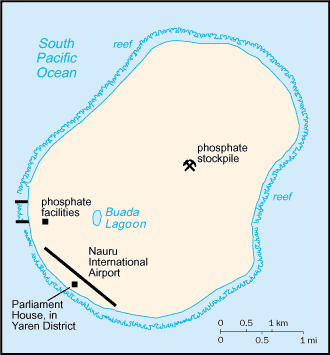
Nauru
- this
map and description is from "CIA
- The World Factbook" website
for Nauru.
Background:
Nauru's phosphate deposits began to be mined early in the
20th century... Nauru is the world's smallest independent
republic.
Location:
Oceania, island in the South Pacific Ocean, south of the
Marshall Islands
Area
- comparative:
about 0.1 times the size of Washington, DC
Environment
- current issues: ...
intensive phosphate mining during
the past 90 years - mainly by a UK, Australia, and NZ consortium
- has left the central 90% of Nauru a wasteland and threatens
limited remaining land resources
Economy
- overview:
Revenues of this tiny island have traditionally come from
exports of phosphates, but reserves are now depleted...
The rehabilitation of mined land and
the replacement of income from phosphates are serious long-term
problems...
Abstract: In
order to evaluate the magnitude and effect of phosphate
(fluorapatite) rock particles on the distribution of fluoride
in the Jordanian sector of the Gulf of Aqaba, sea water and sediment
samples were collected from six stations north and south of Aqaba
Port. The fluoride concentrations of the water and sediments were
determined, together with the concentrations of calcium, calcium
carbonate, total phosphorus, magnesium and organic matter in the
sediments. Normal fluoride
concentrations were found in the sea water samples, whereas
abnormally
high values were found in the phosphate-polluted sediments. These
findings and the correlations between fluoride concentrations
and those of other measured parameters are discussed.
CAS
Registry Numbers:
16984-48-8 - Fluoride
14265-44-2 - Phosphate
7723-14-0 - Phosphorus
7440-70-2 - Calcium
7439-95-4 - Magnesium
1306-05-4 - Fluorapatite
471-34-1 - Calcium carbonate
Ref:
Fluoride distribution in the Jordan Gulf of Aqaba (Red Sea).by ABU-HILAL AH. SCI TOTAL ENVIRON; 49 (0). 1986. 227-234.
Abstract: Literature
on source of environmental pollution with F and its compounds
is reviewed. Studies are cited on the accumulation
of F in the soil and in plants (carrots, beets, cabbage, cucumbers,
potatoes, grains, e.g. wheat and corn, fruit trees, e.g. apricots,
plums, peaches and apples, pines, grasses, tea, camellias, gladioli);
this leads to F accumulation in livestock (cows and pigs) fed
with fodder yeast or other feed containing high F levels.
Problems of endemic fluorosis and osteosclerosis in humans living
in certain areas are mentioned and the negative effects of occupational
exposure to F compounds on various organs and systems of the human
body. A mutagenic action in rats was also indicated. In addition
to increasing efforts at environmental protection and improving
working conditions in industries involving F or its compounds,
serious consideration should be given to lowering quantities of
F in the drinking water.
CAS
Registry Numbers:
16984-48-8 - Fluoride (F)
15096-52-3 - Cryolite ( Al-F6.3Na)
14542-23-5 - Fluorite (CaF2)
1318-94-1 - Muscovite ( Al.H4-O4-Si.1/3K)
1306-05-4 - Fluorapatite (Ca10-F2-O4-P
and Ca5-F-O12-P3)
1302-27-8 - Biotite ( Al.F.Fe.H-O.K.Mg.O3-Si.O)
Ref:
Ecological problems of the production and use of fluorine compounds.by RODIN VI. ZH VSES KHIM O-VA IM D I MENDELEEVA; 24
(1). 1979. 42-48.
Abstract: Several naturally
occurring Ca-phosphate apatites which varied in crystalline structure
and ionic composition were added as crystals of different particle
size to P-free (< 1 mug/l total P) nutrient media. Sufficient
%W%000006%% was released by the partial dissolution of apatite
crystals at limnetic pH levels (pH 7.8) to support growth of several
unialgal-mixed bacterial culture. The biomass produced by mixed
populations increased as the amount of available apatite was increased
and as the pH of the media and the particle size of the apatite
crystals were decreased. Although apatite characteristically displays
reduced solubility under alkaline conditions,
the tons of apatite which are continuously entering aquatic environments
as erosion material may be contributing to the P loading of those
ecosystems. (The following algae were examined: Ankistrodesmus
braunii, A. falcatus, Chlorella vulgaris, C. pyrenoidosa, Scenedesmus
quadricauda, S. longus, Microcystis aeruginosa, Chlamydomonas
dysosmos, C. reinhardtii, Cryptomonas sp., Ochromonas sp., Golenkinia
minutissima, Closterium sp. and Staurastrum sp.)
CAS
Registry Numbers:
1306-05-4 - Fluorapatite
Ref: Naturally occurring apatite
as a source of orthophosphate for growth of bacteria and algae.
SMITH EA, MAYFIELD CI, WONG P TS. MICROB ECOL; 4 (2).
1978 105-118.
Fluoroacetamide
-
Insecticide, Rodenticide - CAS No. 640-19-7
(also known as Fluoroacetamide
or Compound 1081)
-- RESULTS OF LAB INVESTIGATIONS
ARE REPORTED IN MASS POISONING IN WHICH ABOUT
800 DOGS DIED SHORTLY AFTER CONSUMING PURCHASED POULTRY MEAT.
THE TOXICOLOGICAL & PUBLIC HEALTH IMPLICATIONS OF MASS POISONING
ARE DISCUSSED.
Abstract: An account is presented of
poisoning in a dairy herd grazing fields adjacent to a chemical
factory which manufactured fluoroacetamide. In mid-May,
three cows of a dairy herd of 26 Friesians died suddenly. In spite
of the fact that a ditch and ponds running through the field were
fenced off so that the cows could not drink from them, several
more cows died at intervals. Clinical signs observed before death
were listlessness, intermittent inappetence, incoordination and
accelerated heart and respiratory rates. No nervous signs and
convulsions were observed. Submaxillary edema and edema of the
brisket occurred in a notable proportion of the herd. Surviving
cows were lethargic, appetite remained poor and milk yield fell
considerably. Several calves died at or
shortly after birth. Postmortem examination did not give
any indication of the nature of the poison.
A neighboring farm reported infertility of their cows and at another
adjoining farm several apparently healthy sheep died suddenly.
An investigation of the environs together with the clinical condition
of the cows provided circumstantial evidence that the cows had
been poisoned by water contaminated by a toxic organic fluorine
compound present in the factory effluent and draining into ditches
and ponds situated on the adjoining farms. Five months after the
cows were removed from access to the ditch and pond water. the
survivors were still unthrifty and lethargic. The production and
agricultural uses of fluoroacetamide and fluoroactate are discussed.
Early in 1964, the Ministry of Agriculture,
Fisheries and Food recommended that fluoroacetamide should not
be used as an insecticide in agriuclture, home gardens or in food
storage practice in Great Britain; proprietary products containing
fluoroacetamide were subsequently withdrawn from the market. Ref:
Fluoroacetamide poisoning. I. Toxicity in dairy cattle: Clinical
history and preliminary investigations.
Authors: Allcroft JSL RJones. Source: Vet. REcord; 84(16), 399-402,
1969.[also
noted: Epidemiology
and Treatment 69/10/00, 346 1969]
Soil:
Depending on the soil, fluoxastrobin was shown to be highly
persistent in soil and hence it was present in rotational
crops at plant back intervals up to 328 days as the major residue.
Decline of fluoxastrobin residues under processing conditions
does not occur (page 2)... Persistence of fluoxastrobin in soil
may be very variable. Fluoxastrobin may
behave as a moderate to high persistent compound. Metabolite
M48-E is moderate to medium persistent in soil. Anaerobic metabolite
M40 is moderately persistent in soil under aerobic conditions
(page 3).
A high risk is identified to aquatic organisms.
A bufferzone of 15 metres is needed to
respect the Annex VI trigger value for the long term risk for
the use of fluoxastrobin as a spray application in cereals (page
5). A high risk to aquatic organisms
is identified which requires consideration of appropriate risk
mitigation measures. A bufferzone of 15 metres is needed to respect
the Annex VI trigger value for the long term risk (page
41).
Ref:
Conclusion regarding the peer review of the pesticide risk assessment
of the active substance fluoxastrobin finalised: August 10, 2005.
European Food Safety Authority. http://www.fluorideaction.org/pesticides/fluoxastrobin.eu.review.2005.pdf
Aquatic
Animals. Toxicity:
On an acute basis, Fluoxastrobin is moderately
toxic to estuarine/marine fish; highly toxic to freshwater fish
and invertebrates; and very highly toxic to estuarine/marine invertebrates.
Chronic LOCs are also exceeded for estuarine/marine invertebrates
and mollusks. Chronic effects for estuarine/marine invertebrates
include reduced survival and reductions in wet weight of surviving
adults following a 28-day exposure duration. No data were available
to assess the chronic toxicity of fluoxastrobin to estuarine/marine
mollusks. Therefore, the NOAEC value was estimated based on the
acute-to-chronic ratio for mysid shrimp. .. The ecological risks
to fish and invertebrates are considered conservative estimates
because they are based on worst case exposure and use scenarios.
Nonetheless, because of the potential for exposure and possible
adverse effects of fluoxastrobin to endangered and nonendangered
fish and invertebrates, the registrant is required to provide
information on the proximity of Federally listed freshwater fish
and invertebrates to the fluoxastrobin use sites...
Risk
to Endangered Species The
preliminary risk assessment for endangered species indicates that
fluoxastrobin exceeds the endangered species LOCs for the following
combinations of analyzed uses and species:
•
Use of fluoxastrobin on the following crop scenarios
indicate an exceedance of the endangered species LOC for freshwater
fish: Maine potatoes (ground
and aerial application), Florida tomatoes,
peanuts, and turf (at the maximum application rate of
4 times per year).
•
Use of fluoxastrobin on Idaho potatoes
(aerial application only), Maine potatoes
(ground and aerial application), tomatoes,
peppers, cabbage, peanuts, and turf (at maximum [4x/year]
and reduced [2x/year] application rates) indicate
endangered LOC exceedances for endangered freshwater invertebrates.
•
Use of fluoxastrobin on Idaho and Maine
potatoes (aerial and ground application), tomatoes,
peppers, cabbage, peanuts, and turf (at maximum [4x/year]
and reduced [2x/year] application rates) indicate
endangered acute and chronic LOC exceedances for estuarine/marine
invertebrates.
•
Use of fluoxastrobin on Maine potatoes
(ground and aerial application), Florida
tomatoes, peppers, cabbage, peanuts, and turf in Florida
(at maximum [4x/year] application rates only) and Pennsylvania
(for applications of both 4 and 2x/year)
indicate chronic LOC exceedances for estuarine/marine mollusks.
The
list of endangered/threatened freshwater fish species where potatoes,
tomatoes, peppers, and peanuts are grown is comprised of 84 different
species representing 36 States. The three States with the largest
number of endangered/threatened freshwater fish species include
California, Washington, and Oregon.
Within these States, the majority of endangered/threatened fish
species are salmon and steel head (Orcorhynchus sp.). The predominant
endangered fish species in Florida and North
Carolina, where tomatoes, peppers, and peanuts are grown,
is the sturgeon (Acipenser sp.).
The list is
of freshwater invertebrates is primarily comprised of bivalves
(70% of all listed invertebrates; present in 20 States), crustaceans
(i.e., amphipods, crayfish, and shrimp) (~19 of all listed invertebrates;
present in 6 States), and snails (~11% of all listed invertebrates;
present in 2 States). While the majority of listed freshwater
invertebrates are bivalves, the amphipod (Gammarus acherondytes)
was listed as endangered in Illinois. The identification of an
endangered amphipod is a factor because this species was identified
as the most sensitive freshwater invertebrate from the available
effects data. It appears, however, that the endangered amphipods
in Illinois are present only in caves, where pesticides are not
likely to be present in water at concentrations that would cause
adverse effects.
The Agency’s
levels of concern for endangered and threatened freshwater fish
and invertebrates and estuarine/marine invertebrates and mollusks
are exceeded for the use of fluoxastrobin. However, the Agency
recognizes that there are no Federally listed estuarine/marine
invertebrates/mollusks.
The registrant
must provide information on the proximity of Federally listed
freshwater fish and invertebrates to the fluoxastrobin use sites.
This requirement may be satisfied in one of three ways:
1) having
membership in the FIFRA Endangered Species Task Force (Pesticide
Registration [PR] Notice 2000-2);
2) citing
FIFRA Endangered Species Task Force data; or
3) independently
producing these data, provided the information is of sufficient
quality to meet FIFRA requirements.
The information
will be used by the OPP Endangered Species Protection Program
to develop recommendations to avoid adverse effects to listed
species. The registrant has satisfied this requirement using option
#1 above.
Reference: November
2005 - US EPA Pesticide Fact Sheet: Fluoxastrobin. http://www.fluorideaction.org/pesticides/fluoxastrobin.epa.fact.sheet.2005.pdf
7. Particular conditions
to be taken into account on short term basis by Member States
in relation to the granting of authorisations of plant protection
products containing Flupyrsulfuron-methy. On the basis of the
proposed and supported uses, the following particular issues have
been identified which require particular and short term (within
12 months at the latest) attention from the Member States, in
the framework of authorisations to be granted, varied or withdrawn,
as appropriate. Leaching
to groundwater: Particular attention should be given to the potential
for groundwater contamination, when the active substance is applied
in regions with vulnerable soil and/or extreme climatic conditions.
Ref:
FINAL European Commission Review
report for the active substance flupyrsulfuron-methyl. Finalised
in the Standing Committee on Plant Health at its meeting on 27
April 2001 in view of the inclusion of flupyrsulfuron-methyl in
Annex I of Directive 91/414/EEC. http://europa.eu.int/comm/food/fs/ph_ps/pro/eva/newactive/list2_flupyrsulfi_en.pdf
-- The data available
at this time indicate that fluroxypyr is
highly phytotoxic.
-- Aquatic - Estuarine/Marine Fluroxypyr is slightly toxic to
the silverside (96-hour LC 50 = 40 mg/L). Fluroxypyr
acid is highly toxic to the eastern oyster (96-hour LC
50 /EC 50 = 0.068 mg/L); fluroxypyr 1-methylheptyl ester is slightly
toxic to the eastern oyster (96-hour LC 50 /EC 50 = 51 mg/L).
It is practically non-toxic to the grass shrimp (96-hour LC 50
/EC 50 > 120 mg/L). Fluroxypyr is highly
toxic terrestrial plants. Seedling emergence studies identified
the most sensitive species to fluroxypyr methylheptyl ester being
the cucumber (EC 25 = 0.075 pounds active ingredient/acre). Since
fluroxypyr methylheptyl ester may degrade to fluroxypyr acid before
reaching non-target plants, seedling emergence studies were performed
on fluroxypyr acid and identified cotton as the most sensitive
species (EC 25 = 0.025 pounds active ingredient/acre). Vegetative
vigor studies with fluroxypyr methlyheptyl ester also identified
cotton as the most sensitive species (EC 25 = 0.0012 pounds active
ingredient/acre).
Ref: US EPA. Pesticide Fact Sheet. Fluroxypyr.
Reason for Issuance: Conditional Registration Date Issued: September
30, 1998.
http://www.epa.gov/opprd001/factsheets/fluroxypyr.pdf
-- For flusilazole,
no data are available to assess the impact on organic matter decomposition.
Except earthworms and soil microflora, no soil-dwelling organisms
have been tested. Given the persistence
of flusilazole in soil and the environmental and agronomical
importance of the organic matter breakdown for soil fertility,
the Committee considers a risk assessment based solely on the
existing data as not adequate.
-- Although fish early life-stage tests provide useful information
on sensitive life stages of fish, for flusilazole
in particular the risk assessment has explicitly identified fish
and other aquatic species to be at risk from agricultural use
of this a.s., and there is evidence that flusilazole may have
specific effects on the reproductive process. Therefore
the SCP cannot conclude that a NOEC based on a fish early life-stage
test for a single species is necessarily adequate in this particular
case to ensure sufficient protection of fish populations from
adverse effects on reproduction.
-- The monograph (volume 3, pp. 230-233) identified aquatic species,
and fish in particular, as possibly at risk from flusilazole.
In addition, a dose-dependent decrease in
serum estradiol levels by flusilazole, considered to be indicative
of aromatase inhibition, was observed in studies with rats (volume
3, p. 73). Aromatase inhibition is significant
for reproduction since aromatization of testosterone is the process
by which oestrogen is formed in vertebrates (Trant et al.
1997). This reaction is mediated by the cytochrome P450 aromatase.
It has been shown that oestrogen (i.e., oestradiol) plays a major
role in the reproductive physilogy of all vertebrates, including
gamete development and maturation, and induces the hepatic synthesis
of the yolk precursor, vitellogenin. Studies in which fish have
been exposed to aromatase inhibitors suggest that aromatase activity,
specificity or expression levels vary with maturation stage and
among species (Bl‡zquez et al. 2001, Zerulla et al. 2002).
-- ... Neither of the above tests was designed to investigate
possible effects on reproductive output or mating behaviour of
adult fish. Given that there is evidence that flusilazole is an
aromatase inhibitor, there are specific concerns that reproduction
could be adversely affected by this substance. Therefore potential
effects on mating behaviour, time to sexual maturity, reproductive
output and timing, fertilisation success, and sex ratio of offspring
are also of concern and should be explicitly addressed by a test
designed for this purpose.
Ref: July 2002 - Opinion of the
Scientific Committee on Plants on specific questions from the
Commission concerning the evaluation of flusilazole in the Council
Directive 91/414/EEC. European Commission. Health & Consumer Protection
Directorate-General. http://www.fluorideaction.org/pesticides/flusilazole.eu.july.2002.pdf
"Flusilazole
85509-19-9 Withdrawn. Low degradability. 1994."
Definition: "Withdrawn. A
substance which the manufacturer has either withdrawn from the
market, or for which he has withdrawn his application for registration,
approval, or renewed approval and when it is clear that these
measures were undertaken due to the health or environmental properties
of the substance."
Ref: Euopean Commission. Appendix
5. Substances which may not be included as active ingredients
in approved pesticide products, Chapter 15, Section 2, subsection
one.
http://www.kemi.se/lagar_eng/pdf/app5_8.pdf
Soil dissipation.
The Meeting reviewed the final report of a 3-year soil dissipation
study (4 applications per year) for which an interim report was
reviewed by the 1989 JMPR. It confirms the 1989 observations that
over 92% of the radioactivity is confined to the top 8 cm of soil
over the test period, and that the predominant residues in this
segment are flusilazole and its silanol metabolite IN-F7321. The
author cites statistical evaluation of the data to support the
view that residues will reach a steady level at 57% of yearly
application levels after repeated application levels under worst-case
conditions.
The report cites the steady-state conclusion, the strong adsorption
to the top layers of soil, the lack of residues exceeding 0.01
mg/kg in the 24-36 cm soil depths and the weak leaching potential
indicated in other studies as evidence that residues in ground
water were unlikely. While the data indicate that over 92% of
the radioactivity remains in the top 8 cm of the silt loam soil
investigated, and indeed that residue levels are extremely low
in the 24-36 cm depths, it also shows an increasing penetration
by low levels of radioactivity over the test period in this soil
type. The identity of these residues in the deeper soil segments
was not indicated.
While
the adsorption of this persistent pesticide to soil is strong,
the 1989 JMPR had noted that uptake of low residue levels can
occur in rotational crops and that the leaching potential would
be less for silt loams (as in this study) than for more sandy
soils. Because the silt loam study was under worst-case conditions
(bare ground, repeated applications) and was consistent with reassuring
findings of a number of other relevant studies, the Meeting accepted
that ground water residues from silt loam soils were unlikely.
Ref: 1993
FAO/WHO JOINT MEETING ON PESTICIDE RESIDUES Geneva, 20-29 September
1993. PESTICIDE RESIDUES IN
FOOD. REPORT OF THE 1993 JOINT FAO/WHO MEETING OF EXPERTS. 4.24
FLUSILAZOLE (165). RESIDUE AND ANALYTICAL ASPECTS.
Reproductive
process -- Although fish early life-stage tests provide
useful information on sensitive life stages of fish, for
flusilazole
in particular the risk assessment has explicitly identified fish
and other aquatic species to be at risk from agricultural use
of this a.s., and there is evidence that flusilazole may
have specific effects on the reproductive process. Therefore
the SCP cannot conclude that a NOEC based on a fish early life-stage
test for a single species is necessarily adequate in this particular
case to ensure sufficient protection of fish populations from
adverse effects on reproduction.
-- The monograph (volume 3, pp. 230-233) identified aquatic species,
and fish in particular, as possibly at risk from flusilazole.
In addition, a dose-dependent decrease in
serum estradiol levels by flusilazole, considered to be indicative
of aromatase inhibition, was observed in
studies with rats (volume 3, p. 73). Aromatase
inhibition is significant for reproduction since aromatization
of testosterone is the process by which oestrogen is formed in
vertebrates (Trant et al. 1997). This reaction is mediated
by the cytochrome P450 aromatase. It has been shown that oestrogen
(i.e., oestradiol) plays a major role in the reproductive physilogy
of all vertebrates, including gamete development and maturation,
and induces the hepatic synthesis of the yolk precursor, vitellogenin.
Studies in which fish have been exposed to aromatase inhibitors
suggest that aromatase activity, specificity or expression levels
vary with maturation stage and among species (Bl‡zquez et al.
2001, Zerulla et al. 2002).
-- ... Neither of the above tests was designed to investigate
possible effects on reproductive output or mating behaviour of
adult fish. Given that there is evidence that flusilazole is an
aromatase inhibitor, there are specific concerns that reproduction
could be adversely affected by this substance. Therefore potential
effects on mating behaviour, time to sexual maturity, reproductive
output and timing, fertilisation success, and sex ratio of offspring
are also of concern and should be explicitly addressed by a test
designed for this purpose.
Ref:
July 2002 - Opinion of the Scientific Committee on Plants on specific
questions from the Commission concerning the evaluation of flusilazole
in the Council Directive 91/414/EEC. European Commission. Health
& Consumer Protection Directorate-General. http://www.fluorideaction.org/pesticides/flusilazole.eu.july.2002.pdf
Ecotoxicology (page 11)
• Acute toxicity to oysters - shell deposition
• Acute toxicity to mysid shrimp
• Acute toxicity to sheepshead minnow
• Chronic toxicity to mysid shrimp
• Chronic toxicity to sheepshead minnow
•• A waiver will be requested for the cbironomid sediment
toxicity test with Chironomus tentans (a Chironomus riparius study
will be submitted in support of the waiver) .Algal toxicity (Anabaena,
Navicula, Skeletonema)
• Aquatic plant toxicity - Lemna
Ref: DuPont Punch
(Active ingredient: Flusilazole) and DuPont Charisma (Active ingredients:
Flusilazole and Famoxadone): Summary of
data compiled in support of a Section 18 Emergency Exemption request
for control of Asian soybean rust on soybeans. By DuPont authors:
Cosgrove T, Czochor L, Dinter A, Jemberg K, Klemens A, Marcon
A, McInnes B, Mullin L, Russell M, Ryan D, Singles S, Vanderbroeck
V. Revision No. 1: February 2, 2005. http://www.fluorideaction.org/pesticides/flusilazole.appendix1.pdf
-- Fluthiacet-methyl
was shown to be practically non-toxic to birds, practically non-toxic
to small mammals, practically non-toxic to bees and other beneficial
insects, very highly toxic to fish,
and moderately toxic to fresh water invertebrates. For seedling
emergence, onion is the most sensitive non-target plant species
and for vegetative, vigor, cucumber is the most sensitive non-target
plant species. For aquatic plants, duckweed and nonvascular green
algae are the most sensitive aquatic plant species. There are
no acute or chronic risk to non-target endangered fish, birds,
aquatic invertebrates, terrestrial or aquatic plants or endangered
species. Risks to endangered terrestrial and aquatic species are
expected to be minimal form the use of Action Herbicide on soybeans.
Because surfactant is used with the end-use product, and may enhance
the productÕs phytotoxicity, limited vegetative vigor test with
onion, tomato, cucumber and an aquatic test with duckweed are
a condition of the registration for Action Herbicide.
-- The following statement must appear in the Environmental Hazards
section of the label of end use products: This
pesticide is toxic to fish and aquatic invertebrates. Do
not discharge effluent containing this product into lakes, streams,
ponds, estuaries, oceans or other waters unless in accordance
with the requirements of a National Pollutant Discharge Elimination
System (NPDES) permit and the permitting authority has been notified
in writing prior to discharge. Do not discharge effluent containing
this product to sewer systems without previously notifying the
sewage treatment plant authority. For guidance contact your State
Water Board or Regional Office of the Environmental Protection
Agency.
Ref: US EPA. Pesticide Fact Sheet. Fluthiacet-methyl
Reason for Issuance: Conditional Registration Date Issued: April
1999. http://www.epa.gov/opprd001/factsheets/fluthiacet.pdf
Flutolanil
is very persistent
and moderately mobile
Aqueous Photolysis: Flutolanil
degraded slowly, 8% over the 30-day study. No half-life was indicated.
Aerobic Soil Metabolism: Flutolanil
had a half-life in sandy loam of 300 days.
Anaerobic Aquatic Metabolism:
Flutolanil had a half-life of >13 years.
Ref:
December 19, 2002. New York State Department of Environmental
Conservation. Letter - Registration of a Major Label Change -
Flutolanil (Moncoat). http://www.fluoridealert.org/pesticides/Flutolanil.NYDEC.Dec.2002.htm
"Flutolanil 66332-96-5
Banned. Low degradability. 1995."
Definition: "Banned. A substance which
for health or environmental reasons by an authority decision is
either no longer approved for any area of application, or for
which an approval or registration has been denied from the first
instance."
Ref: Euopean Commission. Appendix 5. Substances
which may not be included as active ingredients in approved pesticide
products, Chapter 15, Section 2, subsection one. http://www.kemi.se/lagar_eng/pdf/app5_8.pdf
Recommendations (page
51): [Flutriafol] is extremely persistent
in soil and will accumulate following repeated annual applications.
Soil residues also demonstrate the potential to be mobile.
Although the fate and behaviour of flutriafol in water has not
been evaluated and no data are available from natural water monitoring,
the high spray application rate and the use on cereals, indicated
that water contamination is likely.
Evaluation
on: Flutriafol. October 1996. Issue No. 158, UK Department for
Environment, Food and Rural Affairs, Pesticides Safety Directorate,
Mallard House, Kings Pool, 3 Peasholme Green, York YO1 7PX. http://www.pesticides.gov.uk/citizen/evaluations/158_confirm-box.htm
The Svalbard
archipelago in arctic Norway receives considerable semivolatile
organic contaminant (SOC) inputs from the atmosphere... The
surface sample also had highest concentrations of pendimethalin
(herbicide, 18.6 ng L-1) and flutriafol,
the lone observed fungicide (9.6 ng L-1).
Reference:
Current-Use and Legacy Pesticide History in the Austfonna Ice
Cap, Svalbard, Norway. By Mark H. Hermanson et al. Environ. Sci.
Technol., 39 (21), 8163 -8169, 2005. See
Abstracts
Fluvalinate
- Acaricide, Insecticide - CAS No. 69409-94-5
Aquatic
acute toxicity
values for fluvalinate include a daphnid
48- hour EC
50 of 0.40 ppb,
a bluegill sunfish 96-hour
LC50 of 0.9 ppb,
a rainbow trout 96-hour
LC50 of 2.9 ppb,
and a sheepshead minnow 96-hour
LC 50
of 10.8 ppb.
EPA believes that there is sufficient evidence for listing fluvinate
on EPCRA section 313 pursuant to EPCRA section 313(d)(2)(C) based
on the available environmental toxicity data for this chemical.
Ref: USEPA/OPP. Support Document for the
Addition of Chemicals from Federal Insecticide, Fungicide, Rodenticide
Act (FIFRA) Active Ingredients to EPCRA Section 313. U. S. Environmental
Protection Agency, Washington, DC (1993). As cited by US EPA in:
Federal
Register: January 12, 1994. Part IV. 40 CFR Part 372. Addition
of Certain Chemicals; Toxic Chemical Release Reporting; Community
Right-to-Know; Proposed Rule.
Environmental
Bioconcentration:
Based upon a water solubility of 0.005 mg/L at 20-25 deg C (taken
from the USDA's evaluated database of pesticide properties)(1),
the BCF for fluvalinate can be estimated to be 12,000
from a recommended regression-derived equation(2,SRC).
This BCF value suggests that bioconcentration may be important
in aquatic organisms that cannot metabolize fluvalinate(SRC).
[(1) Wauchope RD et al; Rev Environ Contam Toxicol 123: 1-36 (1991)
(2) Lyman WJ et al; Handbook of Chemical Property Estimation Methods
Washington, DC: Amer Chem Soc p. 5-10 (1990)]
Ref:
Hazardous Substances Data Bank for FLUVALINATE CASRN: 69409-94-5. http://www.fluorideaction.org/pesticides/fluvalinate.toxnet.hsdb.htm
Abstract: ...
In
mesocosms, multiple application of fomesafen, leading to maximal
herbicide concentrations of 60.33 +/- 2.68 microg/L in water,
resulted in reduced number of egg masses and altered glycogen
metabolism in contaminated snails. These
changes, as well as affected steroid-like levels in fomesafen-exposed
snails, support the hypothesis of impaired neuroendocrine functions.
Ref: Environ
Toxicol Chem 2002 Sep;21(9):1876-88. Nonylphenol polyethoxylate
adjuvant mitigates the reproductive toxicity of fomesafen on the
freshwater snail Lymnaea stagnalis in outdoor experimental ponds;
by Jumel A, Coutellec MA, Cravedi JP, Lagadic L.
-- iii. Cancer risk.
Based on exposure levels for drinking water, as given above, the
estimate of cancer risk is 2.7 x 10⁻⁶. This figure
is an overestimate, as it was arrived at based on several very
conservative assumptions. Estimates used were calculated based
on data from only one small scale study conducted in NC, for use
of fomesafen on soybeans at a vulnerable site. This represents
a worst case scenario, so is not representative of the ``average''
conditions of use. Additionally, there is language on the product
label warning of the potential of fomesafen
to leach to ground water in vulnerable areas. Vulnerable
areas in this case refers to areas where soils are permeable (sand
and silt loams) and the water table is shallow. The majority of
areas of soybean production, and potential use of fomesafen, will
not likely be vulnerable sites, thus the data used from the one
small scale study greatly overestimates levels which could actually
occur. Further, it is assumed that this exaggerated level will
occur in all drinking water throughout the US, and that each individual
consumes 2 liters of drinking water per day.
Ref: Federal Register. November 19, 1997.
Fomesafen; Pesticide Tolerances for Emergency Exemptions. Final
Rule. http://www.fluoridealert.org/pesticides/Fomesafen.FR.Nov.19.1997.htm