2004-2006
- US EPA CHEERS study in Jacksonville, Duval County, Florida.
This 2-year study of children's exposure to selected pesticides
and chemicals has ignited enormous controversy. Fipronil
was one of 16 pesticides selected to be monitored in children
(ages 0-3 years). See FAN's
updates on this study. |
See
reports available from The National Technical Information
Service (NTIS)
|
Abstract
Brain Res Bull. 2009 Mar 30;78(6):313-22.
Is fipronil safer than chlorpyrifos? Comparative developmental neurotoxicity modeled in PC12 cells.
Lassiter TL, MacKillop EA, Ryde IT, Seidler FJ, Slotkin TA.
Department of Pharmacology & Cancer Biology, Duke University Medical Center, Durham, NC 27710, USA. tll18@duke.edu
Fipronil, a GABA(A) receptor antagonist, is replacing many insecticide uses formerly fulfilled by organophosphates like chlorpyrifos. Few studies have addressed the potential for fipronil to produce developmental neurotoxicity. We compared the neurotoxicity of fipronil and chlorpyrifos in undifferentiated and differentiating neuronotypic PC12 cells, evaluating indices of cell replication, cell number, differentiation, and viability for short- and long-term exposures. Fipronil inhibited DNA and protein synthesis in undifferentiated PC12 cells and evoked oxidative stress to a greater extent than did chlorpyrifos, resulting in reduced cell numbers even though cell viability was maintained. In differentiating cells, fipronil displayed an even lower threshold for disruption of development, reducing cell numbers without impairing cell growth, and promoting emergence of neurotransmitter phenotypes; superimposed on this effect, the phenotypic balance was shifted in favor of dopamine as opposed to acetylcholine. Differentiation also enhanced the susceptibility to fipronil-induced oxidative stress, although antioxidant administration failed to provide protection from cell loss. At low concentrations maintained for prolonged periods, fipronil had a biphasic effect on cell numbers, increasing them slightly at low concentrations, implying interference with apoptosis, while nevertheless reducing cell numbers at higher concentrations. Our results suggest that fipronil is inherently a more potent disruptor of neuronal cell development than is chlorpyrifos. The neurodevelopmental effects are not predicated on GABA(A) antagonist properties, since PC12 cells lack the GABA(A) receptor. If fipronil is intended to provide greater safety than chlorpyrifos, then this will have to entail advantages from factors that are yet unexamined: exposure, persistence, pharmacokinetics.
|
Abstract
Toxicology. 2009 Jan 8;255(1-2):38-44.
Fipronil-induced disruption of thyroid function in rats is mediated by increased total and free thyroxine clearances concomitantly to increased activity of hepatic enzymes.
Leghait J, Gayrard V, Picard-Hagen N, Camp M, Perdu E, Toutain PL, Viguié C.
UMR181 Physiopathologie et Toxicologie Expérimentales, INRA, ENVT, 23 Chemin des Capelles, BP 87614, 31076 Toulouse Cedex 3, France.
Fipronil is a widely used phytosanitary product and insecticide for pets. In the rat, fipronil can disrupt thyroid function by decreasing plasma concentrations of total thyroxine (T4) likely through increased T4 clearance. However, the mechanism of fipronil action on thyroid function remains unclear. The goals of the present study were to evaluate the effects of fipronil on thyroid hormone (TH) concentrations and elimination in the rat under well characterized plasma exposure to fipronil and its main metabolite fipronil sulfone. In thyroid-intact female rats, fipronil treatment (3 mg/(kg day) per os for 14 days) decreased both total and free TH plasma concentrations concomitantly to increased thyroid stimulating hormone plasma concentrations. A T4-free euthyroid-like model consisting of thyroidectomized rats treated with tri-iodothyronine (12 microg/(kg day), sc) was developed to evaluate both total and free T4 clearances. In this model, fipronil treatment induced a twofold increase in total and free T4 clearances. The same fipronil treatment increased antipyrine clearance in thyroid-intact rats suggesting an increase in the activity of cytochrome P450 enzymes. Finally, this treatment was also associated with an increase in hepatic microsomal 4-nitrophenol UDP-glucuronosyltransferase activity involved in T4 glucuronidation. Thus, fipronil-induced thyroid disruption results from an increased rate of T4 elimination likely mediated by increased hepatic enzyme activity. Plasma concentrations of fipronil sulfone were at least 20-fold higher than those of fipronil. This highlights the need to further investigate the contribution of fipronil sulfone to the fipronil-induced thyroid disruption.
|
| http://www.ncbi.nlm.nih.gov:80/entrez/query.fcgi?cmd=Retrieve&db=PubMed&list_uids=9681970&dopt=Abstract
Environ
Health Perspect. 1998 Aug;106(8):437-45.
Mode of
carcinogenic action of pesticides inducing thyroid
follicular cell tumors in rodents.
Hurley
PM.
Office
of Prevention, Pesticides and Toxic Substances, U.S.
Environmental Protection Agency, Washington,
DC 20460 USA.
Of
240 pesticides screened for carcinogenicity by the U.S.
Environmental Protection Agency Office of Pesticide
Programs, at least 24 (10%) produce
thyroid follicular cell tumors in rodents. Thirteen
of the thyroid carcinogens also induce liver tumors,
mainly in mice, and 9 chemicals produce tumors at other
sites. Some mutagenic data are available on all 24 pesticides
producing thyroid tumors. Mutagenicity does not seem
to be a major determinant in thyroid carcinogenicity,
except for possibly acetochlor; evidence is less convincing
for ethylene thiourea and etridiazole. Studies on thyroid-pituitary
functioning, including indications of thyroid cell growth
and/or changes in thyroxine, triiodothyronine, or thyroid-stimulating
hormone levels, are available on 19 pesticides. No such
antithyroid information is available for etridiazole,
N-octyl bicycloheptene dicarboximide, terbutryn, triadimefon,
and trifluralin. Of the studied chemicals, only bromacil
lacks antithyroid activity under study conditions.
Intrathyroidal and extrathyroidal sites of action are
found: amitrole, ethylene thiourea, and mancozeb
are thyroid peroxidase inhibitors; and acetochlor, clofentezine,
fenbuconazole, fipronil,
pendimethalin, pentachloronitrobenzene, prodiamine,
pyrimethanil, and thiazopyr seem to enhance the hepatic
metabolism and excretion of thyroid hormone. Thus, with
12 pesticides that mode of action judgments can be made,
11 disrupt thyroid-pituitary homeostasis only; no chemical
is mutagenic only; and acetochlor may have both antithyroid
and some mutagenic activity. More information is needed
to identify other potential antithyroid modes of thyroid
carcinogenic action.
PMID:
9681970 [PubMed - indexed for MEDLINE]
|
http://www.ncbi.nlm.nih.gov/entrez/query.fcgi?cmd=Retrieve&db=pubmed&dopt=Abstract&list_uids=14643964
Toxicol
Lett. 2004 Jan 15;146(2):121-7.
Reproductive
adverse effects of fipronil in Wistar rats.
Ohi
M, Dalsenter PR, Andrade AJ, Nascimento AJ.
Departamento
de Farmacologia, Setor de Ciencias Biologicas, Universidade
Federal do Parana, 81531-980 /PR Curitiba, Brazil. pdalsenter@ufpr.br
The
purpose of the present study was to investigate possible
reproductive adverse effects of fipronil (Frontline
TopSpot) in female Wistar
rats. The pesticide was topically applied to
rats (single dose) at different concentrations (70,
140 and 280 mg/kg) and hormonal analysis, estrous cycle,
and pregnancy and outcome data were determined. Treatment
with fipronil altered cyclicity of female rats lengthening
the estrous cycle (days) after a single topic administration
of 70 mg/kg (9.7+/-1.18) or 280 mg/kg (14.5+/-1.45)
when compared to control (4.8+/-0.17). In
the mating study fipronil reduced the pregnancy index
(67%) in the highest dose group (280 mg/kg). Plasma
progesterone and estradiol levels, obtained in different
periods after treatment with fipronil (70 mg/kg), were
significantly different 96 h after treatment, when compared
to controls. In summary, the results of the present
study indicate that fipronil may alter the normal functioning
of the endocrine system and cause adverse reproductive
effects in female rats.
PMID:
14643964 [PubMed - indexed for MEDLINE]
See
Also
http://www.ncbi.nlm.nih.gov/entrez/query.fcgi?cmd=Retrieve&db=pubmed&dopt=Abstract&list_uids=14567575
Bull
Environ Contam Toxicol. 2003
Sep;71(3):497-503.
Effects of fipronil and chlorpyrifos
on endocrine-related endpoints in female grass shrimp
(Palaemonetes pugio).
Volz
DC, Wirth EF, Fulton MH, Scott GI, Strozier E, Block
DS, Ferry JL, Walse SS, Chandler GT.
Department
of Environmental Health Sciences, University of South
Carolina, Columbia, SC 29208, USA.
PMID:
14567575 [PubMed - indexed for MEDLINE]
|
http://www.ncbi.nlm.nih.gov:80/entrez/query.fcgi?cmd=Retrieve&db=PubMed&list_uids=12442503&dopt=Abstract
Rev
Environ Contam Toxicol. 2003;176:1-66.
Fipronil:
environmental fate, ecotoxicology, and human health
concerns.
Tingle
CC, Rother JA, Dewhurst CF, Lauer S, King WJ.
Natural
Resources Institute, University of Greenwich at Medway,
Central Avenue, Chatham Maritime, Kent ME4 4TB, UK.
Fipronil
is a highly effective, broad-spectrum insecticide with
potential value for the control of a wide range of crop,
public hygiene, amenity, and veterinary pests. It can
generally be applied at low to very low dose rates to
achieve effective pest control. Application rates vary
between 0.6 and 200 g a.i./ha, depending on the target
pest and formulation. It belongs to the phenyl pyrazole
or fiprole group of chemicals and is a potent disrupter
of the insect central nervous system via interference
with the gamma-aminobutyric acid (GABA-) regulated chloride
channel. Fipronil degrades slowly on vegetation and
relatively slowly in soil and in water, with a half-life
ranging between 36 hr and 7.3 mon depending on substrate
and conditions. It is relatively immobile in soil and
has low potential to leach into groundwater. One of
its main degradation products, fipronil desulfinyl,
is generally more toxic than the parent compound and
is very persistent. There is evidence
that fipronil and some of its degradates may bioaccumulate,
particularly in fish. Further investigation on
bioaccumulation is warranted, especially for the desulfinyl
degradate. The suitability of fipronil for use in IPM
must be evaluated on a case-by-case basis. In
certain situations, fipronil may disrupt natural enemy
populations, depending on the groups and species
involved and the timing of application. The indications
are that fipronil may be incompatible with locust IPM;
hence, this possibility requires further urgent investigation.
It is very highly toxic to termites
and has severe and long-lasting negative impacts on
termite populations. It thus presents a long-term risk
to nutrient cycling and soil fertility where termites
are "beneficial" key species in these ecological processes.
Its toxicity to termites also increases the risk to
the ecology of habitats in which termites are a dominant
group, due to their importance as a food source to many
higher animals. This risk
has been demonstrated in Madagascar, where two endemic
species of lizard and an endemic mammal decline in abundance
because of their food chain link to termites.
Fipronil is highly toxic to bees
(LD50 = 0.004 microgram/bee),
lizards [LD50 for Acanthodactylus dumerili (Lacertidae)
is 30 micrograms a.i./g bw], and gallinaceous
birds (LD50 = 11.3 mg/kg for Northern bobwhite
quail), but shows low toxicity to waterfowl (LD50 >
2150 mg/kg for mallard duck). It is moderately toxic
to laboratory mammals by oral exposure (LD50 = 97 mg/kg
for rats; LD50 = 91 mg/kg for mice). Technical fipronil
is in toxicity categories II and III, depending on route
of administration, and is classed as a nonsensitizer.
There are indications of carcinogenic
action in rats at 300 ppm, but it is not carcinogenic
to female mice at doses of 30 ppm. The acute toxicity
of fipronil varies widely even in animals within the
same taxonomic groups. Thus, toxicological findings
from results on standard test animals are not necessarily
applicable to animals in the wild. Testing on local
species seems particularly important in determining
the suitability of fipronil-based products for registration
in different countries or habitats and the potential
associated risk to nontarget wildlife.
Risk assessment predictions have shown that some fipronil
formulations present a risk to endangered bird, fish,
and aquatic and marine invertebrates. Great
care should thus be taken in using these formulations
where they may impact any of these endangered wildlife
groups. Work in Madagascar has highlighted field evidence
of this risk. The dose levels
at which fipronil produces thyroid cancer in rats are
very high and are unlikely to occur under normal
conditions of use. There is also dispute as to whether
this is relevant to human health risk. However, as fipronil
is a relatively new insecticide that has not been in
use for long enough to evaluate the risk it may pose
to human health, from data on human exposure to the
product, a precautionary approach
may be warranted. The use of some fipronil-based
products on domestic animals is not recommended where
handlers spend significant amounts of time grooming
or handling treated animals. In general, it would appear
unwise to use fipronil-based insecticides without accompanying
environmental and human health monitoring, in situations,
regions, or countries where it has not been used before,
and where its use may lead to its introduction into
the wider environment or bring it into contact with
people. Further work is needed
on the impacts of fipronil on nontarget vertebrate fauna
(amphibians, reptiles, birds, and mammals) in
the field before the risk to wildlife from this insecticide
can be adequately validated. Further field study of
the effects of fipronil on the nutrient cycling and
soil water-infiltration activities of beneficial termites
is required to assess the ecological impacts of the
known toxicity of fipronil to these insects.
Publication
Types: Review; Review, Academic
PMID:
12442503 [PubMed - indexed for MEDLINE]
|
From
Dart Special at Toxnet: http://toxnet.nlm.nih.gov/
Neurotoxicology
2000 Feb-Apr;21(1-2):251
Retrospective
analysis of EPA's developmental neurotoxicity testing
battery.
Makris
S
US Environmental Protection Agency,
Office of Prevention, Pesticides, and Toxic Substances,
Washington, DC.
On December 8, 1998, a study entitled "A Retrospective
Analysis of Twelve Developmental Neurotoxicity Studies
Submitted to the USEPA Office of Prevention, Pesticides,
and Toxic Substances (OPPTS)", co-authored by Susan
Makris, William Sette, Kathleen Raffaele, and Jennifer
Seed, was presented to the FIFRA Scientific Advisory
Panel. In this paper, the methods and results (maternal
and offspring) of all developmental neurotoxicity studies
received in OPPTS and reviewed by EPA scientists as
of November, 1998 were summarized. This data set included
studies on 9 pesticides (aldicarb, carbaryl, carbofuran,
chlorpyrifos, DEET, emamectin,
fipronil, molinate, and "chemical X"
which was not identified by name since it had not yet
been registered) and 3 solvents (1,1,1-trichloroethane,
triethylene glycol monomethyl ether, and isopropanol).
For each chemical, the data on
prenatal developmental toxicity, reproductive toxicity,
and acute and subchronic adult neurotoxicity were summarized
for comparison to the developmental neurotoxicity study
findings. Additionally, the studies, NOELs and
endpoints selected for acute and chronic dietary risk
assessment for these chemicals were presented. The offspring
NOELs from the developmental neurotoxicity studies were
compared with those of the other studies within each
chemical database, as well as with those studies that
were selected for risk assessment. The conclusions of
this analysis are considered preliminary, given the
limited number of studies available, the lack of breadth
of chemical classes evaluated, and other confounding
factors that may have influenced study design and interpretation
of results. The analysis revealed
that positive findings in the offspring were noted across
studies for all types of observations recorded: developmental
landmarks, behavioral/functional observations, sensory
function, motor activity, learning and memory, brain
weight, and/or neuropathology. In addition, there
was a high degree of coincident findings in the functional
and structural assessments; for five of the six pesticides
for which morphometric analysis was conducted, alterations
were identified in both behavior and brain morphology.
The detection of coincident findings in the developmental
neurotoxicity studies was considered to be likely due
to a variety of biological and methodological factors,
including the focus of these studies on developmental
profiles derived from assessments at multiple time points.
This supports the need to assess a variety of functional
and developmental neurobehavioral and neuropathological
endpoints to screen for effects on nervous system development.
It was concluded that the evaluation of effects on neurological
development, through conduct of the OPPTS developmental
neurotoxicity study, can be a sensitive indicator of
toxicity to offspring. This was, in part, demonstrated
by the fact that for two of the nine pesticides evaluated,
the NOEL for developmental neurotoxicity was lower than
or equal to that for any adult or offspring endpoint
from the prenatal developmental, reproduction, or neurotoxicity
studies. Additionally, since this study examines endpoints
which are not evaluated in any other guideline toxicology
study, it is a valuable tool in the characterization
of hazard to infants and children. The paper proposed
ways in which developmental neurotoxicity data should
be considered in the process of selecting endpoints
for risk assessment of pesticides in EPA. In the course
of this review, various general issues were raised pertaining
to the developmental neurotoxicity study methodology
and interpretation of results, and have provided a preliminary
focus for discussions that are expected to culminate
in future guideline revision. The topics include: the
route of administration, the duration of treatment,
the use of combined protocols, biochemical measures
of exposure or effect (e.g., cholinesterase inhibition),
pharmacokinetic data, and age-related susceptibility.
|
From
Toxline at Toxnet: http://toxnet.nlm.nih.gov/
Year
of Publication: 2002
Supporting
Agency: U.S. DEPT. OF HEALTH AND HUMAN SERVICES; PUBLIC
HEALTH SERVICE; NATIONAL INSTITUTES OF HEALTH, NATIONAL
INSTITUTE OF ENVIRONMENTAL HEALTH SCIENCES
State:
CALIFORNIA
Zip Code: 94720-3112
GABAERGIC
INSECTICIDE TOXICOLOGY
CASIDA JE
ECTL@NATURE.BERKELEY.EDU,
UNIV OF CALIFORNIA, BERKELEY, 114 WELLMAN HALL, BERKELEY,
CA 94720-3112
Source:
Crisp Data Base National Institutes of Health
The long-term objective is to define the fundamental
basis for the selective toxicity of insecticides
acting at the gamma-aminobutyric acid (GABA) receptor
of mammals and insects. This is the target of major
neurotoxic insecticides acting as both blockers and
activators of the GABA-gated chloride channel.
More than 5,000,000,000 pounds of these channel blockers
have been used for pest control in the past 50 years
and they range in chlorine content from 52-73%. The
major channel blockers used at present, representing
6% of the insecticide market, are endosulfan and lindane
and this market share will increase
with expanded use of the newly-commercialized polyhalogenated
fipronil. The activators such as avermectin and
moxidectin are also used in ever increasing quantities
as insecticides and anthelmintics. More specifically,
the goal is to provide toxicological profiles and maps
for the insecticide blocker site and the insecticide
activator site by designing and using high-affinity
radioligands (the insecticide itself or a closely-related
model compound) and photoaffinity
probes to study binding site interactions and localization
in the brain and chloride channel. Emphasis will
be placed on the discovery of differences between the
GABA receptors of mammals and insects that confer preferential
sensitivity to insecticides and safety to mammals. The
proposal is to prepare suitable radioligands and photoaffinity
probes and use them to localize the binding sites as
to brain region, receptor subunit and specific derivatized
amino acid(s) in the chloride channel of mammals (bovine)
and insects (Drosophila); the chemistry to achieve this
end comes largely from discoveries in this laboratory.
The research also involves rat cerebellar granule cells
in primary culture to study radioligand binding and
chloride flux in intact cells, localization of radioligand
binding in mouse brain slices following in vitro and
in vivo exposure to unlabeled toxicants, and receptors
derived from Sf9 cells transfected with cDNs of human
GABAa receptor subunits.
|
From
Toxline at Toxnet: http://toxnet.nlm.nih.gov/
Supporting
Agency: U.S. DEPT. OF HEALTH AND HUMAN SERVICES; PUBLIC
HEALTH SERVICE; NATIONAL INSTITUTES OF HEALTH, NATIONAL
INSTITUTE OF NEUROLOGICAL DISORDERS AND STROKE
State: ILLINOIS
Year
of Publication: 2002
Zip
Code: 60611-3008
Mode
of Action of Insecticides: Electrophysiological
NARAHASHI T
TNA597@NWU.EDU, NORTHWESTERN UNIV MED SCH, 303 E CHICAGO
AVENUE, CHICAGO, IL 60611-3008
Source:
Crisp Data Base National Institutes of Health
The long-term goal of the proposed
study is to elucidate the mechanism by which neuroactive
insecticides exert their toxic actions. The specific
aims of the proposed renewal application are to elucidate
the physiological mechanisms that underlie the selective
toxicity of several selected newer insecticides between
mammals and insects. Most insecticides are much more
toxic to insects than to mammals, and the mechanism
of selective toxicity lies in many cases in differential
actions on the target neuroreceptors/ion channels. Although
recent developments and applications of molecular biology
and genetics techniques have identified the molecular
structures such as amino acid compositions of target
receptors/channels that are deemed responsible for differential
actions, almost nothing is known about how the differential
actions are brought about as a result of the difference
in molecular structures. Our working hypothesis is that
the differential actions of insecticides on the target
receptor/channels of mammals and insects could be caused
by some difference in the kinetics of receptors/channels.
For example, insecticide modification of the channel
may be dependent upon the channel open or closed state,
the kinetics of insecticide binding and unbinding, the
temperature coefficient, etc. In order to elucidate
the physiological mechanisms of selective toxicity,
patch clamp data on the kinetics of receptors/channels
and those of insecticide modification will be compared
between rat and cockroach neurons for fipronil
modulation of GABA receptors, imidacloprid modulation
of neuronal nicotinic acetylcholine receptors (nnAChRs),
spinosad modulation of nnAChRs and GABA receptors, and
indoxacarb modulation of sodium channels, nnAChRs and
GABA receptors. The results thus obtained are expected
to answer the question of how selective toxicity between
mammals and insects can be explained in terms of the
differential actions on the target receptors/channels.
This information will significantly
contribute to the development of newer therapeutic means
of insecticide intoxication of humans and of more effective
and safer insecticides.
|
March
3, 2004.
Federal Register. Docket No. ORD-2003-0011.
Longitudinal
Study of Young Children's Exposures in their Homes to
Selected Pesticides, Phthalates, Brominated Flame Retardants,
and Perfluorinated Chemicals (A Children's Environmental
Exposure Research Study--CHEERS).
Abstract:
The U.S. EPA's Office of Research and Development's
National Exposure Research Laboratory proposes to conduct
a two-year longitudinal field measurement study of young
children's (aged 0 to 3 years) potential exposures to
current-use pesticides and selected phthalates, polybrominated
diphenyl ethers, and perfluorinated compounds that may
be found in residential environments. The study will
be conducted in Duval County, Jacksonville, Florida
over a two-year period from 2004 to 2006. Sixty young
children will be recruited into this study in two cohorts:
(1) infants recruited into the study soon after birth,
and, (2) children recruited into the study at approximately
12 months of age.
Part
A: Supporting Statement - EPA ICR Number: 2126.01
- 61 pages
From Table 2:
• Of 16 pesticides included in this study, 4 are
fluorinated:
Bifenthrin, Fipronil, lamda-Cyhalothrin,
and Cyfluthrin I, II, III, IV, total
• Perfluorinated chemicals:
Perfluorooctanoic acid (PFOA) and Perfluorooctane sulfonate
(PFOS)
From Table 3: List of chemicals to be analyzed in biological
media:
• one is fluorinated: 4-fluoro-3-phenoxybenzoic
acid
• Perfluorooctanoic acid/Perfluorooctane sulfonate
|
Full
free report at http://www.fluoridealert.org/pesticides/fipronil.ca.epa.2001.pdf
December
2001
ENVIRONMENTAL
FATE OF FIPRONIL
Pete
Connelly
Environmental
Monitoring Branch, Department of Pesticide Regulation,
California Environmental Protection Agency
This document reviews the environmental fate and environmental
effects of fipronil (5-
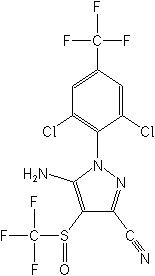
amino-1-[2,6-dichloro-4-(trifluromethyl)phenyl]-4-[(trifluromethyl)sulfinyl]-1H-
pyrazole). Fipronil (C12H4Cl2F6N4OS), a phenylpyrazole
insecticide, was discovered by Rhone-Poulenc Agro in
1987, introduced in 1993, and registered as a pesticide
in the U.S in 1996 ...
|
http://www.ncbi.nlm.nih.gov/entrez/query.fcgi?cmd=Retrieve&db=pubmed&dopt=Abstract&list_uids=16172884&query_hl=1
Invert Neurosci. 2005 Sep 20;:1-15
[Epub ahead of print]
Ion channels: molecular targets of neuroactive
insecticides.
Raymond-Delpech V, Matsuda K, Sattelle
BM, Rauh JJ, Sattelle DB.
MRC Functional Genetics Unit, Department of Human Anatomy and
Genetics, University of Oxford, South Parks Road, Oxford, OX1
3QX, UK, david.sattelle@anat.ox.ac.uk.
Many of the insecticides in current use act on molecular targets
in the insect nervous system. Recently, our understanding of
these targets has improved as a result of the complete sequencing
of an insect genome, i.e., Drosophila melanogaster. Here we
examine the recent work, drawing on genetics, genomics and physiology,
which has provided evidence that specific receptors and ion
channels are targeted by distinct chemical classes of insect
control agents. The examples discussed include, sodium channels
(pyrethroids, p,p'-dichlorodiphenyl-trichloroethane (DDT), dihydropyrazoles
and oxadiazines); nicotinic acetylcholine receptors (cartap,
spinosad, imidacloprid and related nitromethylenes/nitroguanidines);
gamma-aminobutyric acid (GABA) receptors (cyclodienes, gamma-BHC
and fipronil) and L: -glutamate
receptors (avermectins). Finally, we have examined the molecular
basis of resistance to these molecules, which in some cases
involves mutations in the molecular target, and we also consider
the future impact of molecular genetic technologies in our understanding
of the actions of neuroactive insecticides.
PMID: 16172884 [PubMed - as supplied by publisher]
Abstract
Cell Biol Toxicol. 2009 May 15.
Morphological alterations induced by boric acid and fipronil in the midgut of worker honeybee (Apis mellifera L.) larvae : Morphological alterations in the midgut of A. mellifera
da Silva Cruz A, da Silva-Zacarin EC, Bueno OC, Malaspina O.
Biology Department, CEIS-Social Insects Studies Center, UNESP, Av. 24-A, 1515, CEP: 13506-900, Rio Claro, SP, Brazil.
Morphological alterations, by means of histological and ultrastructural analysis, have been used to determine the effects of boric acid and fipronil on midgut tissues of honeybee worker, Apis mellifera L. larvae. In order to observe possible morphological alterations in the midgut, two groups of bioassays were performed. In the first one, the larvae were chronically treated with different concentrations of boric acid added to the food (1.0, 2.5 and 7.5 mg/g). In the second group, the larvae were fed with diets containing different concentrations of fipronil (0.1 and 1 mug/g) and compared with control groups without these chemical compounds. In the first bioassay, the larvae were collected on day 3 and in the second bioassay on day 4, when the mortality rate obtained in the toxicological bioassay was not very high. The larval midguts were removed and processed for morphological analyses using a light and transmission electron microscopy. We observed cytoplasmic vacuolizations, with the absence of autophagic vacuoles, and chromatinic compacting in most of the cells in the groups treated with pesticides. The morphological alterations were far greater in the larvae treated with boric acid than in the larvae treated with fipronil. Our data suggest that the midgut cell death observed was in response to boric acid and fipronil action. This study significantly improves the understanding of the toxicological effect of these insecticides from the ecotoxicological perspective.
Abstract
Environ Toxicol Chem. 2009 Apr 8:1.
Enantioselectivity in Fipronil Aquatic Toxicity and Degradation.
Nillos MG, Lin K, Gan J, Bondarenko S, Schlenk D.
Fipronil and its transformation products are being increasingly detected in aquatic ecosystems due to widespread use. Fipronil is a chiral compound and enantioselectivity may greatly impact its environmental fate and effects. In the present study, fipronil enantiomers were isolated and used to investigate the possibility of enantioselectivity in their acute toxicity to Japanese medaka (Oryzias latipes), and cytotoxicity to primary hepatocytes from rainbow trout (Oncorhynchus mykiss). Enantioselectivity was further evaluated in fipronil degradation in sediments under aerobic and anaerobic conditions, and in field-contaminated runoff water from urban watersheds. The 96-h median lethal concentration (LC50) to Japanese medaka were 94.2 (95% CI: 82.9-107.1), 98.3 (95% CI: 85.6-113.0) and 95.4 (95% CI: 74.7-121.9) mug/L, for the racemic, R-(-)- and S-(+)- fipronil, respectively, suggesting absence of enantioselectivity. The 24-h median effect concentration (EC50) of racemic fipronil to primary rainbow trout hepatocyte was 26.7 (95% CI: 25.6-27.9) mug/ml. In contrast, exposure of the cells to the S-(+)- and R-(-)- enantiomers resulted in respective 19.7 and 7.8% reductions in cell viability at the highest treatment concentrations (100 mug/ml), potentially indicating a greater than additive interaction between enantiomers. Under aerobic or slightly reduced conditions, biodegradation of fipronil in sediments was found to be essentially non-stereoselective with enantiomer fraction (EF) similar to racemic (EF = 0.5) after 168 days of incubation. However, EF decreased to as low as < 0.1 following short incubations under anaerobic conditions, suggesting preferential degradation of S-(+)-fipronil in strongly reduced sediments. A survey of urban runoff samples consistently showed near racemic EF, indicating fipronil degradation that was not enantioselective. Results suggest that site-specific characteristics are critical in accurately predicting fipronil fate and toxicity in the environment.
http://www.ncbi.nlm.nih.gov/entrez/query.fcgi?cmd=Retrieve&db=pubmed&dopt=Abstract&list_uids=15701711&query_hl=1
J Pharmacol Exp Ther. 2005 Jul;314(1):363-73.
Epub 2005 Feb 8.
Sulfone metabolite of fipronil blocks gamma-aminobutyric acid-
and glutamate-activated chloride channels in mammalian and insect
neurons.
Zhao X, Yeh JZ, Salgado VL, Narahashi
T.
Department of Molecular Pharmacology and Biological Chemistry,
Northwestern University Medical School, 303 East Chicago Avenue,
Chicago, IL 60611, USA.
Fipronil sulfone, a major metabolite
of fipronil in both insects and mammals, binds strongly to GABA
receptors and is thought to play a significant role in poisoning
by fipronil. To better understand the mechanism of selective
insecticidal action of fipronil, we examined the effects of
its sulfone metabolite on GABA- and glutamate-activated chloride
channels (GluCls) in cockroach thoracic ganglion neurons and
on GABA(A) receptors in rat dorsal root ganglion neurons using
the whole-cell patch-clamp technique. Fipronil sulfone blocked
both desensitizing and nondesensitizing GluCls in the cockroach.
Activation was required for block and unblock of desensitizing
GluCls. In contrast, activation was not prerequisite for block
and unblock of nondesensitizing channels. After repetitive activation
of the receptors, the IC50 of fipronil sulfone to block the
desensitizing GluCls was reduced from 350 to 25 nM and that
for blocking nondesensitizing GluCls was reduced from 31.2 to
8.8 nM. This use-dependent block may be explained by its slow
unbinding rate. In cockroach and rat neurons, fipronil sulfone
blocked GABA receptors in both activated and resting states,
with IC50 values ranging from 20 to 70 nM. In conclusion, although
fipronil sulfone is a potent inhibitor of cockroach GABA receptors,
desensitizing and nondesensitizing GluCls, and rat GABA(A) receptors,
its selective toxicity in insects over mammals appears to be
associated with its potent blocking action
on both desensitizing and nondesensitizing GluCls, which are
lacking in mammals.
PMID: 15701711 [PubMed - indexed for MEDLINE]
http://www.ncbi.nlm.nih.gov/entrez/query.fcgi?cmd=Retrieve&db=pubmed&dopt=Abstract&list_uids=16044331&query_hl=1
J Comp Physiol A Neuroethol Sens Neural Behav Physiol. 2005
Sep;191(9):823-36. Epub 2005 Sep 13.
Acetylcholine, GABA and glutamate induce
ionic currents in cultured antennal lobe neurons of the honeybee,
Apis mellifera.
Barbara GS, Zube C, Rybak J, Gauthier
M, Grunewald B.
Institut fur Biologie, AG Neurobiologie, Freie Universitat
Berlin, Konigin-Luise-Str. 28-30, 14195, Berlin, Germany, gruenewa@zedat.fu-berlin.de.
The honeybee, Apis mellifera, is a valuable model system for
the study of olfactory coding and its learning and memory capabilities.
In order to understand the synaptic organisation of olfactory
information processing, the transmitter receptors of the antennal
lobe need to be characterized. Using whole-cell patch-clamp
recordings, we analysed the ligand-gated ionic currents of antennal
lobe neurons in primary cell culture. Pressure applications
of acetylcholine (ACh), gamma-amino butyric acid (GABA) or glutamate
induced rapidly activating ionic currents. The ACh-induced current
flows through a cation-selective ionotropic receptor with a
nicotinic profile. The ACh-induced current is partially blocked
by alpha-bungarotoxin. Epibatidine and imidacloprid are partial
agonists. Our data indicate the existence of an ionotropic GABA
receptor which is permeable to chloride ions and sensitive to
picrotoxin (PTX) and the insecticide fipronil.
We also identified the existence of a chloride current activated
by pressure applications of glutamate. The glutamate-induced
current is sensitive to PTX. Thus, within the honeybee antennal
lobe, an excitatory cholinergic transmitter system and two inhibitory
networks that use GABA or glutamate as their neurotransmitter
were identified.
PMID: 16044331 [PubMed - in process]
http://www.ncbi.nlm.nih.gov/entrez/query.fcgi?cmd=Retrieve&db=pubmed&dopt=Abstract&list_uids=16102801&query_hl=1
Pharmacol Biochem Behav. 2005 Aug
12; [Epub ahead of print]
Effects of sublethal doses of fipronil
on the behavior of the honeybee
(Apis mellifera).
El Hassani AK, Dacher M, Gauthier M,
Armengaud C.
Centre de Recherches sur la Cognition Animale, Universite Paul
Sabatier Toulouse III-CNRS UMR 5169, 118 Route de Narbonne,
31062 Toulouse Cedex 04, France.
Fipronil is a phenylpyrazole insecticide introduced for pest
control, but it can also affect non-target insects such as honeybees.
In insects, fipronil is known to block GABA receptors and to
inhibit ionotropic glutamate-gated chloride channels, but the
behavioral effects of low doses are not yet fully understood.
We have studied the effect of sublethal doses of fipronil on
the behavior of the honeybee (Apis mellifera) under controlled
laboratory conditions. The drug was either administered orally
or applied topically on the thorax. A significant reduction
of sucrose sensitivity was observed for the dose of 1 ng/bee
1 h after a thoracic application. No significant effect on sucrose
sensitivity was obtained with acute oral treatment. A
lower dose of fipronil (0.5 ng/bee applied topically) impaired
the olfactory learning of the honeybees. By contrast,
locomotor activity was not affected. Our
results suggest a particular vulnerability of the olfactory
memory processes and sucrose perception to sublethal doses of
fipronil in the honeybee.
PMID: 16102801 [PubMed - as supplied by publisher]
http://www.ncbi.nlm.nih.gov/entrez/query.fcgi?cmd=Retrieve&db=pubmed&dopt=Abstract&list_uids=15750780&query_hl=1
Arch Environ Contam Toxicol. 2005
Feb;48(2):242-50. Epub 2005 Feb 15.
Comparative sublethal toxicity of nine
pesticides on olfactory learning performances of the honeybee
Apis mellifera.
Decourtye A, Devillers J, Genecque E,
Le Menach K, Budzinski H, Cluzeau S, Pham-Delegue MH.
Association de Coordination Technique Agricole, Maison des
Agriculteurs, La Tour de Salvagny, France. axel.decourtye@acta.asso.fr
Using a conditioned proboscis extension response (PER) assay,
honeybees (Apis mellifera L.) can be trained to associate an
odor stimulus with a sucrose reward. Previous studies have shown
that observations of conditioned PER were of interest for assessing
the behavioral effects of pesticides on the honeybee. In the
present study, the effects of sublethal concentrations of nine
pesticides on learning performances of worker bees subjected
to the PER assay were estimated and compared. Pesticides were
tested at three concentrations. The highest concentration of
each pesticide corresponded to the median lethal dose value
(48-h oral LD50), received per bee and per day, divided by 20.
Reduced learning performances were observed
for bees surviving treatment with fipronil, deltamethrin,
endosulfan, and prochloraz. A lack of behavioral effects after
treatment with lambda-cyalothrin, cypermethrin, tau-fluvalinate,
triazamate, and dimethoate was recorded. No-observed-effect
concentrations (NOECs) for the conditioned PER were derived
for the studied pesticides. Our study shows that the PER assay
can be used for estimating sublethal effects of pesticides on
bees. Furthermore, comparisons of sensitivity as well as the
estimation of NOECs, useful for regulatory purposes, are possible.
PMID: 15750780 [PubMed - indexed for MEDLINE]
http://www.ncbi.nlm.nih.gov/entrez/query.fcgi?cmd=Retrieve&db=pubmed&dopt=Abstract&list_uids=16097320&query_hl=1
Bull Environ Contam Toxicol. 2005
May;74(5):872-9.
Acute toxicity of imidacloprid and fipronil
to a nontarget aquatic insect, Simulium vittatum Zetterstedt
cytospecies IS-7.
Overmyer JP, Mason BN, Armbrust KL.
University of Georgia, Department of Entomology, 413 Biological
Sciences Building, Athens, GA 30602, USA.
No abstract available
PMID: 16097320 [PubMed - indexed for MEDLINE]
http://www.ncbi.nlm.nih.gov/entrez/query.fcgi?cmd=Retrieve&db=pubmed&dopt=Abstract&list_uids=16193765&query_hl=1
Environ Toxicol Chem. 2005 Sep;24(9):2350-5.
Acute enantioselective toxicity of fipronil
and its desulfinyl photoproduct to Ceriodaphnia dubia.
Konwick BJ, Fisk AT, Garrison AW, Avants
JK, Black MC.
Department of Environmental Health Science, University of Georgia,
Athens, Georgia 30602, USA.
Fipronil is a phenylpyrazole insecticide increasingly used
in applications such as rice culture, turf grass management,
and residential pest control, with a high probability to contaminate
aquatic environments. As a chiral pesticide, fipronil is released
to the environment as a racemic mixture (equal amounts of optical
isomers called enantiomers). Enantiomers can have different
toxicological and biological activity; however, information
on these differences, which is necessary for accurate risk assessment
of chiral pesticides, is limited. Here we examine the acute
toxicity of fipronil enantiomers, the racemate, and its photoproduct
(desulfinyl fipronil) to Ceriodaphnia dubia. The 48-h median
lethal concentration (LC50) values based on measured concentrations
of each compound indicate the (+) enantiomer (LC50 = 10.3 +/-
1.1 microg/L, mean +/- standard error [SE]) was significantly
more toxic to C. dubia than either the (-) enantiomer (LC50
= 31.9 +/- 2.2 microg/L) or racemate (LC50 = 17.7 +/- 1.3 microg/L).
To account for any potential loss of fipronil through photolysis,
tests were performed under light (fluorescent) and dark exposure
conditions, and no significant differences in toxicity were
observed. Desulfinyl fipronil, the major photodegradation product,
which is not chiral, was detected at < 1% of each parent
compound in test solutions after 48 h. Separate toxicity tests
with desulfinyl fipronil found a > 20-fold higher LC50 (355
+/- 9.3 microg/L) compared to the fipronil racemate, suggesting
lower adverse effects to C. dubia as a result of fipronil photolysis.
The present results suggest selection of the (-) enantiomer
in fipronil production for lower impacts to C. dubia; however,
the consistency and relevancy of fipronil's
enantiomer-specific activity at both acute and chronic levels
of concern to additional target and nontarget species needs
further consideration.
PMID: 16193765 [PubMed - in process]
Toxicology - Article in Press, Corrected
Proof
Received 7 April 2005; revised 27 May 2005; accepted
31 May 2005. Available online 11 July 2005.
Transient alterations in neuronal and behavioral
activity following bensultap and fipronil treatment in rats
Viktor Szegedi, György Bárdos,
László Détári, Attila Tóth,
Ilona Banczerowski-Pelyhe and Ildikó Világi,
Eötvös Loránd University, Department of Physiology
and Neurobiology, 1117 Budapest, Hungary
In the present multilevel study, neuromodulatory effect of
two insecticides, bensultap and fipronil were investigated in
rats. Although the new generation of insecticides shows greater
affinity to invertebrate as compared to mammalian receptors,
toxic effect of these compounds in vertebrates cannot be excluded.
The aim of the study was to follow the course of neuronal changes
in rats for 1 week after a high-dose insecticide exposure. Alterations
in synaptic excitability, in sleep–wake pattern and in
behavior were analyzed using conventional in vitro brain slice
method, long-lasting EEG recordings, and open-field tests. The
two chemicals examined in this study induced only weak and transient
effects. Bensultap, acting on nicotinic acetylcholine receptors,
caused a transient decrease in neuronal excitability. Sleep
and behavioral changes demonstrated a similar time course. Fipronil,
on the other hand, increased excitability and its effect lasted
slightly longer. All effects were greatest on the first
day following ‘poisoning’, and measured variables
usually returned to normal within a week. These results suggest
that the studied compounds do have some
effects on the mammalian nervous system, but this effect
is usually mild and temporary.
Ecotoxicology and Environmental Safety ; Volume 62, Issue 1 ,
September 2005, Pages 11-16
Toxicity and hazard assessment of fipronil to Daphnia pulex
John D. Stark (a) , and Roger I. Vargas
(b)
(a) Department of Entomology, Washington State University,
Puyallup Research and Extension Center, Pioneer Way East 7612,
Puyallup, WA 98371, USA
(b) USDA-ARS, P.O. Box 4459, Hilo, HI 96720, USA
Received 20 September 2004; revised 24 February 2005;
accepted 25 February 2005. Available online 11 April 2005.
Hazard assessments based on two measures of toxicity were
conducted for the water flea, Daphnia pulex (Leydig) exposed
to the insecticide, fipronil. The measures of toxicity obtained
were 48 h acute lethal concentration estimates, and a direct
measure of population growth rate, the 10-day instantaneous
rate of increase (ri). Additionally, life tables were developed
after exposure to several concentrations to tease out the apparent
sublethal effects of this insecticide to D. pulex. The
acute LC50 was estimated to be 0.0156 (0.0088–0.083) mg/L.
In the 10-day population growth rate study, extinction of D.
pulex populations occurred after exposure to 0.08 mg/L
of fipronil, which was equivalent to the 48 h acute LC75.
The NOEC and LOEC for population size after a 10-day exposure
to fipronil were 0.03 and 0.05 mg/L, respectively. An expected
environmental concentration (EEC) in freshwater lakes/ponds
based on an application rate of 250 mg ai/ha (recommended
rate for use in Tephritid fruit fly control programs) was estimated
to be 0.00017 mg/L. Hazard assessments were developed by
dividing the EEC by the LC50 and NOEC for population size. The
assessments based on the LC50 and NOEC for population size were
0.011 and 0.0057, respectively, indicating that fipronil does
not pose a hazard to D. pulex when applied at the rates recommended
for control of Tephritid fruit flies. Life tables were developed
after exposure to two insecticide concentrations and a control.
Exposure to 0.015 mg/L, the approximate 48 h acute
LC50, resulted in only a slight decrease in the net reproductive
rate (Ro), birth rate (b), and intrinsic rate of increase (rm)
and an increase in generation time (T), death rate (d), and
doubling time (DT) compared to the control. Exposure to 0.03 mg/L,
the approximate 48 h acute LC60, and NOEC in the 10-day
study, resulted in a 57% decline in the net reproductive rate,
a 1.45-fold decrease in birth rate, a 1.5-fold decrease in the
intrinsic rate of increase, a 6-day increase in generation time,
a 4-fold increase in death rate, and a 1.5-fold increase in
doubling time. The stable age distribution (after 60 days) of
D. pulex changed after exposure to fipronil. Increasing concentrations
of fipronil resulted in a decrease in the percentage of individuals
in the first, second, third, and fourth juvenile stages, an
increase in the adult stage, and no change in the adolescent
stage. These results indicate that certain
concentrations of fipronil approaching the LC50 can negatively
affect population parameters of D. pulex, but that EECs, at
least for fruit fly control, should be lower than the concentration
necessary to cause damage.
4. Discussion
Results of our study indicate that formulated fipronil is
toxic to D. pulex causing both lethal and sublethal effects.
Chaton et al. (2002) found that
D. pulex was insensitive to fipronil and was not affected
even at concentrations close to the water solubility of fipronil.
However, Chaton et al. (2002)
evaluated unformulated technical grade fipronil, while in
our study, we evaluated formulated fipronil (Regent 4SC).
The water solubility of fipronil is approximately 2.4 mg/L
and according to Aventis, the formulation will not increase
the solubility of the active ingredient. The 4SC formulation
is a suspension concentrate; particles of fipronil are finely
ground and suspended in water using a proprietary system of
suspension agents. The formulation, therefore, has no effect
on the water solubility of the active ingredient. However,
smaller particle sizes in the formulated product may result
in more active ingredients being ingested by Daphnia compared
to the unformulated product. Furthermore, the formulation
itself might be toxic. Because the formulated product is used
for pest control, it has the potential to enter aquatic ecosystems
and as such should be evaluated for toxicity to aquatic organisms.
Fipronil (Icon 6.2 FSTM) is also used as a seed treatment
for rice to control rice water weevil. Schlenk
et al. (2001) found that fipronil
was very toxic to two crayfish species (Procambarus clarkii
and P. zonangulus) with LC50 estimates of 14 and 19 µg/L,
respectively. Their LC50 estimates are similar to the estimate
developed for D. pulex (16 µg/L) in our study.
Furthermore, Schlenk et al. (2001) conducted an in situ study
in culturing ponds and found high levels of mortality in crayfish.
A hazard quotient revealed that fipronil in water from Icon-treated
rice seed plantings poses a significant risk to crayfish survival.
In contrast to the study by Schlenk
et al. (2001), the study by Lahr
(1998) indicated that fipronil was one of the least
ecologically damaging insecticides to aquatic ecosystems in
the Sahel.
Chandler et al. (2004) studied
the effects of fipronil on the estuarine copepod, Amphiascus
tenuiremis. Fipronil was highly toxic to A. tenuiremis with
a 96-h acute LC50 of 6.8 µg/L. Additionally,
exposure to fipronil delayed female and male development and
nearly eliminated reproduction after exposure to 0.42µg/L.
Furthermore, our comparison of the EEC for rates of fipronil
labeled for fruit fly control to toxicity endpoints indicated
that fipronil should not pose a hazard to wild D. pulex populations.
An interesting result in our study is that the NOEC in the
10-day population growth study was estimated to be 0.03 mg/L.
However, exposure to this same concentration in the life table
study resulted in a 1.5 decline in the intrinsic rate of increase.
This can be explained by the fact that in the 10-day population
study, D. pulex was only exposed for 10 days while in the
life table study D. pulex was exposed over a lifetime. Walthall
and Stark (1997) indicated that 10-day studies for
aphids yielded population growth rates that were similar to
those produced by life tables. However, in their study, exposures
in both the 10-day and the life table experiments were similar
in that aphids were exposed to plants that were sprayed once
at the onset of the study. Demography and other population
growth rate measures of toxicity are being used more frequently
to evaluate toxicity (Stark and Wennergren,
1995; van Straalen and Kammenga, 1998; Forbes and Calow, 1999;
Kammenga and Laskowski, 2000; Stark and Vargas, 2003; Herbert
et al., 2004). Because demography takes into account
all effects (lethal and sublethal) that a toxicant might have
on a population and these studies are usually conducted throughout
the life span of an organism, a complete measure of effect
can be obtained (Stark and Banks, 2000
and Stark and Banks, 2003). A
comparison of demographic and other endpoints of toxic effect
has indicated that demographic toxicological endpoints and
other measures of population effect such as the instantaneous
rate of increase are superior to other endpoints of effect
(Forbes and Calow, 1999; Herbert et
al., 2004). Therefore, demographic and other population
approaches for the evaluation of toxic effects should be more
widely adopted.
Chandler, 2004 G.T. Chandler, T.L.
Cary, D.C. Volz, S.S. Walse, J.L. Ferry and S.L. Klosterhaus,
Fipronil effects on estuarine copepod (Amphiascus tenuiremis)
development, fertility, and reproduction: a rapid life-cycle
assay in 96-well microplate format, Environ. Toxicol. Chem.
23 (2004), pp. 117–124.
Chaton et al., 2002 P.F. Chaton,
P. Ravanel, M. Tissut and J.C. Meyran, Toxicity and bioaccumulation
of fipronil in the nontarget arthropodan fauna associated
with subalpine mosquito breeding sites, Ecotoxicol. Environ.
Saf. 52 (2002), pp. 8–12.
Forbes and Calow, 1999 V.E.
Forbes and P. Calow, Is the per capita rate of increase a
good measure of population-level effects in ecotoxicology?,
Environ. Toxicol. Chem. 18 (1999), pp. 1544–1556.
Herbert et al., 2004 I.N. Herbert,
C. Svendsen, P.K. Hankard and D.J. Spurgeon, Comparison of
instantaneous rate of population increase and critical-effect
estimates in Folsomia candida exposed to four toxicants, Ecotoxicol.
Environ. Saf. 57 (2004), pp. 175–183.
Kammenga and Laskowski, 2000
J. Kammenga and R. Laskowski, Demography in Ecotoxicology,
Wiley, West Sussex, England (2000).
Lahr, 1998 J. Lahr, An ecological
assessment of the hazard of eight insecticides used in desert
locust control, to invertebrates in temporary ponds in the
Sahel, Aquat. Ecol. 32 (1998), pp. 153–162.
Schlenk et al., 2001 D. Schlenk,
D.B. Huggett, J. Allgood, E. Bennett, J. Rimoldi, A.B. Beeler,
D. Block, A.W. Holder, R. Hovinga and P. Bedient, Toxicity
of fipronil and its degradation products to Procambarus sp.:
field and laboratory studies., Arch. Environ. Contam. Toxicol.
41 (2001), pp. 325–332.
Stark and Banks, 2000 J.D.
Stark and J.E. Banks, The toxicologists and ecologists point
of view—unification through a demographic approach.
In: J. Kammenga and R. Laskowski, Editors, Demography in Ecotoxicology,
Wiley, West Sussex, England (2000), pp. 9–20.
Stark and Banks, 2001 J.D. Stark
and J.E. Banks, Selective pesticides: are they less hazardous
to the environment?, BioScience 51 (2001), pp. 980–982.
Stark and Vargas, 2003 J.D.
Stark and R.I. Vargas, Demographic changes in Daphnia pulex
(Leydig) after exposure to the insecticides, spinosad and
diazinon, Ecotoxicol. Environ. Saf. 56 (2003), pp. 334–338.
Stark and Wennergren, 1995 J.D.
Stark and U. Wennergren, Can population effects of pesticides
be predicted from demographic toxicological studies?, J. Econ.
Entomol. 88 (1995), pp. 1089–1096.
Van Straalen and Kammenga, 1998 N.M.
Van Straalen and J.E. Kammenga, Assessment of ecotoxicity
at the population level using demographic parameters. In:
G. Shüürmann and B. Markert, Editors, Ecotoxicology,
Ecological Fundamentals, Chemical Exposure, and Biological
Effects, Wiley, New York (1998), pp. 622–644.
Walthall and Stark, 1997 W.K.
Walthall and J.D. Stark, Comparison of two population-level
ecotoxicological endpoints: the intrinsic (rm) and instantaneous
(ri) rates of increase, Environ. Toxicol. Chem. 16 (1997),
pp. 1068–1073.
http://www.ncbi.nlm.nih.gov/entrez/query.fcgi?cmd=Retrieve&db=pubmed&dopt=Abstract&list_uids=15750780&query_hl=1
Arch Environ Contam Toxicol. 2005
Feb;48(2):242-50. Epub 2005 Feb 15.
Comparative sublethal toxicity of nine
pesticides on olfactory learning performances of the honeybee
Apis mellifera.
Decourtye A, Devillers J, Genecque E,
Le Menach K, Budzinski H, Cluzeau S, Pham-Delegue MH.
Association de Coordination Technique Agricole, Maison des
Agriculteurs, La Tour de Salvagny, France. axel.decourtye@acta.asso.fr
Using a conditioned proboscis extension response (PER) assay,
honeybees (Apis mellifera L.) can be trained to associate an
odor stimulus with a sucrose reward. Previous studies have shown
that observations of conditioned PER were of interest for assessing
the behavioral effects of pesticides on the honeybee. In the
present study, the effects of sublethal concentrations of nine
pesticides on learning performances of worker bees subjected
to the PER assay were estimated and compared. Pesticides were
tested at three concentrations. The highest concentration of
each pesticide corresponded to the median lethal dose value
(48-h oral LD50), received per bee and per day, divided by 20.
Reduced learning performances were observed
for bees surviving treatment with fipronil, deltamethrin,
endosulfan, and prochloraz. A lack of behavioral effects after
treatment with lambda-cyalothrin, cypermethrin, tau-fluvalinate,
triazamate, and dimethoate was recorded. No-observed-effect
concentrations (NOECs) for the conditioned PER were derived
for the studied pesticides. Our study shows that the PER assay
can be used for estimating sublethal effects of pesticides on
bees. Furthermore, comparisons of sensitivity as well as the
estimation of NOECs, useful for regulatory purposes, are possible.
PMID: 15750780 [PubMed - indexed for MEDLINE]
http://www.ncbi.nlm.nih.gov/entrez/query.fcgi?cmd=Retrieve&db=pubmed&dopt=Abstract&list_uids=15859435&query_hl=1
Huan Jing Ke Xue. 2005 Jan;26(1):185-9.
[Joint acute toxicity of fipronil and
bata-cypermethrin to protozoa community]
[Article in Chinese]
Liu GG, Xu HJ, Wang LX, Zheng LQ.
Henan Key Laboratory for Environmental Pollution control, College
of Chemistry and Environmental Science, Henan Normal University,
Xinxiang 453002, China. guoguangliu@263.net
Compared with the toxicity test on single organism, the effects
of toxic pollutants on organisms at community level are more
reliable. The acute single and joint toxic effects of Fipronil
and Bata-cypermethrin on freshwater protozoa community are studied
in this paper. The results show that the 48h-LC50 of Fipronil
and Bata-cypermethrin to the microbial community was 35.83mg
x L(- 1), 1.92mg x L(-1), the joint toxicity of Bata-cypermethrin
and Fipronil was antagonism in 48h with toxicity 1: 1 to freshwater
protozoa community, and Additive Index was -0.08. The structure
of protozoa community would change in a low concentration of
Bata-cypermethrin and Fipronil mixture; the species and population
of Algivores(A) and Predators Raptors (P) would reduce but Bactivoresdetrivores(B)
would become predominant relatively.
PMID: 15859435 [PubMed - in process]
http://www.ncbi.nlm.nih.gov/entrez/query.fcgi?cmd=Retrieve&db=pubmed&dopt=Abstract&list_uids=15641641&query_hl=1
J Toxicol Clin Toxicol. 2004;42(7):955-63.
Acute human self-poisoning with the
N-phenylpyrazole insecticide fipronil--a GABAA-gated chloride
channel blocker.
Mohamed F, Senarathna L, Percy A, Abeyewardene
M, Eaglesham G, Cheng R, Azher S, Hittarage A, Dissanayake W,
Sheriff MH, Davies W, Buckley NA, Eddleston M.
South Asian Clinical Toxicology Research Collaboration, Department
of Clinical Medicine, University of Colombo, Colombo, Sri Lanka.
OBJECTIVE: Fipronil, a broad spectrum N-phenylpyrazole insecticide
that inhibits GABAA-gated chloride channels, has been in use
since the mid-1990s. A high affinity for insect compared to
mammalian GABA receptors results in lower animal toxicity than
other insecticides blocking this channel. To date, only two
accidental cases of fipronil poisoning in humans have been published.
CASE SERIES: We report seven patients
with fipronil self-poisoning seen prospectively in Sri Lanka
together with pharmacokinetics for four patients. Non-sustained
generalized tonic-clonic seizures were seen in two patients
(peak measured plasma fipronil concentrations 1600 and 3744
microg/L); both were managed with diazepam without complications.
A patient with a peak measured plasma concentration of 1040
microg/L was asymptomatic throughout his stay. Plasma concentration
was still high at discharge 3-4 days post-ingestion when the
patients were well. Retrospective review
of >1000 pesticide poisoning deaths since 1995 found only
one death from fipronil-based products. In contrast to
the good outcome of the above cases, this patient required intubation
and ventilation and had continuous fits despite therapy with
barbiturates and benzodiazepines.
CONCLUSIONS: Our experience with prospectively observed patients
suggests that fipronil poisoning is characterized by vomiting,
agitation, and seizures, and normally has a favorable outcome.
Management should concentrate on supportive care and early treatment
of seizures. However, further experience
is needed to determine whether increased susceptibility to fipronil
or larger doses can produce status epilepticus.
Publication Types:
• Case Reports
PMID: 15641641 [PubMed - indexed for MEDLINE]
http://www.ncbi.nlm.nih.gov/entrez/query.fcgi?cmd=Retrieve&db=pubmed&dopt=Abstract&list_uids=15474615
Neurotoxicology.
2004 Dec;25(6):967-80.
Kinetic and pharmacological characterization of desensitizing
and non-desensitizing glutamate-gated chloride channels in cockroach
neurons.
Zhao
X, Salgado VL, Yeh JZ, Narahashi T.
Department
of Molecular Pharmacology and Biological Chemistry, Northwestern
University Medical School, 303 East Chicago Avenue, Chicago,
IL 60611, USA.
Glutamate-gated
chloride channels (GluCls) are found only in invertebrate nerve
and muscle, where they mediate inhibitory synaptic transmission,
and are important target sites of insecticides. Two GluCl subtypes
have previously been distinguished in isolated cockroach CNS
neurons based on differential pharmacology. The present study
characterizes the kinetics and pharmacological properties of
desensitizing and non-desensitizing GluCls. Both types of GluCls
were sensitive to glutamate and ibotenic acid. The non-desensitizing
GluCl subtype was elicited by glutamate with an EC(50) of 115.8
microM and a Hill coefficient of 2.6 and was also sensitive
to the agonist ibotenic acid with an EC(50) of 42 microM and
a Hill coefficient of 1.7. The desensitizing and non-desensitizing
currents were carried by chloride ions, and occurred either
separately or in combination in individual neurons. The GluCls
were also found to coexist with and function independently of
the GABA-activated chloride channels. The desensitizing and
non-desensitizing GluCls exhibited different sensitivities to
the ligand-gated channel blocker picrotoxinin. The desensitizing
GluCls were blocked only 8% by 30 microM picrotoxinin, whereas
the non-desensitizing GluCls were potently blocked by picrotoxinin
with an IC(50) of 4.1 microM. The insecticides
fipronil and dieldrin at 1 microM inhibited the desensitizing
currents by 56 and 13%, respectively, and the non-desensitizing
currents by 98 and 43%, respectively. It is concluded
that the two types of GluCls found in cockroach neurons exhibit
significantly different electrophysiological and pharmacological
characteristics.
PMID: 15474615
[PubMed - in process]
http://www.ncbi.nlm.nih.gov/entrez/query.fcgi?cmd=Retrieve&db=pubmed&dopt=Abstract&list_uids=15386133
Arch Environ
Contam Toxicol. 2004 Oct;47(3):387-95.
A method to quantify and analyze the foraging activity
of honey bees: relevance to the
sublethal effects induced by systemic insecticides.
Colin
ME, Bonmatin JM, Moineau I, Gaimon C, Brun S, Vermandere JP.
Universite
de Montpellier II, Laboratoire de Pathologie Comparee des Invertebres,
CC 101, Batiment 24, Place Eugene Bataillon, 34095 Montpellier
Cedex 5, France. colinme@ensam.inra.fr
The assessment
of agropharmaceuticals' side effects requires more realistic
simulations of field conditions than those deduced from the
dose-lethality relation obtained under laboratory conditions.
Because the presence of sublethal doses or concentrations may
also alter the behavior of foraging insects, we attempted to
devise a quantifiable and accurate protocol for evidencing various
alterations in free-flying bees. Such a protocol was illustrated
by testing new classes of systemic insecticides. The protocol
focused on video recording to quantify the foraging activity
of small colonies of honey bees confined in insect-proof tunnels.
The basis of the protocol was not the colony itself but the
change in each colony on a specific day and between days. First,
the paradigms of attendance at a safe feeding source were established
by observing 8 control colonies at different times of the season
during 5 days after the necessary forager training was accomplished.
Second, on three different colonies we considered the paradigms
on the control day before contamination and during 4 days after
the feeding source was contaminated. During the same period,
one more colony was exclusively fed with safe food to serve
as control. Two plant-systemic insecticides
were tested at contamination levels 70 times lower than the
50% of the lethal concentration. Imidacloprid, at 6 microg/kg,
clearly induced a decrease in the proportion of active bees.
Fipronil, at 2 microg/kg, induced an additional decrease in
attendance at the feeder. Such levels are still higher than
the corresponding lowest observable effect concentration (LOEC).
Our protocol, which provided intermediate conditions
between field and laboratory conditions, allowed the quantification,
with an enhanced level of sensitivity, of sublethal effects
on foraging bees. Copyright 2004 Springer Science + Business
Media, Inc.
PMID: 15386133
[PubMed - indexed for MEDLINE]
Environmental
Pollution Volume 131, Issue 3 , October 2004,
Pages 365-371
The
effects of the contemporary-use insecticide (fipronil) in an
estuarine mesocosm
E. F. Wirth
(a), P. L. Pennington (b), J. C. Lawton (c), M. E. DeLorenzo
(b), D. Bearden (a), B. Shaddrix (a), S. Sivertsen (a) and M.
H. Fulton (a)
(a) Center
for Coastal Environmental Health and Biomolecular Research,
NOAA, 219 Fort Johnson Road, Charleston, SC 29412, USA
(b) Arnold School of Public Health, University of South Carolina,
Columbia, SC 29208, USA
(c) Office of Response and Restoration, National Oceanic and
Atmospheric Administration, 77 West Jackson SR_6J, Chicago,
IL 60604, USA
"Capsule":
Fipronil exposure at environmentally relevant concentrations
had a significant toxic effect on grass shrimp in mesocosms.
Available online 4 June 2004.
Abstract:
To examine the effects of environmentally realistic fipronil
concentrations on estuarine ecosystems, replicated mesocosms
containing intact marsh plots and seawater were exposed to three
treatments of fipronil (150, 355, and 5000 ng/L) and a
Control. Juvenile fish (Cyprinidon variegatus), juvenile clams
(Mercenaria mercenaria), oysters (Crassostrea virginica), and
grass shrimp (Palaemonetes pugio) were added prior to fipronil
in an effort to quantify survival, growth, and the persistence
of toxicity during the planned 28-day exposure. Results indicated
that there were no fipronil-associated effects on the clams,
oysters, or fish. Shrimp were sensitive to the highest two concentrations
(40% survival at 355 ng/L and 0% survival at 5000 ng/L).
Additionally, the highest fipronil treatment (5000 ng/L)
was toxic to shrimp for 6 weeks post dose. These results suggest
that fipronil may impact shrimp populations at low concentrations
and further use in coastal areas should be carefully assessed.
http://www.ncbi.nlm.nih.gov/entrez/query.fcgi?cmd=Retrieve&db=pubmed&dopt=Abstract&list_uids=15214624
J Toxicol
Clin Toxicol. 2004;42(2):189-90.
Accidental
dermal and inhalation exposure with fipronil--a case report.
Chodorowski
Z, Anand JS.
Department
of Internal Medicine and Toxicology, Medical University of Gdansk,
Gdansk ul., Lanowa, Poland.
BACKGROUND:
Fipronil which has initiated the new generation of insecticides
and possesses greater affinity at GABA receptors in insects
than humans is supposed to be safer than the old generation
of insecticides. Dermal and inhalation exposure to fipronil
has not been reported in the literature.
CASE REPORT: A 50-year-old male was admitted to the Clinic after
5h of spraying his field with the solution of fipronil. The
patient was fully conscious with the BP and HR within normal
range. There were no seizures, other neurological deficits,
signs of conjunctivitis or skin irritation. Physical examinations
and biochemical results were normal. The
patient complained of a headache, nausea, vertigo and weakness.
All symptoms resolved spontaneously after about 5h. During hospitalization
and the follow up after three weeks he was asymptomatic.
CONCLUSIONS: Further investigations should be carried on to
evaluate the risk of fipronil in humans. The benzodiazepines
are drugs of choice during seizures, B1 agonists and steroids
may be useful during severe inhalation exposure.
Publication
Types:
* Case Reports
PMID: 15214624
[PubMed - indexed for MEDLINE]
http://www.ncbi.nlm.nih.gov/entrez/query.fcgi?cmd=Retrieve&db=pubmed&dopt=Abstract&list_uids=15261399
Environ
Pollut. 2004 Oct;131(3):365-71.
The effects of the contemporary-use insecticide (fipronil)
in an estuarine mesocosm.
Wirth
EF, Pennington PL, Lawton JC, DeLorenzo ME, Bearden D, Shaddrix
B, Sivertsen S, Fulton MH.
Center for
Coastal Environmental Health and Biomolecular Research, NOAA,
219 Fort Johnson Road, Charleston, SC 29412, USA.
To examine
the effects of environmentally realistic fipronil concentrations
on estuarine ecosystems, replicated mesocosms containing intact
marsh plots and seawater were exposed to three treatments of
fipronil (150, 355, and 5000ng/L) and a Control. Juvenile fish
(Cyprinidon variegatus), juvenile clams (Mercenaria mercenaria),
oysters (Crassostrea virginica), and grass shrimp (Palaemonetes
pugio) were added prior to fipronil in an effort to quantify
survival, growth, and the persistence of toxicity during the
planned 28-day exposure. Results indicated that there were no
fipronil-associated effects on the clams, oysters, or fish.
Shrimp were sensitive to the highest two concentrations (40%
survival at 355ng/L and 0% survival at 5000ng/L). Additionally,
the highest fipronil treatment (5000ng/L) was toxic to shrimp
for 6 weeks post dose. These results suggest
that fipronil may impact shrimp populations at low concentrations
and further use in coastal areas should be carefully assessed.
PMID: 15261399
[PubMed - in process]
http://www.ncbi.nlm.nih.gov/entrez/query.fcgi?cmd=Retrieve&db=pubmed&dopt=Abstract&list_uids=15298200
Environ
Sci Technol. 2004 Jul 15;38(14):3908-15.
Role
of dissolved organic matter, nitrate, and bicarbonate in the
photolysis of aqueous fipronil.
Walse
SS, Morgan SL, Kong L, Ferry JL.
Department
of Chemistry and Biochemistry, University of South Carolina,
Columbia, South Carolina 29208, USA.
A multivariate
kinetic model of aqueous fipronil photodegradation was developed
as a function of dissolved organic matter (DOM), bicarbonate,
and nitrate at concentrations that bracketthose commonly observed
in natural waters (ca. 0-10 mg/L). Several pathways were available
for fipronil photodegradation in this system, including direct
photolysis and indirect photooxidation by species produced during
the illumination of natural waters (e.g., 3NOM*, 1O2*, *OH,
*CO3(1-), *OOR, *OOH, e(aq)-, O2(*-)). Product
studies indicated that fipronil was quantitatively converted
to fipronil desulfinyl, a product that is associated with direct
photolysis alone. DOM was the only variable that affected fipronil
degradation; it decreased the rate of fipronil photodegradation
primarily through competitive light absorption (i.e., attenuation)
and the quenching of fipronil*. The addition of sodium chloride
(30 percent per thousand) resulted in a more rapid rate (approximately
20%) of fipronil loss in comparison to equivalent experiments
performed without sodium chloride, implying
that fipronil may be more photolabile in marine environments.
PMID: 15298200
[PubMed - in process]
http://www.ncbi.nlm.nih.gov/entrez/query.fcgi?cmd=Retrieve&db=pubmed&dopt=Abstract&list_uids=15154517
Pest Manag
Sci. 2004 May;60(5):487-92.
Fipronil
modulation of GABAA receptor single-channel currents.
Ikeda T, Nagata K, Kono Y, Yeh JZ, Narahashi
T.
Institute of Agriculture and Forestry, University of Tsukuba,
Tsukuba 305-8572, Japan.
Fipronil is the first phenylpyrazole insecticide
introduced for pest control. Although
fipronil is known to inhibit GABA receptors, the detailed mechanism
of action remains to be seen. In order to elucidate the
mechanism of fipronil interaction with the mammalian GABAA system,
single-channel patch clamp experiments were performed using
rat dorsal root ganglion neurons. The amplitude of main conductance
state (27pS) current was not significantly altered by co-application
of 10 microM fipronil and 10 microM GABA. The histograms of
open time distribution were fitted to a sum of three exponential
functions. After application of 10 microM fipronil, the proportion
of the fastest component increased slightly and that of the
slowest component decreased slightly. Thus, the mean open time
was decreased from 11.4 ms to 7.8 ms by fipronil. The histograms
of closed time distribution were fitted to a sum of four exponential
functions. Fipronil 10 microM prolonged the slowest time constant
resulting in a prolongation of the mean closed time from 29.7
ms to 52.8 ms. Thus, the frequency of
channel openings was reduced. Thus, the fipronil suppression
of GABA-induced whole-cell currents is caused in part by decreases
in the channel open time and the frequency of channel openings.
PMID: 15154517
[PubMed - in process]
http://www.ncbi.nlm.nih.gov/entrez/query.fcgi?cmd=Retrieve&db=pubmed&dopt=Abstract&list_uids=15135087
Chem Biol
Interact. 2004 Apr 15;147(3):319-29.
In vitro metabolism of fipronil by human and rat cytochrome
P450 and its interactions with testosterone and diazepam.
Tang
J, Amin Usmani K, Hodgson E, Rose RL.
Department
of Environmental and Molecular Toxicology, North Carolina State
University, Raleigh, NC 27695, USA.
Fipronil
(5-amino-1-[2,6-dichloro-4-(trifluoromethyl)phenyl]-4-[(trifluoromethyl)sulfinyl]-1H-pyrazole-3-carbonitrile)
is a highly active, broad spectrum insecticide from the phenyl
pyrazole family, which targets the gamma-amino butyric acid
(GABA) receptor. Although fipronil is presently widely used
as an insecticide and acaricide, little
information is available with respect to its metabolic fate
and disposition in mammals. This study was designed to
investigate the in vitro human metabolism of fipronil and to
examine possible metabolic interactions that fipronil may have
with other substrates. Fipronil was incubated with human liver
microsomes (HLM) and several recombinant cytochrome P450 (CYP)
isoforms obtained from BD Biosciences. HPLC was used for metabolite
identification and quantification. Fipronil sulfone was the
predominant metabolite via CYP oxidation. The K(m) and V(max)
values for human liver microsomes are 27.2 microM and 0.11 nmol/mg
proteinmin, respectively; for rat liver microsomes (RLM) the
K(m) and V(max) are 19.9 microM and 0.39 nmol/mg proteinmin,
respectively. CYP3A4 is the major isoform responsible for fipronil
oxidation in humans while CYP2C19 is considerably less active.
Other human CYP isoforms have minimal or no activity toward
fipronil. Co-expression of cytochrome b(5) (b(5)) is essential
for CYP3A4 to manifest high activity toward fipronil. Ketoconazole,
a specific inhibitor of CYP3A4, inhibits 78% of the HLM activity
toward fipronil at a concentration of 2 microM. Oxidative activity
toward fipronil in 19 single-donor HLMs correlated well with
their ability to oxidize testosterone. The interactions of fipronil
and other CYP3A4 substrates, such as testosterone and diazepam,
were also investigated. Fipronil metabolism was activated by
testosterone in HLM but not in CYP3A4 Supersomes. Testosterone
6beta-hydroxylation in HLM was inhibited by fipronil. Fipronil
inhibited diazepam demethylation but had little effect on diazepam
hydroxylation. The results suggest that fipronil has the potential
to interact with a wide range of xenobiotics or endogenous chemicals
that are CYP3A4 substrates and that fipronil may be a useful
substrate for the characterization of CYP3A4 in HLM.
PMID: 15135087
[PubMed - indexed for MEDLINE
http://www.ncbi.nlm.nih.gov/entrez/query.fcgi?cmd=Retrieve&db=pubmed&dopt=Abstract&list_uids=14982375
Environ
Toxicol Chem. 2004 Feb;23(2):298-305.
An
enzyme-linked immunosorbent assay for lipovitellin quantification
in copepods: a screening tool for endocrine toxicity.
Volz
DC, Chandler GT.
Department
of Environmental Health Sciences, Arnold School of Public Health,
University of South Carolina, Columbia, South Carolina 29208,
USA.
Vitellogenin
(VTG) has been widely used as a biomarker of estrogenic exposure
in fish, leading to the development of standardized assays for
VTG quantification. However, standardized quantitative assays
for invertebrate, particularly crustacean, lipovitellin (also
known as vitellin [VTN]) are lacking. In this study, a fluorescence-based
VTN enzyme-linked immunosorbent assay (ELISA) was developed
to quantify microquantities of VTN in the estuarine, sediment-dwelling
copepod Amphiascus tenuiremis. This ELISA utilizes a VTN-specific
polyclonal antibody developed against amphipod (Leptocheirus
plumulosus) embryo VTN and exhibits specificity toward female
copepod proteins. In routine assays, the working range of the
ELISA was 31.25 to 1,000 ng/ml (75-25% specific binding/maximum
antibody binding [B/B0]) with a 50% B/B0 intra- and interassay
variation of 3.9% (n = 9) and 12.5% (n = 26), respectively.
This ELISA is capable of detecting VTN as low as 2 ng/ml, and
can accurately detect VTN in as few as four copepods. The ELISA
significantly discriminated positive (gravid female) and negative
(male) samples, and was suitable for screening endocrine toxicity
in copepods. Stage-I juvenile copepods
were individually reared to adults in aqueous microvolumes of
the phenylpyrazole insecticide, fipronil, and whole-body
homogenate extracts were assayed for VTN levels. Fipronil-exposed
virgin adult females, but not males, exhibited significantly
higher levels of VTN relative to control males and females.
This crustacean VTN ELISA is likely useful for evaluating
endocrine activity of environmental toxicants in copepods and
other crustacean species.
PMID: 14982375
[PubMed - indexed for MEDLINE]
http://www.ncbi.nlm.nih.gov/entrez/query.fcgi?cmd=Retrieve&db=pubmed&dopt=Abstract&list_uids=14750729
Environ
Sci Technol. 2004 Jan 15;38(2):522-8.
Phenylpyrazole insecticide fipronil induces male
infertility in the estuarine meiobenthic crustacean Amphiascus
tenuiremis.
Cary TL, Chandler GT, Volz DC, Walse SS,
Ferry JL.
Department of Environmental Health Sciences, Norman J. Arnold
School of Public Health, University of South Carolina, Columbia,
South Carolina 29208, USA.
Copepods are the most abundant arthropods on earth and are often
the most important secondary producers in estuarine/marine food
webs. The new GABA (gamma-aminobutyric
acid)-disrupting insecticide fipronil (FP) induces unique sex-specific
reproductive dysfunction in male meiobenthic copepods, leading
to trans-generational population depression at environmentally
realistic concentrations (0.63 microg/L). Using a newly
developed 96-well microplate lifecycle bioassay, more than 700
individual Stage-I juveniles were reared to adulthood in as
short as 12 days in only 200 microL of control (CTL) or 0.63
microg-FP/L seawater solution. Individual virgin male: female
pairs were then cross-mated for all possible combinations within
and across rearing treatments and allowed to mate for an additional
12 days in CTL or 0.63 microg-FP/L solution. FP at 0.63 microg/L
caused no significant lethality to any mating combinations but
evoked 73% or 89% inhibition of reproduction when FP-reared
males were mated with either a control- or FP-reared female
in FP solution, respectively. In contrast, when CTL-reared males
were mated with FP-reared females in FP solution, there was
no difference in reproductive success compared to FP-free controls.
When FP-reared males were mated with either female group in
FP-free solution, these mating pairs displayed a 3-day delay
in time to brood sac extrusion but ultimately did reproduce.
As fipronil (1) has a high K(ow), (2) is persistent in sediments
where meiobenthic copepods live, and (3) has been detected in
estuarine waters >0.7 microg/L, it may pose high risk to
copepod production in estuarine systems.
PMID: 14750729
[PubMed - indexed for MEDLINE]
http://www.ncbi.nlm.nih.gov/entrez/query.fcgi?cmd=Retrieve&db=pubmed&dopt=Abstract&list_uids=14737471
J Environ
Monit. 2004 Jan;6(1):58-64. Epub
2003 Nov 26.
The
fate of fipronil in modular estuarine mesocosms.
Walse SS, Pennington PL, Scott GI, Ferry
JL.
Department of Chemistry and Biochemistry, University of South
Carolina, Columbia, SC 29208, USA.
The degradation and corresponding product manifold for the pesticide
fipronil was determined in three replicate estuarine mesocosms.
Aqueous fipronil concentrations rapidly decreased over the 672
h timescale of the experiment (95% removal). Loss was apparently
first-order in fipronil, although there appeared to be a change
in the removal mechanism after 96 h that corresponded to a dramatic
slowdown in its disappearance. The reduction product of fipronil,
fipronil sulfide, was not detected in the water column; however,
it formed rapidly in sediments and was identified as the major
product of fipronil degradation in the system (20% yield at
672 h, with respect to initial fipronil concentration). Fipronil
sulfone is thought to form primarily via biological oxidation;
and, although it was generated rapidly in the water column (10%
yield), only trace amounts were detected in the sediment (1%
yield). The direct photolysis product
of fipronil, fipronil desulfinyl, was present in all samples;
it formed rapidly in the water column (4% yield) and partitioned
into the sediment phase (7% yield) over the course of the experiment.
The mass balance on fipronil and associated products
was 42% at 672 h.
PMID: 14737471
[PubMed - indexed for MEDLINE]
http://www.ncbi.nlm.nih.gov/entrez/query.fcgi?cmd=Retrieve&db=pubmed&dopt=Abstract&list_uids=15154488
J Econ Entomol.
2004 Apr;97(2):601-5.
Impacts of residual insecticide barriers on perimeter-invading
ants, with particular reference to the odorous house ant, Tapinoma
sessile.
Scharf
ME, Ratliff CR, Bennett GW.
Center for
Urban and Industrial Pest Management, Department of Entomology,
Purdue University, West Lafayette, IN 47907-2089, USA. scharfm@purdue.edu
Three liquid
insecticide formulations were evaluated as barrier treatments
against perimeter-invading ants at a multifamily housing complex
in West Lafayette, IN. Several ant species were present at the
study site, including (in order of abundance) pavement ant,
Tetramorium caespitum (L.); honey ant, Prenolepis imparis (Say);
odorous house ant, Tapinoma sessile (Say); thief ant, Solenopsis
molesta (Say); acrobat ant, Crematogaster ashmeadi (Mayr); crazy
ant, Paratrechina longicornis (Latrielle), field ants, Formica
spp.; and carpenter ant Camponotus pennsylvanicus (DeGeer).
Studies began in May 2001 and concluded 8 wk later in July.
Individual replicate treatments were placed 0.61 in (2 feet)
up and 0.92 m (3 feet) out from the ends of 46.1 by 10.1-m (151
by 33-foot) apartment buildings. Ant sampling was performed
with 10 placements of moist cat food for 1 h within treatment
zones, followed by capture and removal of recruited ants for
later counting. All treatments led to substantial reductions
in ant numbers relative to untreated controls. The
most effective treatment was fipronil, where 2% of before-treatment
ant numbers were present at 8 wk after treatment. Both imidacloprid
and cyfluthrin barrier treatments
had efficacy comparative with fipronil, but to 4 and 2 wk, respectively.
Odorous house ants were not sampled before treatment. Comparisons
of ant species composition between treatments and controls revealed
an increase in odorous house ant frequencies at 1-8 wk after
treatment in treated locations only. These results demonstrate
efficacy for both nonrepellent and repellent liquid insecticides
as perimeter treatments for pest ants. In addition, our findings
with odorous house ant highlight an apparent invasive-like characteristic
of this species that may contribute to its dramatic increase
in structural infestation rates in many areas of the United
States.
PMID: 15154488
[PubMed - indexed for MEDLINE]
http://www.ncbi.nlm.nih.gov/entrez/query.fcgi?cmd=Retrieve&db=pubmed&dopt=Abstract&list_uids=14667049
Pest Manag
Sci. 2003 Dec;59(12):1273-5.
Insecticidal
activity of the enantiomers of fipronil.
Teicher
HB, Kofoed-Hansen B, Jacobsen N.
Cheminova
A/S, PO Box 9, DK-7620 Lemvig, Denmark. hbt@cheminova.dk
The two
enantiomers of the insecticide fipronil were made by preparative
HPLC. The insecticidal activities of the racemic mixture and
the two enantiomers against selected agricultural or household
pests (cotton stainer, Dysdercus cingulatus F; grain weevil,
Sitophilus granarius L and house fly, Musca domestica L) were
determined. There was no significant difference in acute or
residual activity between the racemic mixture and the enantiomers
of fipronil, indicating that there is no preferred chiral form
of the compound in these key species of important insects. This
observation clearly suggests that there is no major scope for
marketing the insecticide in a one-enantiomer form.
PMID: 14667049
[PubMed - indexed for MEDLINE]
http://www.ncbi.nlm.nih.gov/entrez/query.fcgi?cmd=Retrieve&db=pubmed&dopt=Abstract&list_uids=14768875
Environ
Toxicol Chem. 2004 Jan;23(1):117-24.
Fipronil
effects on estuarine copepod (Amphiascus tenuiremis) development,
fertility, and reproduction: a rapid life-cycle assay in 96-well
microplate format.
Chandler GT, Cary TL, Volz DC, Walse SS,
Ferry JL, Klosterhaus SL.
Department of Environmental Health Sciences, Arnold School of
Public Health, University of South Carolina, Columbia, South
Carolina 29208, USA. chandlgt@gwm.sc.edu
Fipronil is a novel gamma-aminobutyric acid receptor-specific
phenylpyrazole insecticide commonly used near estuarine environments
for rice production, turf-grass management, and residential
insect control. In this study, we evaluated the acute, developmental,
and reproductive toxicity of fipronil to the estuarine harpacticoid
copepod Amphiascus tenuiremis. Fipronil
was highly toxic to A. tenuiremis (adult 96-h median lethal
concentration [LC50] = 6.8 microg/L) and was more toxic to male
copepods (96-h LC50 = 3.5 microg/L) than to nongravid female
copepods (96-h LC50 = 13.0 microg/L). By using a newly
developed 96-well microplate-based life-cycle toxicity test,
we successfully reared single individuals of A. tenuiremis to
adulthood in 200-microl microwells and concurrently assessed
developmental and reproductive effects (after paired virginal
matings) of environmentally relevant aqueous fipronil concentrations
(0.16, 0.22, and 0.42 microg/L measured). Throughout the entire
life cycle, copepod survival in all treatments was >90%.
However, fipronil at 0.22 microg/L and higher significantly
delayed male and female development from stage 1 copepodite
to adult by approximately 2 d. More importantly,
fipronil significantly halted female egg extrusion by 71% in
the 0.22-microg/L fipronil treatment, and nearly eliminated
reproduction (94% failure) in the 0.42-microg/L fipronil treatment.
A three-generation Leslie matrix-based
population growth model of fipronil reproductive and life-cycle
impacts predicted a 62% decline in population size of A. tenuiremis
relative to controls at only 0.16 microg/L.
Publication
Types:
* Historical Article
PMID: 14768875
[PubMed - indexed for MEDLINE]
http://www.ncbi.nlm.nih.gov/entrez/query.fcgi?cmd=Retrieve&db=pubmed&dopt=Abstract&list_uids=14611171
J Agric
Food Chem. 2003 Nov 19;51(24):7055-61.
Phenylpyrazole insecticide photochemistry, metabolism,
and GABAergic action: ethiprole compared with fipronil.
Caboni
P, Sammelson RE, Casida JE.
Environmental
Chemistry and Toxicology Laboratory, Department of Environmental
Science, Policy and Management, University of California, Berkeley,
California 94720-3112, USA.
Ethiprole•
differs from fipronil, the major phenylpyrazole insecticide,
only in an ethylsulfinyl substituent replacing the trifluoromethylsulfinyl
moiety. This study compares their photochemistry, metabolism,
action at the gamma-aminobutyric acid (GABA) receptor, and insecticidal
potency. On exposure to sunlight as a thin film, ethiprole undergoes
oxidation (major), reduction, and desethylsulfinylation but
not desulfinylation whereas the major photoreaction for fipronil
is desulfinylation. Metabolic sulfone
formation is more rapid with ethiprole than fipronil in human
expressed CYP3A4 in vitro and mouse brain and liver in vivo.
High biological activity is observed for the sulfide, sulfoxide,
sulfone, and desulfinyl derivatives in both the ethiprole and
the fipronil series in GABA receptor assays (human recombinant
beta3 homomer and house fly head membranes) with [(3)H]EBOB
and in topical toxicity to house flies with and without the
P450-inhibiting synergist piperonyl butoxide. On an overall
basis, the ethiprole series is very similar in potency to the
fipronil series.
PMID: 14611171
[PubMed - indexed for MEDLINE]
•
Ethiprole
is an organofluroine insecticide.
http://www.ncbi.nlm.nih.gov/entrez/query.fcgi?cmd=Retrieve&db=pubmed&dopt=Abstract&list_uids=12836967
Environ
Toxicol Chem. 2003 Jul;22(7):1437-47.
Toxicity
and pathogenicity of Metarhizium anisopliae var. acridum (Deuteromycotina,
Hyphomycetes) and fipronil to the fringe-toed lizard Acanthodactylus
dumerili (Squamata: Lacertidae).
Peveling R, Demba SA.
Institut fur Natur-, Landschafts- und Umweltschutz (NLU)-Biogeographie,
Universitat Basel, St. Johanns-Vorstadt 10, 4056 Basel, Switzerland.
ralf.peveling@unibas.ch
Reptiles in arid and semiarid zones are frequently exposed to
insecticides sprayed to control locusts and grasshoppers. We
evaluated the toxicity and pathogenicity of new biological and
chemical control agents to the fringe-toed lizard Acanthodactylus
dumerili in Mauritania, West Africa ... The second agent tested
was fipronil (Adonis), a phenylpyrazole
insecticide. A single dose of 30 microg fipronil/g body weight
was administered via contaminated prey or stomach instillation.
The percentage of dead or moribund lizards
at four weeks posttreatment was 62.5% in animals fed contaminated
prey and 42.0% in gavaged animals. In both tests, survivors
showed significantly reduced feeding activity, food consumption,
body weight, and organ-to-body-weight ratios (liver and/or fat
body). The high toxicity of fipronil to
lizards was not previously known, suggesting that follow-up
studies (e.g., subacute dietary tests) are needed to provide
adequate data for risk assessment.
PMID: 12836967
[PubMed - indexed for MEDLINE]
http://www.ncbi.nlm.nih.gov/entrez/query.fcgi?cmd=Retrieve&db=pubmed&dopt=Abstract&list_uids=12807306
J Toxicol
Clin Toxicol. 2003;41(3):245-8.
A case of accidental ingestion
of ant bait containing fipronil.
Fung
HT, Chan KK, Ching WM, Kam CW.
Accident
and Emergency Department, Tuen Mun Hospital, Hong Kong. jhtfung@netvigator.com
A 77-year-old
woman accidentally ingested a commercial ant bait containing
fipronil without development of obvious toxicity, supporting
the safety of this new insecticide as demonstrated in animal
studies. However, concentrated agricultural products may be
more toxic, and the potential for seizures should not be overlooked.
The pharmacological action, mechanism
of selective insect toxicity, and clinical effects of fipronil
are discussed.
Publication
Types:
* Case Reports
PMID: 12807306
[PubMed - indexed for MEDLINE]
http://www.ncbi.nlm.nih.gov:80/entrez/query.fcgi?cmd=Retrieve&db=PubMed&list_uids=12747004&dopt=Abstract
Biomed Environ
Sci. 2003 Mar;16(1):17-28.
Genetically
engineered corn rootworm resistance: potential for reduction
of human health effects from pesticides.
Oehme
FW, Pickrell JA.
Comparative
Toxicology Laboratories, M213 Mosier Hall, 1800 Denison Ave,
Kansas State University, Manhattan, KS 66506-5705, USA. oehme@vet.ksu.edu
OBJECTIVE
AND METHODS: Insecticide use, grower preferences regarding genetically
engineered (GE) corn resistant to corn rootworm (CRW), and the
health effects of using various CRW insecticides (organophosphates,
pyrethroids, fipronil and carbamates)
are reviewed for current and future farm practices.
RESULTS: Pest damage to corn has been reduced only one-third
by insecticide applications. Health costs from insecticide use
appear significant, but costs attributable to CRW control are
not quantifiable from available data. Methods reducing health-related
costs of insecticide-based CRW control should be evaluated.
As a first step, organophosphate insecticide use has been reduced
as they have high acute toxicity and risk of long-term neurological
consequences. A second step is to use agents which more specifically
target the CRW.
CONCLUSION: Whereas current insecticides may be poisonous to
many species of insects, birds, mammals and humans, a protein
derived from Bacillus thurigiensis and produced in plants via
genetic modification can target the specific insect of CRW (Coleoptra),
sparing other insect and non-insect species from injury.
PMID: 12747004
[PubMed - in process]
http://www.ncbi.nlm.nih.gov:80/entrez/query.fcgi?cmd=Retrieve&db=PubMed&list_uids=12712298&dopt=Abstract
Arch Environ
Contam Toxicol. 2003 Apr;44(3):377-82.
Horizontal
and trophic transfer of diflubenzuron and fipronil among grasshoppers
(Melanoplus sanguinipes) and between grasshoppers and darkling
beetles (Tenebrionidae).
Smith
DI, Lockwood JA.
Entomology
Section, Department of Renewable Resources, University of Wyoming,
Laramie, WY 82071-3354, USA. dsmith@uwyo.edu
The possibility
of horizontal transmission of diflubenzuron and fipronil was
assessed in rangeland grasshoppers. Laboratory studies of Melanoplus
sanguinipes demonstrated that fipronil was horizontally transferred
at lethal levels (p < 0.05) via cannibalism through four passages
when the initial dose applied to a food source was 250 times
the label rate for rangeland grasshopper and locust control
(label rate is 4 g AI/ha). Mortality was 100% on the first three
passages through cannibalism. At 25 and 1 times the label rate,
fipronil was lethal (p < 0.05) only on the first cannibalistic
passage. Diflubenzuron generated significant (p < 0.05) mortality
via horizontal transmission through two passages when the initial
dose applied to a food source was 2,000 times the label rate
for rangeland grasshopper control (label rate is 8.71 g AI/ha).
There was 100% mortality in the first passage via cannibalism.
At 250 and 25 times the label rate, diflubenzuron was lethal
only on the first cannibalistic passage. Field applications
of these two acridicides followed by collection of cadavers
(Amphitornus coloradus and Ageneotettix deorum) that were fed
to M. sanguinipes in the laboratory revealed that fipronil (25
times the label rate) generated significant (p < 0.05) mortality
through two passages and diflubenzuron (label rate) caused no
mortality via necrophagy. Tenebrionid beetles fed grasshopper
cadavers collected from the field application of fipronil yielded
45% mortality, compared with 25% mortality in the controls.
These findings suggest that horizontal and trophic transfer
probably play a nominal ecotoxicological role in rangeland grasshopper
control programs with diflubenzuron, but the transfer of fipronil
to grasshoppers, scavengers, and natural enemies via necrophagy
may increase both the efficacy of control programs and their
environmental affects.
PMID: 12712298
[PubMed - indexed for MEDLINE]
http://www.ncbi.nlm.nih.gov:80/entrez/query.fcgi?cmd=Retrieve&db=PubMed&list_uids=12677386&dopt=Abstract
Bull Environ
Contam Toxicol. 2003 Apr;70(4):746-52.
No
Abstract available
Impact
of fipronil on crustacean aquatic organisms in a paddy field-fishpond
ecosystem.
Shan
Z, Wang L, Cai D, Gong R, Zhu Z, Yu F.
Department
of Environmental Science, Nanjing University, Nanjing 210093,
People's Republic of China.
PMID: 12677386
[PubMed - indexed for MEDLINE]
http://www.ncbi.nlm.nih.gov:80/entrez/query.fcgi?cmd=Retrieve&db=PubMed&list_uids=12592529&dopt=Abstract
Bull Environ
Contam Toxicol. 2003 Mar;70(3):533-40.
Toxicity
of the Insecticides Fipronil and Endosulfan to Selected Life
Stages of the Grass Shrimp ( Palaemonetes pugio).
Key
PB, Chung KW, Opatkiewicz AD, Wirth EF, Fulton MH.
National
Ocean Service, Center for Coastal Environmental Health and Biomolecular
Research, 219 Fort Johnson Road, Charleston, SC 29412, USA.
PMID: 12592529
[PubMed - in process]
http://www.ncbi.nlm.nih.gov:80/entrez/query.fcgi?cmd=Retrieve&db=PubMed&list_uids=12590480&dopt=Abstract
J Agric
Food Chem. 2003 Feb 26;51(5):1347-52.
Fipronil
metabolism and dissipation in a simplified aquatic ecosystem.
Aajoud
A, Ravanel P, Tissut M.
Laboratoire
Ecosystemes et Changements Environnementeaux, Universite Joseph
Fourier, B.P. 53, 38041 Grenoble Cedex 09, France.
Several
phenylpyrazole derivatives are selective inhibitors of chloride
channel activities in insects. In this chemical family, fipronil
is a powerful insecticide now widely used for several purposes.
The dissipation of this molecule in a simplified aquatic ecosystem
has been studied for 3 months, using (14)C-labeled fipronil.
The main features of the complex process leading to fipronil
transformation in this system were the following. The fipronil
aqueous solution was submitted to two chemical transformations:
the photodependent desulfuration of the side chain bound to
the 4-position of the heterocyclic ring and the chemical hydrolysis
of the nitrile function bound to the 3-position. Fipronil, rapidly
transferred from the water solution to the organic matter, was
protected from the previously mentioned chemical transformations
but evolved to give two main metabolites, which were either
reduced or oxidized in the side chain on the 4-position. These
derivatives were powerful insecticides as shown by LC(50) measurements
on Aedes aegypti larvae (LC(50) for CF(3)-S-R and CF(3)-SO(2)-R
= 8.8 nM). During the course of this experiment, nitrile hydrolysis
took place slowly, originating either from the chemical hydrolysis
in the aqueous solution or from enzymatic hydrolysis inside
the microbial biomass. The fipronil-amide (3-NH(2)-CO-R') derivative,
although much more polar than fipronil itself, was mostly bound
to the organic matter. Other more polar derivatives were also
detected but in very small amounts. No (14)CO emission was observed
during the experiment.
PMID: 12590480
[PubMed - indexed for MEDLINE]
http://www.ncbi.nlm.nih.gov:80/entrez/query.fcgi?cmd=Retrieve&db=PubMed&list_uids=12596384&dopt=Abstract
Bull Soc
Pathol Exot. 2002 Nov;95(4):299-303.
[An experimental
tool essential for the evaluation of insecticides: the testing
huts]
[Article
in French]
Darriet
F, N'Guessan R, Hougard JM, Traore-Lamizana M, Carnevale P.
Laboratoire
de lutte contre les insectes nuisibles, 911 Avenue Agropolis,
BP 64501, 34394 Montpellier, France. darriet@mpl.ird.fr
The following
study analyses the potentialities of the
experimental huts built in M'be Valley (Cote d'Ivoire)
where the evaluations of the insecticide products have been
carried out for many years in line with the WHOPES protocol
on the methodology of stage 2 assays. Starting a testing station
first requires a good knowledge of the sensitivity of Anopheles
gambiae to the main insecticide families. Then thanks to the
experimental huts the efficacy of the various means of treatment
can be compared with the one in untreated huts; this study focuses
on house spraying using 100 mg a.i./m2 and bednets impregnated
with lambda-cyhalothrin at a dose of 15 mg a.i./m2. The fipronil
used in house spraying doesn't show any repellent effect, however
it does have an irritating effect that increases the natural
exophily of An. gambiae females entering the testing huts. The
blood-feeding rate recorded in the treated huts was reduced
to 24% and to 38% mortality rate consisting mainly of a 24 hours
delayed mortality. The bednets treated with lambda-cyhalothrin
have greatly reduced the contact between man and vector since
the entry rate of An. gambiae females was cut down by 68% compared
to the control. The exophily of this anopheles was twofold greater
with the impregnated bednets and the blood-feeding rate reduced
to 47%. Finally the global mortality rate, two thirds of immediate
mortality, one third of delayed mortality, reached 35%. The
experimental huts in the M'be Valley therefore provide essential
information regarding the selection of the most efficacious
insecticides against An. gambiae. This experimental method must
be extended to other sites in order to finalize ever more selective
and appropriate means of control against nuisance and disease-vector
mosquitoes.
PMID: 12596384
[PubMed - indexed for MEDLINE]
http://www.ncbi.nlm.nih.gov:80/entrez/query.fcgi?cmd=Retrieve&db=PubMed&list_uids=12370061&dopt=Abstract
Mini Rev
Med Chem. 2002 Aug;2(4):419-32.
Nerve
membrane ion channels as the target site of insecticides.
Narahashi
T.
Department
of Molecular Pharmacology and Biological Chemistry, Northwestern
University Medical School, Chicago, IL 60611, USA. tna597@nwu.edu
Most insecticides
are potent neurotoxicants that act on various neuroreceptors
and ion channels. However, the major target receptors are limited
to sodium channels, GABA receptors, and nicotinic acetylcholine
receptors. DDT and pyrethroids act similarly on sodium channels
to keep them open leading to hyperexcitation. Indoxacarb inhibits
sodium channels and certain subtypes of nicotinic receptors.
Dieldrin, lindane and fipronil block GABA
receptors. Imidacloprid modulates nicotinic receptors
in a complex manner. Spinosad's major target site appears to
be nicotinic receptors.
Publication
Types: Review; Review, Tutorial
PMID: 12370061
[PubMed - indexed for MEDLINE]
http://www.ncbi.nlm.nih.gov:80/entrez/query.fcgi?cmd=Retrieve&db=PubMed&list_uids=12361121&dopt=Abstract
Vet Hum
Toxicol. 2002 Oct;44(5):301-3.
Human
exposure to fipronil from dogs treated with frontline.
Jennings
KA, Canerdy TD, Keller RJ, Atieh BH, Doss RB, Gupta RC.
Department
of Agriculture, Murray State University, KY 42071-1906, USA.
This investigation
determined fipronil residues on gloves worn while petting dogs
after Frontline application. Frontline contains 9.8% fipronil,
which controls fleas and ticks on dogs for at least 30 d. Frontline
(1.34 ml) was applied topically on adult household dogs and
gloves worn for 5 min during pettingwere collected 24 hr and
1, 2, 3, 4 and 5 w post-Frontline application for fipronil residue
determinations using GC/MS. The highest concentration of fipronil
(589.3 +/- 205.7ppm) was detected 24 h after Frontline application
and was undetectable in the gloves collected at 5w. Repeated
exposure to such contamination can pose human health risks.
PMID: 12361121
[PubMed - indexed for MEDLINE]
http://www.ncbi.nlm.nih.gov:80/entrez/query.fcgi?cmd=Retrieve&db=PubMed&list_uids=11337886&dopt=Abstract
Environ
Toxicol Chem. 2001 May;20(5):972-7.
Abiotic
processes influencing fipronil and desthiofipronil dissipation
in California, USA, rice fields.
Ngim
KK, Crosby DG.
Department
of Environmental Toxicology, University of California, One Shields
Avenue, Davis, California 95616, USA.
Fipronil
insecticide dissipated in California rice fields, producing
half-lives of 10.5 to 125 h in water and 44.5 to 533 h in soil,
depending on the formulation applied and the resulting differences
in water solubility. The major degradation
products were desthiofipronil in water and fipronil-sulfide
in soil, while the sulfone and amide were less abundant.
Fipronil was photolyzed rapidly to desthiofipronil in deionized
water in the laboratory (t1/2 = 7.97-9.42 h) and even faster
in the presence of H2O2 (t1/2 = 0.874-4.51 h). Fipronil was
also hydrolyzed to amide in base (t1/2 = 542 h at pH 9) and
volatilized slowly from water (H = 6.60 x 10(-6) m3.atm/mol),
properties not explaining its rapid field water dissipation.
Desthiofipronil was more stable than fipronil to direct photolysis
(t1/2 = 120-149 h), was indirectly photolyzed in the presence
of H2O2 (t1/2 = 0.853-3.76 h), and was nonvolatile from water.
The desthiofipronil observed in field water was formed photochemically
from fipronil, accumulated due to slower photolysis and lack
of volatility from water, but eventually dissipated.
PMID: 11337886
[PubMed - indexed for MEDLINE]
http://www.ncbi.nlm.nih.gov:80/entrez/query.fcgi?cmd=Retrieve&db=PubMed&list_uids=11052715&dopt=Abstract
J Agric
Food Chem. 2000 Oct;48(10):4661-5.
Elucidation
of fipronil photodegradation pathways.
Ngim
KK, Mabury SA, Crosby DG.
Department
of Environmental Toxicology, University of California, One Shields
Avenue, Davis, California 95616, USA.
The phenylpyrazole
insecticide fipronil (I) photolyzes to its desthio product (II)
in aqueous solution. However, the necessity of an intervening
oxidation to a sulfone intermediate (III) has not been resolved,
and the photodegradation products of II have not been identified.
Using GC-MS, HPLC-UV/vis, electrospray MS, (19)F NMR, and GC-TSD,
our objective was to characterize the photodegradation pathways
of I, which would clarify the role of III, identify products
of II, and explain unbalanced mass accounts in previous studies.
Findings showed that II is formed directly and photochemically
from I, confirmed by the greater stability of III (t(1/2) 112
h), and that successive oxidations of I to III and then a sulfonate
(IV) comprise a second pathway. Compound II underwent photodechlorination,
substitution of chlorine by trifluoromethyl, and pyrazole ring
cleavage. This work is significant to understanding the photochemistry
of novel phenylpyrazole pesticides in the environment.
PMID: 11052715
[PubMed - indexed for MEDLINE]
http://www.ncbi.nlm.nih.gov:80/entrez/query.fcgi?cmd=Retrieve&db=PubMed&list_uids=10197255&dopt=Abstract
Aust Vet
J. 1999 Mar;77(3):202.
Product
warning: FRONTLINE.
Webster
M.
Publication
Types: Letter
PMID: 10197255
[PubMed - indexed for MEDLINE]
http://www.ncbi.nlm.nih.gov:80/entrez/query.fcgi?cmd=Retrieve&db=PubMed&list_uids=9860498&dopt=Abstract
Chem Res
Toxicol. 1998 Dec;11(12):1529-35.
Mechanisms
for selective toxicity of fipronil insecticide and its sulfone
metabolite and desulfinyl photoproduct.
Hainzl
D, Cole LM, Casida JE.
Environmental
Chemistry and Toxicology Laboratory, Department of Environmental
Science, Policy and Management, University of California, Berkeley,
California 94720-3112, USA.
Fipronil,
an N-phenylpyrazole with a trifluoromethylsulfinyl substituent,
initiated the second generation of insecticides acting at the
gamma-aminobutyric acid (GABA) receptor to block the chloride
channel. The first generation includes the polychlorocycloalkanes
alpha-endosulfan and lindane. In this study, we examine the
mechanisms for selective toxicity of the sulfoxide fipronil
and its sulfone metabolite and desulfinyl photoproduct relative
to their target site interactions in vitro and ex vivo and the
importance in fipronil action of biooxidation to the sulfone.
Differences in GABA receptor sensitivity, assayed by displacement
of 4'-ethynyl-4-n-[2, 3-3H2]propylbicycloorthobenzoate ([3H]EBOB)
from the noncompetitive blocker site, appear to be a major factor
in fipronil being much more toxic to the insects (housefly and
fruit fly) than to the vertebrates (humans, dogs, mice, chickens,
quail, and salmon) examined; in insects, the IC50s range from
3 to 12 nM for fipronil and its sulfone and desulfinyl derivatives,
while in vertebrates, the IC50 average values are 1103, 175,
and 129 nM for fipronil, fipronil sulfone, and desulfinyl fipronil,
respectively. The insect relative to the vertebrate specificity
decreases in the following order: fipronil > lindane > desulfinyl
fipronil > fipronil sulfone > alpha-endosulfan. Ex vivo inhibition
of [3H]EBOB binding in mouse brain is similar for fipronil and
its sulfone and desulfinyl derivatives at the LD50 dose, but
surprisingly, at higher doses fipronil can be lethal without
detectably blocking the [3H]EBOB site. The P450 inhibitor piperonyl
butoxide, acting in houseflies, increases the metabolic stability
and effectiveness of fipronil and the sulfone but not those
of the desulfinyl compound, and in mice it completely blocks
the sulfoxide to sulfone conversion without altering the poisoning.
Thus, the selective toxicity of fipronil and fipronil-derived
residues is due in part to the higher potency of the parent
compound at the insect versus the mammalian GABA receptor but
is also dependent on the relative rates of conversion to the
more persistent and less selective sulfone metabolite and desulfinyl
photoproduct.
PMID: 9860498
[PubMed - indexed for MEDLINE]
Full
free article available at
http://www.pubmedcentral.nih.gov/articlerender.fcgi?tool=pubmed&pubmedid=8917493
Proc Natl
Acad Sci U S A. 1996 Nov 12;93(23):12764-7.
Fipronil
insecticide: novel photochemical desulfinylation with retention
of neurotoxicity.
Hainzl
D, Casida JE.
Department
of Environmental Science, Policy, and Management, University
of California, Berkeley 94720-3112, USA.
Fipronil
is an outstanding new insecticide for crop protection with good
selectivity between insects and mammals. The insecticidal action
involves blocking the lambda-aminobutyric acid-gated chloride
channel with much greater sensitivity of this target in insects
than in mammals. Fipronil contains a trifluoromethylsulfinyl
moiety that is unique among the agrochemicals and therefore
presumably important in its outstanding performance. We
find that this substituent unexpectedly undergoes a novel and
facile photoextrusion reaction on plants upon exposure to sunlight,
yielding the corresponding trifluoromethylpyrazole, i.e.,
the desulfinyl derivative. The persistence of this photoproduct
and its high neuroactivity, resulting from blocking the lambda-aminobutyric
acid-gated chloride channel, suggest that it may be a significant
contributor to the effectiveness of fipronil. In addition, desulfinylfipronil
is not a metabolite in mammals, so the safety evaluations must
take into account not only the parent compound but also this
completely new environmental product.
PMID:
8917493 [PubMed - indexed for MEDLINE]
http://www.ncbi.nlm.nih.gov:80/entrez/query.fcgi?cmd=Retrieve&db=PubMed&list_uids=8546445&dopt=Abstract
Annu Rev
Entomol. 1996;41:163-90.
Ion channels
as targets for insecticides.
Bloomquist
JR.
Department
of Entomology, Virginia Polytechnic Institute and State University,
Blacksburg 24061-0319, USA.
Ion channels
are the primary target sites for several classes of natural
and synthetic insecticidal compounds. The voltage-sensitive
sodium channel is the major target site for DDT and pyrethroids,
the veratrum alkaloids, and N-alkylamides. Recently, neurotoxic
proteins from arthropod venoms, some of which specifically attack
insect sodium channels, have been engineered into baculoviruses
to act as biopesticides. The synthetic pyrazolines also primarily
affect the sodium channel, although some members of this group
target neuronal calcium channels as well. The ryanoids have
also found use as insecticides, and these materials induce muscle
contracture by irreversible activation of the calcium-release
channel of the sarcoplasmic reticulum. The arylheterocycles
(e.g. endosulfan and fipronil)
are potent convulsants and insecticides that block the GABA-gated
chloride channel. In contrast, the avermectins activate both
ligand- and voltage-gated chloride channels, which leads to
paralysis. At field-use rates, a neurotoxic effect of the ecdysteroid
agonist RH-5849 is observed that involves blockage of both muscle
and neuronal potassium channels. The future use of ion channels
as targets for chemical and genetically engineered insecticides
is also discussed.
Publication
Types: Review; Review, Academic
PMID: 8546445
[PubMed - indexed for MEDLINE]
Return
to Fipronil Index Page