|
Return to
Index
Page
Adverse Effects
NTIS reports
ACTIVITY:
Insecticide
(pyrethroid)
Note:
The unresolved isomeric mixture of this substance has the ISO common
name cyhalothrin.
CAS Name:
rel-(R)-cyano(3-phenoxyphenyl)methyl (1S,3S)-3-[(1Z)-2-chloro-3,3,3-trifluoro-1-propenyl]-2,2-dimethylcyclopropanecarboxylate
Structure:
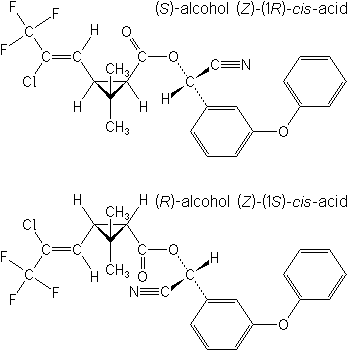
2004-2006
- US EPA CHEERS study in Jacksonville, Duval County,
Florida.
This 2-year study of children's exposure to selected
pesticides and chemicals has ignited enormous controversy.
Lambda-cyhalothrin was
one of 16 pesticides selected to be monitored in children
(ages 0-3 years). See FAN's
updates on this study.
|
See reports available from The
National Technical Information Service
|
Full
free text available at http://www.asiaandro.com/1008-682X/4/35.htm
Asian
J Androl. 2002 Mar;4(1):35-41.
Effects
of pyrethroid insecticide ICON
(lambda cyhalothrin) on reproductive competence of
male rats.
Ratnasooriya
WD, Ratnayake SS, Jayatunga YN.
Department
of Zoology, University of Colombo, Sri Lanka. dapput@sltnet.LK
AIM:
To assess the effect of ICON (trade name of lambda-cyhalothrin)
on sexual competence and fertility of male rats.
METHODS: Male rats were gavaged daily for 7 consecutive
days with different doses of ICON (63 mg/kg and 100
mg/kg) or vehicle (distilled water). Their sexual
behaviour and fertility were evaluated at different
time points during treatment and post-treatment using
receptive females.
RESULTS: Treatment had no effect on fertility, but
sexual competence was seriously
impaired: libido (assessed in terms of pre-coital
sexual behaviour, and numbers of mounting, intromission
and ejaculation), sexual arousability/motivation (in
terms of latencies for mounting, intromission and
ejaculation), sexual vigour (judged by frequencies
of mounting and intromission or copulatory efficiency).
In addition, ICON suppressed
intromission ratio, indicating erectile dysfunction.
These effects on sexual function had a rapid onset
and was reversible. ICON-induced sexual dysfunction
was mediated by multiple mechanisms, mainly toxicity,
stress, sedation and possibly via GABA and dopaminergic
systems.
CONCLUSION: Exposure to ICON
may cause sexual dysfunction in male rats.
PMID:
11907626 [PubMed - indexed for MEDLINE]
|
http://www.ncbi.nlm.nih.gov:80/entrez/query.fcgi?cmd=Retrieve&db=PubMed&list_uids=12504758&dopt=Abstract
Mutat
Res. 2003 Jan 10;534(1-2):93-9.
Evaluation
of the genotoxic potential of lambda-cyhalothrin using
nuclear and nucleolar biomarkers on fish cells.
Cavas
T, Ergene-Gozukara S.
Department
of Biology, Faculty of Sciences and Letters, Mersin
University, 33342, Mersin, Turkey. tcavas@mersin.edu.tr
Micronucleus
formation in fish erythrocytes, as an indicator of
chromosomal damage, has been increasingly used to
detect the genotoxic potential of environmental contaminants.
Nucleolar organizer regions (NORs) stained with colloidal
silver techniques indicate sites of active RNA transcription.
The number and size of NORs in interphase nuclei reflect
cellular activities such as proliferation and differentiation
of cells. In this study, nuclear (micronucleus frequency)
and nucelolar (changes in quantitative characteristics
of nucleoli) biomarkers were used to evaluate the
functional and structural genotoxic effects of the
pyrethroid insecticide lambda-cyhalothrin on Garra
rufa (Pisces: Cyprinidae). The frequency of micronuclei
was examined in blood smears obtained from fishes
exposed to three different concentrations (0.005,
0.01, 0.05 microg/l) for a period of 36 h. Nucleolar
parameters (the average number of nucleoli per cell;
the volume of a single nucleolus; and the percentage
of cells with heteromorphic paired nucleoli) were
examined in epithelial cells obtained from the edge
of caudal fins at the 90th and 180th minutes of exposure.
Results of both tests demonstrated
the genotoxic potential of pyrethroid lambda-cyhalothrin
on G. rufa. The frequency
of micronucleated erythrocytes was significantly increased
while the nucleolar parameters were repressed by lambda-cyhalothrin
treatment. Our results confirmed that the use
of nucleolar biomarkers on fish fin cells, in addition
to micronucleus test, could provide valuable information
in aquatic genotoxicity studies.
PMID:
12504758 [PubMed - indexed for MEDLINE]
|
http://www.ncbi.nlm.nih.gov:80/entrez/query.fcgi?cmd=Retrieve&db=PubMed&list_uids=10036336&dopt=Abstract
Mutat
Res. 1999 Jan 13;438(2):155-61.
Genotoxic
evaluation of the pyrethroid lambda-cyhalothrin using
the micronucleus test in erythrocytes of the fish
Cheirodon interruptus interruptus.
Campana
MA, Panzeri AM, Moreno VJ, Dulout FN.
Lab.
Genetica, Departamento de Biologia, Facultad de Ciencias
Exactas y Naturales, Universidad Nacional de Mar del
Plata, Funes 3250, 3er piso, (7600), Mar del Plata,
Argentina. macampa@mdp.edu.ar
In
order to develop experimental models able to detect
genotoxic effects of pollutants in aquatic organisms,
the genotoxicity of the pyrethroid lambda-cyhalothrin
was studied using the micronucleus test in erythrocytes
of Cheirodon interruptus interruptus. The frequency
of micronuclei was examined in blood smears obtained
from fishes exposed in vivo to three different concentrations
(0.05; 0. 01; 0.001 ug/l) of the compound and sacrificed
at nine sampling times (24, 48, 72, 96 h and 8, 12,
15, 19 and 23 days). As a positive control fishes
were exposed to 5 mg/l of cyclophosphamide. Results
obtained demonstrated the genotoxic effects of the
pyrethroid in the experimental model employed.
The variation in the micronuclei frequencies in the
different sampling times could be related to the blood
cell kinetics and the erythrocyte replacement. The
results could be considered as a validation of the
MN test in fishes for the assessment of genotoxic
pollutants. Copyright 1999 Published by Elsevier Science
B.V.
PMID:
10036336 [PubMed - indexed for MEDLINE]
|
From
Science Direct
Ecotoxicology
and Environmental Safety - Volume 61, Issue 1 , May
2005, Pages 128-133
Evaluation
of cytogenetic effects of lambda-cyhalothrin on Wistar
rat bone marrow by gavage administration
Ayla
Çelika (a), Birgül Mazmanci (a), Yusuf
Çamlica (a), Ülkü Çömelekogšlu
(b) and Ali As¸kin (a)
a
Department of Biology, Faculty of Science and Letters,
Mersin University, 33342 Mersin, Turkey
b Department of Biophysics, Faculty of Medicine, Mersin
University, Mersin, Turkey
In this study, a synthetic pyrethroid
insecticide, lambda-cyhalothrin
(LCT), was administered to adult female albino
rats (Wistar rats) by gavage dose of 6.12, 3.06, 0.8 mg/kg
b.w. repeated for 13 days at 48 h intervals.
The cytotoxic and genotoxic effects of LCT were investigated
in bone marrow cells, using the structural chromosomal
aberration (SCA) and micronucleus (MN) test systems.
Mitomycin C (MMC) was also used as positive control
(2 mg/kg b.w.). All the
doses of LCT increased the number of SCAs and the
frequency of micronucleated erythrocytes, with respect
to the control group. Only
the highest dose of LCT significantly increased the
MN frequency compared with control (P<0.01). It
was also observed that LCT caused a significant decrease
in the number of polychromatic erythrocytes compared
with controls (p<0.001). These observations indicate
the in vivo suspectibility of mammals to the genetic
toxicity and cytotoxicity potential of LCT.
|
http://www.ncbi.nlm.nih.gov/entrez/query.fcgi?cmd=Retrieve&db=pubmed&dopt=Abstract&list_uids=15288513
Neurotoxicology.
2004 Sep;25(5):825-33.
The
modulatory effect of pyrethroids on acetylcholine
release in the hippocampus of freely moving rats.
Hossain
MM, Suzuki T, Sato I, Takewaki T, Suzuki K, Kobayashi
H.
Department
of Veterinary Medicine, Faculty of Agriculture, Iwate
University, Morioka 020-8550, Japan. g0102201@iwate-u.ac.jp
The
peripheral effects of pyrethroids on Na(+) channels
are well known but the effects on CNS neurotransmission
are less known. In the present study, type I and II
pyrethroids were found to affect the release of acetylcholine
(ACh) from hippocampus in freely moving rats as measured
by in vivo microdialysis. The basal release of ACh
from the hippocampus of untreated rats was 6.6 pmol/10
microl/10 min. Allethrin had an interesting dual effect
on ACh release, increasing ACh efflux (to about 300%
of baseline) at the lower dose of 20 mg/kg i.p. with
a peak time of 60 min and decreasing the efflux (to
about 40% of baseline) at the higher dose of 60 mg/kg
i.p. up to 3 h after administration.
Cyhalothrin 20 and 60 mg/kg i.p. inhibited the release
(to about 30% of baseline) dose-dependently, with
a peak time of 50-60 min after administration. Deltamethrin
20 mg/kg i.p. increased the efflux (to about 250%
of baseline) with a peak time of 30 min after administration
and 60 mg/kg i.p. increased the efflux (to about 450%
of baseline) and remained at a steady level during
the rest of the 3 h experiment. Control vehicle injections
had no effect on the efflux of ACh in any of the experiments.
This is the first report, using
in vivo microdialysis, that pyrethroids modulate the
ACh release in the hippocampus of rat brain.
PMID:
15288513 [PubMed - indexed for MEDLINE]
|
http://www.ncbi.nlm.nih.gov/entrez/query.fcgi?cmd=Retrieve&db=pubmed&dopt=Abstract&list_uids=14655718
Hum
Exp Toxicol. 2003 Oct;22(10):523-33.
Effects
of Icon, a pyrethroid insecticide on early pregnancy
of rats.
Ratnasooriya
WD, Ratnayake SS, Jayatunga YN.
Department
of Zoology, University of Colombo, Colombo-3, Sri
Lanka. wdrratna@webmail.cmb.lk
Icon
is a water miscible type II synthetic pyrethroid insecticide
based on active ingredient lambda
cyhalothrin (10% w/w). It is used in Sri Lanka
as an adulticidal indoor spray against malaria vector
mosquitoes. The goal of this study was to assess the
effects of Icon on pregnancy outcome of rats when
exposed during early pregnancy (days 1-7). Icon was
gavaged daily for 7 consecutive days in three different
doses; 63, 83, or 125 mg/kg/day (active ingredient;
lambda cyhalothrin; 6.3, 8.3, 12.5 mg/kg/day), respectively.
Several parameters of reproduction and pre- and post-natal
development were monitored. The
results show that Icon is detrimental to pregnancy
outcome (in terms of quantal pregnancy, number of
uterine implants, implantation index and foetal deaths)
but induced no detectable developmental defects. The
anti-reproductive effects of Icon were mainly due
to increased pre-implantation losses. Enhancement
of post-implantation losses played a subsidiary role.
These effects resulted from multiple mechanisms: maternal
toxicity, stress, uterotropic activity and embryo-foetotoxicity.
Further progesterone had a protective effect against
Icon induced anti-reproductive actions.
Overall, the results suggest that exposure to Icon
during early gestation may result in a threat to pregnancy.
PMID:
14655718 [PubMed - indexed for MEDLINE]
|
http://www.ncbi.nlm.nih.gov/entrez/query.fcgi?cmd=Retrieve&db=pubmed&dopt=Abstract&list_uids=12948817
Mutat
Res. 2003 Aug 5;539(1-2):91-7.
Cytogenetic
effects of lambda-cyhalothrin on Wistar rat bone marrow.
Celik
A, Mazmanci B, Camlica Y, Askin A, Comelekoglu U.
Department
of Biology, Faculty of Science and Art, Mersin University,
33342 Mersin, Turkey. a.celik@mersin.edu.tr
In
this study, the genotoxic and cytotoxic potential
of lambda-cyhalothrin (LCT),
a synthetic pyrethroid insecticide, was investigated
in Wistar rat bone-marrow cells, using the structural
chromosomal aberration (SCA) and micronucleus (MN)
test systems. LCT was administrated to adult female
albino rats as repeated i.p. doses of 6.12, 3.06,
0.8 mg/kg BW for 13 days at 48 h intervals. Mitomycin
C (MMC) was used as a positive control (2 mg/kg BW).
All the doses of LCT increased the number of structural
chromosomal aberrations and the frequency of micronucleated
erythrocytes, compared with the control group. It
was also observed that LCT caused a significant decrease
in the number of polychromatic erythrocytes. Our
results demonstrate that LCT has a clastogenic/genotoxic
potential as measured by the bone marrow SCA and MN
tests in Wistar rats.
PMID:
12948817 [PubMed - indexed for MEDLINE]
|
http://www.ncbi.nlm.nih.gov/entrez/query.fcgi?cmd=Retrieve&db=pubmed&dopt=Abstract&list_uids=12946652
Toxicol
Appl Pharmacol. 2003 Sep
1;191(2):167-76.
Behavioral
effects of type II pyrethroid cyhalothrin in rats.
Righi
DA, Palermo-Neto J.
Applied
Pharmacology and Toxicology Laboratory, School of
Veterinary Medicine, University of Sao Paulo, Sao
Paulo, SP, Brazil, 05508-900.
Synthetic
pyrethroids such as cyhalothrin are extensively used
in agriculture for the control of a broad range of
ectoparasites in farm animals. It has been suggested
that type II pyrethroids might induce anxiogenic-like
effects in laboratory animals. The present study was
undertaken to investigate a possible anxiogenic-like
outcome of cyhalothrin in rats.
Adult male rats were orally dosed for 7 days with
1.0, 3.0, or 7.0 mg/kg/day of cyhalothrin, present
in a commercial formulation (Grenade Coopers do Brazil
S.A.). The neurobehavioral changes induced
by cyhalothrin as well as those produced on corticosterone
serum levels were measured 24 h after the last treatment.
Picrotoxin (1.0 mg/kg) was also acutely used as a
positive control for anxiety. Results showed that
cyhalothrin:
(1) induced some signs and symptoms of intoxication
that included salivation, tremors, and liquid feces;
(2) reduced total locomotor activity in the open-field;
(3) reduced the percentage of time spent in open-field
central zones;
(4) increased immobility time in the open-field;
(5) reduced the percentage of time spent in plus-maze
open arms exploration;
(6) reduced the time spent in social interactions,
and
(7) increased the levels of serum corticosterone.
The behavioral changes reported for cyhalothrin (3.0
mg/kg/day) were similar of those induced by picrotoxin.
The no effect level dose obtained for cyhalothrin
in this study was 1.0 mg/kg/day. These results provide
experimental evidence that cyhalothrin induces anxiety-like
symptoms, with this effect being dose-related. Thus,
anxiety must be included among the several signs and
symptoms of pesticide intoxication.
PMID:
12946652 [PubMed - indexed for MEDLINE]
|
From Toxline at Toxnet
Journal
of Applied Toxicology, Vol. 16, No. 5, pages 397-400,
26 references, 1996
Insecticide-Induced
Changes in Secretory Activity of the Thyroid Gland
in Rats
Akhtar N, Kayani SA, Ahmad MM,
Shahab M
The effects of organochlorine, organophosphorus, and
pyrethroid insecticides on thyroid function were studied
in rats. Young adult male albino-rats were gavaged
with 0.5 milligram (mg) per rat heptachlor (76448),
0.60mg/rat
benzene-hexachloride (58-89-9) (BHC), 0.06mg/rat malathion
(121-75-5), 0.2mg/rat O,S-dimethyl-phosphoramidothion
(10265-92-6) (Monitor), 0.5mg/rat
bifenthrin (82657-04-3) (Talstar), or 0.2mg/rat
lamdacyhalothrin (91465-08-6) (Karate)
daily for 21 days. They were then killed
and weighed. The serum was separated and analyzed
for triiodothyronine (T3), thyroxine (T4), and thyrotropin
(TSH) using radioimmunoassays. Except for Talstar,
none of the insecticides affected body weight gain.
Talstar significantly decreased body weight gain.
Heptachlor and Monitor did not significantly affect
serum T3, T4, and TSH concentrations. Malathion, BHC,
Karate, and Talstar significantly decreased serum
T3 and T4 concentrations and increased TSH concentrations.
Karate significantly decreased the T43 concentration.
None of the other insecticides altered the
T4/T3 ratio. The authors conclude
that exposure to organochlorine, organophosphorus,
and pyrethroid insecticides for a relatively short
time can suppress thyroid secretory activity in young
adult rats. The decrease in body weight gain
induced by Talstar suggests that pyrethroid insecticides
can inhibit growth rate.
•
Note from FAN: Bifenthrin (Talstar) is an organofluorine.
|
From
Toxline at Toxnet
PESTIC
BIOCHEM PHYSIOL; 37 (2). 1990.
116-120.
Properties
of calcium, magnesium-ATPase from rat brain and its
inhibition by pyrethroids.
AL-RAJHI DH
Plant
Protection Dep., Coll. Agric., King Saud Univ., Riyadh,
Saudi Arabia.
Ca2+
+ Mg2+-ATPase from microsomal fractions of rat brain
was studied. The enzyme was activated by either Ca2+
or Mg2+ reaching the peak at the Ca2+ concentration
of 0.3 mM. Maximal activation occurred at an ATP concentration
of 5 mM with an apparent Km of 0.66 mM, a Vmax of
62.5 mumol inorganic phosphate/mg protein/hr, and
a pH between 8.1 and 8.5. The enzyme was found to
be ouabain insensitive but was inhibited by ruthenium
red and lanthanum with I50 values of 10-5 and 10-6
M, respectively. The enzyme was highly sensitive to
the actions of certain pyrethroid insecticides under
in vitro conditions. The cyano-containing
pyrethroids, karate and bathyroid, exerted a greater
inhibitory effect on the enzyme (Ki = 1.7 and 2 muM)
than the non-cyano-containing pyrethroids, permethrin
and bioallethrin (Ki = 7 and 8.5 muM).
CAS
Registry Numbers:
91465-08-6
68359-37-5
52645-53-1
584-79-2
|
Toxicology Letters, Volume 144, Supplement
1, 28 September 2003,
Page s147
LAMBDA-CYHALOTHRIN’S
INFLUENCE ON MEMORY PROCESSES, MOVEMENT CO-ORDINATION
AND SPONTANEOUS MOVEMENT ACTIVITY IN MICE EXPOSED
TO TRANSIENT OLIGEMIC BRAIN HYPOXIA IN BCCA MODEL.
Barbara
Nieradko, Andrzej Borzecki.
Department
of Hygiene, Medical University in Lublin, Poland
Lambda-cyhalohrin
is one of synthetic pyrethroids of family of compounds
with a-cyano-3-phenoxybenzyl moiety. The
aim of the work was to evaluate the influence of lambda-cyhalothrin
on memory processes, movement co-ordination and spontaneous
movement activity in mice exposed to transient oligemic
brain hypoxia in BCCA model. There were four groups
of animals examined: I) sham-operated, II) after BCCA,
III) sham-operated, treated with beta-cyfluthrin,
and IV) after BCCA, treated with beta-cyfluthrin.
Bilateral clamping of carotid arteries (BCCA) is an
experimental model of transient ischemic attacks (TIAs),
that occur in humans. 24 hours after the surgery,
the mice had a training in the passive avoidance task.
The next day the animals from
group III and IV were injected with 0,1 LD50 lambda-cyhalothrin
intraperitoneally. 30 minutes after administration
the animals were examined in the passive avoidance
task. Then, their movement co-ordination on
a rota- rod was examined. After that the mice were
placed in a Y maze to examine their spontaneous movement
alterations and later, their spontaneous movement
activity was checked. Results obtained were analysed
with Anova and the post hoc tests. There
is a statistically significant difference (p<0,05)
in spontaneous movement activity within first 30 minutes
of examination in group IV versus I and after 60 minutes
in group IV vs all the others and in group II vs sham.
Conclusions:
1. Memory retention is most
impaired by lambda-cyhalothrin in sham-operated animals
whereas BCCA-procedure protects their brains from
pesticide’s toxic action.
2. Lambdacyhalothrin’s
effect on fresh spatial memory and spontaneous motor
activity is enhanced by BCCA.
|
••••
Note:
this study was conducted with Cyhalothrin (not Lambda-cyhalothrin)
Veterinary
and Human Toxicology, Vol. 33, No. 4, pages 315-317,
20 references, 1991
Pyrethroid
Insecticides and Pregnancy: Effect on Physical and
Behavioral Development of Rats
da Silva Gomes M, Bernardi MM,
de Souza Spinosa H
The physical and behavioral effects of cyhalothrin
(68085-85-8) were studied in rats. Pregnant
Wistar-rats were administered 0 or 0.018% cyhalothrin
topically throughout pregnancy. After delivery
the neonates were monitored for development of fur,
testes descent, and ear, eye, and vaginal opening.
Body weights were recorded on postnatal days 2, 7,
14, and 21. The effects on locomotor activity and
inhibitory avoidance behavior were evaluated on postnatal
days 21 and 90. The number of head dips occurring
in a hole board test was recorded on postnatal day
90. Development of fur and times
to testes descent and ear and eye opening were significantly
delayed in cyhalothrin exposed pups. Time to
vaginal opening was not affected. Body weights of
cyhalothrin exposed pups were significantly increased
at postnatal days 2, 7, and 14, but not at postnatal
day 21. Cyhalothrin did not significantly affect locomotor
activity or inhibitory avoidance behavior. Cyhalothrin
exposed rats had a significantly smaller number of
head dips in the hole board test. The
authors conclude that prenatal exposure to cyhalothrin
delays development of fur, eye and ear opening, and
testes descent and affects motivational behavior.
The delays induced in fur development and eye and
ear opening suggest that cyhalothrin interferes with
maternal or neonatal epidermal growth factor activity.
The delay in testes descent suggests that prenatal
cyhalothrin exposure induces changes in male
sexual development.
|
From Science Direct
Toxicology
Letters; Volume 95, Supplement 1 , July 1998,
Page 145
Study
of pre-delivery and post-delivery periods after topical
applications of lambda-cyhalothrin in goats
Igor
Vassilief (1), Cristiane Oliveira (1), Heraldo C.
Gonçalves (2) and Izidoro F. Sartor (3)
1
CEATOX, I.B. Brazil
2 Dept. of Animal's Production and Exploration Brazil
3 Dept. of Animal's Parasitaries Infirmities, UNESP
Botucatu-SP Brazil
Pyrethroids
have a broad spectrum of insecticidal activity and
a short persistence in the environment. Since pyrethroids
are commonly used in mammals as topical insecticides,
we decided to study the possible occurrence of skin
absorption, blood distribution, placental transfer
and lactary excretion of lambda-cyhalothrin. Ten healthy
pregnant goats and their offsprings (19) were used.
Grenade L 2.8% was diluted at the ratio 1: 1000 and
sprayed on the pregnant goats' whole body in a single
therapeutic dose. Lambda-cyhalothrin was sprayed in
goats during pre-delivery and post-delivery periods.
Blood and milk sample collections were conducted during
35 days, with 7-day intervals. Control samples were
collected before the pyrethroid application. Blood
samples were collected from the offsprings before
the first sucking and concomitantly with sample collections
from their mothers during post-delivery. It is worth
pointing out that male offsprings were given their
mothers' milk while female offsprings were given buffalos'
milk during post-delivery. Determinations of sample
residues were performed by gas chromatography with
electron capture detector. During pre-delivery, the
highest residual level presented in milk was 0.219
mg/l and during post-delivery 0.051 mg/l. In regard
to the offsprings, the highest residual level observed
was 0.076 mg/l right after delivery and 0.060 mg/l
during post-delivery. Lambda-cyhalothrin
presented skin absorption, blood distribution, placental
transfer and lactary excretion after topical applications
of a single therapeutic dose in goats.
|
From
Toxline at Toxnet
OCCUPATIONAL
AND ENVIRONMENTAL MEDICINE; 53 (11). 1996.
726-729.
Symptoms
and cholinesterase activity among rural residents
living near cotton fields in Nicaragua.
KEIFER M, RIVAS F, MOON JD,
CHECKOWAY H
Occupational
and Environ. Med. Program, Harborview Med. Cent.,
325 9th Ave., Seattle, WA 98104-2499, USA.
BIOSIS COPYRIGHT: BIOL ABS. Objectives: To explore
whether symptoms resulted from pesticide spray drift
on residentially exposed populations in rural Nicaragua.
Methods: 100 residents, each 10 years of age or older,
were randomly selected from a Nicaraguan community
surrounded by actively sprayed cotton fields (the
exposed community) and from a socioeconomically similar
community far from agricultural spraying (the control
community). Subjects working with pesticides were
excluded, and the study was conducted at the end of
the 1990 cotton spraying season (August-December).
Demographic information, exposure questions, and prevalence
of 11 acute symptoms and 17 chronic symptoms were
gathered from a structured interview. Finger stick
erythrocyte cholinesterase (AChE) was measured with
a portable colorimeter. Acute symptoms were grouped
according to their previously known associations with
cholinesterase (ChE) inhibitors into four ordinal
categories (asymptomatic, non-specific, possible,
probable). Re [abstract truncated]
CAS Registry Numbers:
91465-08-6 - Lambda-cyhalothrin
52315-07-8 - Cypermethrin
298-00-0 - Methyl parathion
|
http://www.ncbi.nlm.nih.gov/entrez/query.fcgi?cmd=Retrieve&db=pubmed&dopt=Abstract&list_uids=16221961&query_hl=8&itool=pubmed_docsum
Toxicol Sci. 2006 Jan;89(1):271-7.
Relative potencies for acute effects of pyrethroids
on motor function in rats.
Wolansky
MJ, Gennings C, Crofton KM.
National
Research Council, Research Triangle Park, North Carolina 27711,
USA.
The prevalence
of pyrethroids in insecticide formulations has increased in
the last decade. A common mode-of-action
has been proposed for pyrethroids based on in vitro studies,
which includes alterations in sodium channel dynamics in nervous
system tissues, consequent disturbance of membrane polarization,
and abnormal discharge in targeted neurons. The objective
of this work was to characterize individual dose-response
curves for in vivo motor function and calculate relative potencies
for eleven commonly used pyrethroids. Acute oral dose-response
functions were determined in adult male Long Evans rats for
five Type I (bifenthrin, S-bioallethrin,
permethrin, resmethrin, tefluthrin), five Type II (beta-cyfluthrin,
lambda-cyhalothrin, cypermethrin,
deltamethrin, esfenvalerate) and one mixed Type I/II (fenpropathrin)
pyrethroids (n = 8-18 per dose; 6-11 dose levels per chemical,
vehicle = corn oil, at 1 ml/kg). Motor function was measured
using figure-8 mazes. Animals were tested for 1 h during the
period of peak effects. All pyrethroids,
regardless of structural class, produced dose-dependent decreases
in motor activity. Relative potencies were calculated
based on the computed ED30s. Deltamethrin, with an ED30 of
2.51 mg/kg, was chosen as the index chemical. Relative potency
ratios ranged from 0.009 (resmethrin) to 2.092 (esfenvalerate).
Additional work with environmentally-based mixtures is needed
to test the hypothesis of dose-additivity of pyrethroids.
PMID:
16221961 [PubMed - in process]
Note:
Of the pesticides cited above, the following are fluorinated:
bifenthrin, tefluthrin, beta-cyfluthrin,
lambda-cyhalothrin.
http://www.ncbi.nlm.nih.gov/entrez/query.fcgi?cmd=Retrieve&db=pubmed&dopt=Abstract&list_uids=15734586&query_hl=11
Environ Pollut. 2005 May;135(2):267-74.
In vitro toxicity of selected pesticides
on RTG-2 and RTL-W1 fish cell lines.
Babin MM, Tarazona JV.
Laboratory for Ecotoxicology, Department of the Environment,
INIA, Crta. de La Coruna Km 7, 28040 Madrid, Spain. babin@inia.es
The rainbow trout fish cell lines RTG-2 and RTL-W1 were used
to determine the cytotoxic effects of the pesticides bifenthrin,
cypermethrin, cyhalothrin, lambda-cyhalothrin, quinalphos
and chlorpyrifos. Cytotoxicity was measured by EROD and beta-Gal
enzymatic activities, the neutral red (NR) uptake assay, and
the FRAME KB protein (KBP) assay. The beta-Gal activity was
unaffected by the pesticide exposure.
The EROD activity was induced by cyhalothrin and lambda-cyhalothrin
(RTG-2 and RTL-W1) and by bifenthrin (RTL-W1). Dose
dependent inhibition responses were observed for EROD activity
in cells exposed to quinalphos (RTL-W1) and chlorpyrifos (RTG-2
and RTL-W1). RTL-W1 offered a better response for EROD induction.
The EC50 values on EROD endpoint were more sensitive than
NR and KBP. The acute fish toxicity of chlorpyrifos and quinalphos
depends highly on the species; the species sensitivity distributions
cover several orders of magnitude and the values obtained
for EROS were within the lowest part of the reported ranges.
PMID: 15734586 [PubMed - in process]
http://www.ncbi.nlm.nih.gov/entrez/query.fcgi?cmd=Retrieve&db=pubmed&dopt=Abstract&list_uids=15839572&query_hl=11
Environ Toxicol Chem. 2005 Apr;24(4):966-72.
Use and toxicity of pyrethroid pesticides
in the Central Valley, California, USA.
Amweg EL, Weston DP, Ureda NM.
Department of Integrative Biology, University of California,
Berkeley, California 94720-3140, USA. eamweg@socrates.berkeley.edu
The use of pyrethroid insecticides is increasing for agriculture,
commercial pest control, and residential consumer use. In
addition, there is a trend toward the use of newer and more
potent compounds. Little is known about the toxicity of sediment-associated
pyrethroid residues to aquatic organisms, yet recent work
has shown they commonly are found in aquatic sediments in
the heavily agricultural Central Valley of California, USA.
Minimal data exist on the sensitivity of standard sediment
toxicity testing species to pyrethroids, despite two or more
decades of agricultural use of these compounds.
Sediment concentrations causing acute toxicity and growth
impairment to the amphipod Hyalella azteca were determined
for six pyrethroids in three sediments, ranging from 1.1 to
6.5% organic carbon (OC). In order of decreasing toxicity
of sediment-associated residues, the compounds tested were
bifenthrin (average 10-d median lethal
concentration [LC50] = 0.18 microg/g OC), lambda-cyhalothrin
(0.45 microg/g OC), deltamethrin (0.79 microg/g OC),
esfenvalerate (0.89 microg/g OC), cyfluthrin (1.08 microg/g
OC), and permethrin (4.87 microg/g OC). In a sediment containing
about 1% OC, most pyrethroids, except permethrin, would be
acutely toxic to H. azteca at concentrations of 2 to 10 ng/g
dry weight, a concentration only slightly above current analytical
detection limits. Growth typically was inhibited at concentrations
below the LC50; animal biomass on average was 38% below controls
when exposed to pyrethroid concentrations roughly one-third
to one-half the LC50. Survival data are consistent with current
theory that exposure occurs primarily via the interstitial
water rather than the particulate phase. A
reanalysis of previously reported field data using these toxicity
data confirms that the compounds are exceeding concentrations
acutely toxic to sensitive species in many agriculture-dominated
water bodies.
PMID: 15839572 [PubMed - in process]
http://www.ncbi.nlm.nih.gov/entrez/query.fcgi?cmd=Retrieve&db=pubmed&dopt=Abstract&list_uids=15912565&query_hl=30
Pest Manag Sci. 2005 May 24;
[Epub ahead of print]
Resistance of Thrips tabaci to pyrethroid
and organophosphorus insecticides in Ontario, Canada.
Macintyre Allen JK, Scott-Dupree CD,
Tolman JH, Ron Harris C.
Department of Environmental Biology, University of Guelph,
Guelph, ON, Canada N1G 2W1.
Onion thrips, Thrips tabaci Lindeman, were collected from
commercial onion fields in 2001, 2002 and 2003 to assess resistance
to lambda-cyhalothrin, deltamethrin and diazinon. In
2001, six of eight adult populations were resistant to lambda-cyhalothrin,
with resistance ratios (RR) ranging from 2 to 13.1
and four of these were also resistant to deltamethrin, with
RR ranging from 19.3 to 120. Three of four adult populations
were resistant to diazinon with RR ranging from 2.5 to 165.8.
In 2002, four of seven nymphal populations and three of six
adult populations were resistant to deltamethrin, with RR
ranging from 4.3 to 72.5 and 9.4 to 839.2, respectively. Only
one of six nymphal populations and one of five adult populations
were resistant to diazinon, with RR of 5.6 and 2.3, respectively.
In 2003 diagnostic dose bioassays, 15 of 16 onion thrips populations
were resistant to lambda-cyhalothrin and all were resistant
to deltamethrin. Eight of the 16 were resistant to diazinon.
These results indicate that insecticide resistance is widespread
in onion thrips in commercial onion fields in Ontario. Copyright
(c) 2005 Society of Chemical Industry.
PMID: 15912565 [PubMed - as supplied by publisher]
http://www.ncbi.nlm.nih.gov/entrez/query.fcgi?cmd=Retrieve&db=pubmed&dopt=Abstract&list_uids=15212247
Environ Sci Technol.
2004 May 15;38(10):2752-9.
Distribution and toxicity of sediment-associated pesticides
in agriculture-dominated water bodies of California's
Central Valley.
Weston DP, You J,
Lydy MJ.
Department of Integrative
Biology, University of California, 3060 Valley Life Sciences
Building, Berkeley, California 94720-3140, USA. dweston@berkeley.edu
The agricultural
industry and urban pesticide users are increasingly relying
upon pyrethroid insecticides and shifting to more potent members
of the class, yet little information is available on residues
of these substances in aquatic systems under conditions of
actual use. Seventy sediment samples were collected over a
10-county area in the agriculture-dominated Central Valley
of California, with most sites located in irrigation canals
and small creeks dominated by agricultural effluent. The sediments
were analyzed for 26 pesticides including five pyrethroids,
20 organochlorines, and one organophosphate. Ten-day sediment
toxicity tests were conducted using the amphipod Hyalella
azteca and, for some samples, the midge Chironomus tentans.
Forty-two percent of the locations sampled caused significant
mortality to one test species on at least one occasion. Fourteen
percent of the sites (two creeks and four irrigation canals)
showed extreme toxicity (>80% mortality) on at least one
occasion. Pyrethroid pesticides were
detected in 75% of the sediment samples, with permethrin
detected most frequently, followed by esfenvalerate > bifenthrin
> lambda-cyhalothrin. Based
on a toxicity unit analysis, measured pyrethroid concentrations
were sufficiently high to have contributed to the toxicity
in 40% of samples toxic to C. tentans and nearly 70% of samples
toxic to H. azteca. Organochlorine compounds (endrin, endosulfan)
may have contributed to the toxicity at a few other sites.
This study provides one of the first
geographically broad assessments of pyrethroids in areas highly
affected by agriculture, and it suggests there is a greater
need to examine sediment-associated pesticide residues and
their potential for uptake by and toxicity to benthic organisms.
PMID:
15212247 [PubMed - indexed for MEDLINE]
http://www.ncbi.nlm.nih.gov/entrez/query.fcgi?cmd=Retrieve&db=pubmed&dopt=Abstract&list_uids=15195804
Arch Environ Contam
Toxicol. 2004 Apr;46(3):324-35.
Comparison
of laboratory single species and field population-level effects
of the pyrethroid insecticide lambda-cyhalothrin on freshwater
invertebrates.
Schroer
AF, Belgers JD, Brock TC, Matser AM, Maund SJ, Van den Brink
PJ.
Alterra Green World
Research, P.O. Box 47, 6700 AA Wageningen, The Netherlands.
The
toxicity of the pyrethroid insecticide
lambda-cyhalothrin to freshwater invertebrates
has been investigated using data from short-term laboratory
toxicity tests and in situ bioassays and population-level
effects in field microcosms.
In laboratory
tests, patterns of toxicity were consistent with previous
data on pyrethroids. The midge Chaoborus
obscuripes was most sensitive (48- and 96-h EC50 = 2.8 ng/L).
Other insect larvae (Hemiptera, Ephemeroptera) and macrocrustacea
(Amphipoda, Isopoda) were also relatively sensitive, with
48- and 96-h EC50 values between 10 and 100 ng/L. Generally,
microcrustacea (Cladocera, Copepoda) and larvae of certain
insect groups (Odonata and Chironomidae) were less sensitive,
with 48-h EC50 values higher than 100 ng/L. Mollusca and Plathelminthes
were insensitive and were unaffected at concentrations at
and above the water solubility (5 microg/L). Generally, the
EC50 values based on initial population responses in field
enclosures were similar to values derived from laboratory
tests with the same taxa. Also, the corresponding fifth and
tenth percentile hazard concentrations (HC5 and HC10) were
similar (laboratory HC5 = 2.7 ng/L and field HC5 = 4.1 ng/L;
laboratory and field HC10 = 5.1 ng/L), at least when based
on the same sensitive taxonomic groups (insects and crustaceans)
and when a similar concentration range was taken into account.
In the three field enclosure experiments and at a treatment
level of 10 ng/L, consistent effects were observed for only
one population (Chaoborus obscuripes), with recovery taking
place within 3 to 6 weeks. The laboratory HC5 (2.7 ng/L) and
HC10 (5.1 ng/L) based on acute EC50 values of all aquatic
arthropod taxa were both lower than this 10 ng/L, a concentration
that might represent the "regulatory acceptable concentration."
The HC5 and HC10 values in this study in The Netherlands (based
on static laboratory tests with freshwater arthropods) were
very similar to those derived from a previous study in the
United Kingdom (1.4 and 3.3 ng/L). This suggests that for
pesticides like lambda-cyhalothrin, HC5 values based on static
laboratory tests may provide a conservative estimate of the
potential for community-level effects under field conditions.
While these HC5 values are conservative for initial effects,
they do not provide information on recovery potential, which
may be important for regulatory decision-making.
PMID:
15195804 [PubMed - indexed for MEDLINE]
http://www.ncbi.nlm.nih.gov/entrez/query.fcgi?cmd=Retrieve&db=pubmed&dopt=Abstract&list_uids=15376534
Environ Toxicol
Chem. 2004 Jun;23(6):1479-98.
Aquatic risk assessment of a realistic exposure to
pesticides used in bulb crops: a microcosm study.
van
Wijngaarden RP, Cuppen JG, Arts GH, Crum SJ, van den Hoorn
MW, van den Brink PJ, Brock TC.
Alterra, Green
World Research, P.O. Box 47, 6700 AA, Wageningen, The Netherlands.
rene.vanwijngaarden@wur.nl
The fungicide fluazinam,
the insecticide lambda-cyhalothrin,
and the herbicides asulam and metamitron were applied to indoor
freshwater microcosms (water volume approximately 0.6 m3).
The treatment regime was based on a realistic application
scenario in tulip cultivation. Concentrations of each pesticide
were equal to 0%, 0.2%, 0.5%, 2%, and 5% spray drift emission
of label-recommended rates. Contribution of compounds to the
toxicity of the pesticide package was established by expressing
their concentrations as fractions of toxic units. The fate
of the compounds in the water, and responses of phytoplankton,
zooplankton, periphyton, macroinvertebrates, macrophytes,
decomposition, and water quality were followed for 13 weeks.
The half-lives of lambda-cyhalothrin,
metamitron, and fluazinam were 1 to 2 d; that of asulam was
>30 d. No consistent effects could be demonstrated for
the 0.2% treatment regime that was therefore considered the
no-observed-effect concentration community (NOEC). The macroinvertebrate
populations of Gammarus pulex, Asellus aquaticus, and Proasellus
meridianus were the most sensitive end points, followed by
species of copepods and cladocerans. Responses
mainly were due to lambda-cyhalothrin. The 0.5% treatment
regime resulted in short-term effects. Pronounced effects
were observed at the 2% and 5% treatment levels. At the end
of the experiment, the macrophyte biomass that consisted of
Elodea nuttallii, showed a decline at the two highest treatment
levels, asulam being the causal factor (NOEC: 0.5% treatment
level). Primary production was reduced at the 5% treatment
level only. In our experiment, the first-tier risk assessment
procedure for individual compounds was adequate for protecting
sensitive populations exposed to realistic combinations of
pesticides. Spray drift reduction measures seem to be efficient
in protecting aquatic ecosystems in agricultural areas.
PMID:
15376534 [PubMed - indexed for MEDLINE]
http://www.ncbi.nlm.nih.gov/entrez/query.fcgi?cmd=Retrieve&db=pubmed&dopt=Abstract&list_uids=14727744
Pest Manag Sci.
2004 Jan;60(1):75-84.
Fate
of the insecticide lambda-cyhalothrin in ditch enclosures
differing in vegetation density.
Leistra
M, Zweers AJ, Warinton JS, Crum SJ, Hand LH, Beltman WH, Maund
SJ.
Alterra Green World
Research, Wageningen University and Research Centre, PO Box
47, 6700 AA Wageningen, The Netherlands. Minze.Leistra@wur.nl
Use
of the insecticide lambda-cyhalothrin in agriculture may result
in the contamination of water bodies, for example by spray
drift. Therefore,
the possible exposure of aquatic organisms to this insecticide
needs to be evaluated. The exposure of the organisms may be
reduced by the strong sorption of the insecticide to organic
materials and its susceptibility to hydrolysis at the high
pH values in the natural range. In experiments done in May
and August, formulated lambda-cyhalothrin was mixed with the
water body of enclosures in experimental ditches containing
a bottom layer and macrophytes (at different densities) or
phytoplankton. Concentrations of lambda-cyhalothrin in the
water body and in the sediment layer, and contents in the
plant compartment, were measured by gas-liquid chromatography
at various times up to 1 week after application. Various water
quality parameters were also measured. Concentrations of lambda-cyhalothrin
decreased rapidly in the water column: 1 day after application,
24-40% of the dose remained in the water, and by 3 days it
had declined to 1.8-6.5%. At the highest plant density, lambda-cyhalothrin
residue in the plant compartment reached a maximum of 50%
of the dose after 1 day; at intermediate and low plant densities,
this maximum was only 3-11% of the dose (after 1-2 days).
The percentage of the insecticide in the ditch sediment was
12% or less of the dose and tended to be lower at higher plant
densities. Alkaline hydrolysis in the water near the surface
of macrophytes and phytoplankton is considered to be the main
dissipation process for lambda-cyhalothrin.
PMID:
14727744 [PubMed - indexed for MEDLINE]
http://www.ncbi.nlm.nih.gov/entrez/query.fcgi?cmd=Retrieve&db=pubmed&dopt=Abstract&list_uids=14668155
Food Addit Contam.
2003 Nov;20(11):1044-63.
Distribution of multiple pesticide residues in apple
segments after home processing.
Rasmusssen
RR, Poulsen ME, Hansen HC.
Danish Veterinary
and Food Administration, Morkhoj Bygade 19, DK-2860 Soborg,
Denmark. riro@fdir.dk
The effects of
washing, storing, boiling, peeling, coring and juicing on
pesticide residue were investigated for field-sprayed Discovery
and Jonagold apples. Residues of chlorpyrifos, cypermethrin,
deltamethrin, diazinon, endosulfan, endosulfan sulfate, fenitrothion,
fenpropathrin, iprodione, kresoxim-methyl, lambda-cyhalothrin,
quinalphos, tolylfluanid and vinclozolin in the processed
apples were analysed by gas chromatography. Statistical analysis
showed that reductions of 18-38% were required to obtain significant
effects of processing practices, depending on pesticide and
apple variety. Juicing and peeling the apples significantly
reduced all pesticide residues. In the case of detectable
pesticide residues, 1-24% were distributed in the juice and
in the peeled apple. None of the pesticide
residues was significantly reduced when the apples were subject
to simple washing or coring. Storing significantly
reduced five of the pesticide residues: diazinon, chlorpyrifos,
fenitrothion, kresoxim-methyl and tolylfluanid, by 25-69%.
Residues of the metabolite endosulfan sulfate were increased
by 34% during storage. Boiling significantly reduced residues
of fenitrothion and tolylfluanid by 32 and 81%, respectively.
Only a few of the observed effects of processing could be
explained by the physical or chemical characteristics of the
pesticides. No differences in effect of processing due to
apple variety were identified.
PMID:
14668155 [PubMed - indexed for MEDLINE]
http://www.ncbi.nlm.nih.gov/entrez/query.fcgi?cmd=Retrieve&db=pubmed&dopt=Abstract&list_uids=14641849
Trop Med Int Health.
2003 Dec;8(12):1131-6.
Erratum in:
• Trop Med Int Health. 2004 Feb;9(2):314.
Control
trial of Lutzomyia longipalpis s.l. in the Island of Margarita,
Venezuela.
Feliciangeli
MD, Mazzarri MB, Blas SS, Zerpa O.
Universidad de
Carabobo, Facultad de Ciencias de la Salud, Centro Nacional
de Referencia de Flebotomos, BIOMED, Nucleo Aragua, Maracay,
Venezuela. mdora@telcel.net.ve
The incidence of
the American visceral leishmaniasis (AVL) in the Island of
Margarita, a major tourist centre in
Venezuela, has been increasing between 1998 and 2001.
Lutzomyia longipalpis s.l. is the recognized vector, which
was found naturally infected with Leishmania spp, indistinguishable
from the parasites recovered from dogs and children. In 1999-2000,
we conducted a control trial in Santa Ana del Valle and Las
Cabreras, which have similar epidemiological and ecological
conditions. The trial was based on intradomestic
residual spraying of lambda-cyhalothrin, E.C., 25 mg/m2
and spatial fogging of fenitrothion around the houses at 30
g/ha. Sandfly abundance was recorded using Centers for Disease
Control (CDC) traps indoors and outdoors. We found significantly
reduced sandfly populations in the target locality. Wall bioassays
showed that the residual effect of the insecticide lasts for
about 3 months. We believe that indoor spraying with lambda-cyhalothrin
three times a year, at a dose slightly greater than 25 mg/m2,
might reduce the L. longipalpis s.l. population to a level
low enough for achieving a significant reduction of the indoor
transmission, thus protecting small children from the disease.
Publication Types:
• Clinical Trial
• Controlled Clinical Trial
PMID:
14641849 [PubMed - indexed for MEDLINE]
http://www.ncbi.nlm.nih.gov/entrez/query.fcgi?cmd=Retrieve&db=pubmed&dopt=Abstract&list_uids=15218929
J Med Entomol.
2000 Jan;37(1):201-4.
Relative efficacy of insecticide
treated mosquito nets (Diptera: Culicidae) under field
conditions.
Ansari
MA, Razdan RK.
Malaria Research
Centre (ICMR), Madhuban, Delhi, India.
The relative efficacy
of insecticide treated mosquito nets was evaluated under field
conditions in Dehra village of Dhaulana PHC, District Ghaziabad,
U.P., India, during 1996. Nylon nets were impregnated with
deltamethrin, cyfluthrin, lambdacyhalothrin,
and etofenprox at 25 mg/m2 by standard methods. Repellent,
excito-repellency, killing, and airborne actions were monitored
from dusk to dawn by hourly collection of mosquitoes that
entered and rested in rooms and also females that landed on
treated and untreated mosquito nets. Results revealed 15.3-22.9%
repellent action, 98.3-99.3% excito-repellency action, and
100% mortality of females that landed on treated fabrics.
No significant differences were observed in the efficacy of
different synthetic pyrethroids against anophelines. However,
against Culex quinquefasciatus Say there was a significant
difference between deltamethrin and etofenprox. Control of
anophelines was more pronounced than Cx. quinquefasciatus.
There was no pronounced airborne action with any insecticide
tested. Synthetic pyrethroids with strong airborne action
may be more appropriate for impregnation of mosquito nets.
PMID:
15218929 [PubMed - indexed for MEDLINE]
http://www.ncbi.nlm.nih.gov:80/entrez/query.fcgi?cmd=Retrieve&db=PubMed&list_uids=12785591&dopt=Abstract
Environ Toxicol
Chem. 2003 Jun;22(6):1330-4.
Pyrethroid
stimulation of ion transport across frog skin.
Cassano
G, Bellantuono V, Ardizzone C, Lippe C.
Dipartimento di
Fisiologia Generale ed Ambientale dell'Universita di Bari,
Via Amendola 165/A, 70126 Bari, Italy. cassano@biologia.uniba.it
Pyrethroids are
grouped into two classes (types I and II) because of the absence
or presence of an alpha-cyano substituent and the production
of a different intoxication syndrome in rodents. In this study,
we investigated the effect of pyrethroids on the ion transport
across frog skin (Rana esculenta). The short-circuit current
value (estimate of ion transport) was increased by each of
the eight pyrethroids tested, with the
following order of potency: lambda-cyhalothrin > deltamethrin
> alpha-cypermethrin = beta-cyfluthrin > bioallethrin > permethrin
> bioresmethrin > phenothrin. The first four compounds are
type II pyrethroids. Therefore,
ion transport is stimulated more by type II pyrethroids than
by type I. Experiments performed in the presence of amiloride
support the conclusion that pyrethroids mainly increase Na+
absorption and to a lesser extent Cl- secretion. In these
experiments, no systematic difference between type I and II
pyrethroids was found. Finally, the stimulation by pyrethroids
was inhibited by indomethacin and W7 (inhibitors of cyclooxygenases
and the Ca2+/calmodulin system, respectively). These observations
suggest that pyrethroids do not directly affect the epithelial
Na+ channel (ENaC) but indirectly influence an intracellular
event involved in ENaC modulation and linked to the Ca2+ signaling
cascade.
PMID:
12785591 [PubMed - in process]
http://www.ncbi.nlm.nih.gov:80/entrez/query.fcgi?cmd=Retrieve&db=PubMed&list_uids=12596384&dopt=Abstract
Bull Soc Pathol
Exot. 2002 Nov;95(4):299-303.
[An
experimental tool essential for the evaluation of insecticides:
the testing huts]
[Article in French]
Darriet
F, N'Guessan R, Hougard JM, Traore-Lamizana M, Carnevale P.
Laboratoire de
lutte contre les insectes nuisibles, 911 Avenue Agropolis,
BP 64501, 34394 Montpellier, France. darriet@mpl.ird.fr
The following study
analyses the potentialities of the experimental huts built
in M'be Valley (Cote d'Ivoire)
where the evaluations of the insecticide products have been
carried out for many years in line with the WHOPES protocol
on the methodology of stage 2 assays. Starting a testing station
first requires a good knowledge of the sensitivity of Anopheles
gambiae to the main insecticide families. Then thanks to the
experimental huts the efficacy of the various means of treatment
can be compared with the one in untreated huts; this study
focuses on house spraying using 100 mg a.i./m2 and
bednets impregnated with lambda-cyhalothrin at a dose of 15
mg a.i./m2. The fipronil used in house spraying doesn't
show any repellent effect, however it does have an irritating
effect that increases the natural exophily of An. gambiae
females entering the testing huts. The blood-feeding rate
recorded in the treated huts was reduced to 24% and to 38%
mortality rate consisting mainly of a 24 hours delayed mortality.
The bednets treated with lambda-cyhalothrin have greatly reduced
the contact between man and vector since the entry rate of
An. gambiae females was cut down by 68% compared to the control.
The exophily of this anopheles was twofold greater with the
impregnated bednets and the blood-feeding rate reduced to
47%. Finally the global mortality rate, two thirds of immediate
mortality, one third of delayed mortality, reached 35%. The
experimental huts in the M'be Valley therefore provide essential
information regarding the selection of the most efficacious
insecticides against An. gambiae. This experimental method
must be extended to other sites in order to finalize ever
more selective and appropriate means of control against nuisance
and disease-vector mosquitoes.
PMID:
12596384 [PubMed - indexed for MEDLINE]
Chemosphere. 2002
Dec;49(10):1285-94.
Sorption
of lambda-cyhalothrin, cypermethrin, deltamethrin and fenvalerate
to quartz, corundum, kaolinite and montmorillonite.
Oudou
HC, Hansen HC.
Department of Chemistry,
Royal Veterinary and Agricultural University, Thorvaldsensvej
40, 1871-DK Frederiksberg C, Denmark. h_oudou@hotmail.com
Sorption to mineral
surfaces may be important for retention and degradation of
hydrophobic pesticides in subsoils and aquifers poor in organic
matter. In this work the title pyrethroids have been used
to investigate selective interactions with the surfaces of
four minerals. Sorption of the four pyrethroids was quantified
in batch experiments with initial pyrethroid concentrations
of 1-100 microg/l. Sorption to centrifuge tubes used in the
batch experiments accounted for 25-60% of total sorption.
Net sorption was obtained from total sorption after subtracting
the amounts of pyrethroids sorbed to centrifuge tubes used.
All isotherms could be fitted by the Freundlich equation with
n ranging between 0.9 and 1.1. Bonding affinities per unit
surface area decreased in the order: corundum > quartz > montmorillonite
approximately equal kaolinite. A similar sequence as found
for the total surface tension of the minerals. All minerals
showed the same selectivity order with respect to sorption
affinity of the four pyrethroids: lambda-cyhalothrin > deltamethrin
> cypermethrin > fenvalerate, which shows that the most hydrophobic
compound is sorbed most strongly. Stereochemical properties
of the four pyrethroid formulations may also contribute to
the selectivity pattern.
PMID:
12489725 [PubMed - indexed for MEDLINE]
http://www.ncbi.nlm.nih.gov:80/entrez/query.fcgi?cmd=Retrieve&db=PubMed&list_uids=12425061&dopt=Abstract
Meded Rijksuniv
Gent Fak Landbouwkd Toegep Biol Wet. 2001;66(2a):403-11.
Effects
of insecticide treatments on insect density and diversity
in vegetable open fields.
Colignon
P, Hastir P, Gaspar C, Francis F.
Pure and Applied
Zoology Unit, Gembloux Agricultural University, Passage des
Deportes 2, B-5030 Gembloux, Belgium. colignon.p@fsagx.ac.be
Vegetable open
field areas increased for 15 years in Wallonia, mainly in
Hesbaye. To be in accordance with quality standards, especially
in terms of agro-chimical residues (R.M.L.), biological pest
control was developed and allowed to reduce the insecticide
use, leading to have safer fresh products. Among cultivated
species in Wallonia, leguminous crops represent more than
85% of the vegetable production. To assess the impact of insecticide
treatment on both pests (mainly aphids) and beneficial insects
(predators and parasitoids), broad bean (Vicia faba L.) fields
were investigated during all the production duration. Twelve
fields between Waremme and Hannut were visited weakly from
May to July. In each field, control untreated and treated
plots were investigated. Insects were caught using yellow
traps and determined until the family level. Approximately
90.000 insects belonging to 59 major families (99% of captures)
and 64 minor families were identified. These
results showed that biodiversity in terms of family numbers
was significantly higher in unsprayed plots. In addition,
biodiversity and biomass (insect density) increased gradually
during the season. Evaluation of pest and beneficial diversity
and density was discussed in relation to aphicid (lambda-cyhalothrin,
pirimicarb) treatments and the development of I.P.M. program
in vegetable crops.
PMID:
12425061 [PubMed - indexed for MEDLINE]
http://www.ncbi.nlm.nih.gov:80/entrez/query.fcgi?cmd=Retrieve&db=PubMed&list_uids=12322942&dopt=Abstract
J Am Mosq Control
Assoc. 2002 Sep;18(3):202-6.
Low
insecticide deposit rates detected during routine indoor residual
spraying for malaria vector control in two districts of Gokwe,
Zimbabwe.
Masendu
HT, Nziramasanga N, Muchechemera C.
Blair Research
Institute. Ministry of Health and Child Welfare, Harare, Zimbabwe.
Questions have
been raised about the quality of indoor residual spraying
for malaria vector control after the decentralization of the
national malaria control program in Zimbabwe.
Given the critical role this control method plays, we conducted
an exercise to determine the amount of insecticide (mg active
ingredient/m2 of lambda-cyhalothrin) applied during routine
house spraying. Severe insecticide underdosing was detected.
Spraying efficiency ranged between 63.4 and 76.1% on walls,
and 52.7 and 63.2% on roofs. Differences between 2 districts
suggested the problem originates from deficient training and
lack of pump calibration. Underdosing can undermine effective
residual insecticide activity and the expected reduction in
disease transmission.
PMID:
12322942 [PubMed - indexed for MEDLINE]
http://www.ncbi.nlm.nih.gov:80/entrez/query.fcgi?cmd=Retrieve&db=PubMed&list_uids=11491557&dopt=Abstract
Environ Toxicol
Chem. 2001 Aug;20(8):1740-5.
Influences
of aquatic plants on the fate of the pyrethroid insecticide
lambda-cyhalothrin in aquatic environments.
Hand
LH, Kuet SF, Lane MC, Maund SJ, Warinton JS, Hill IR.
Syngenta,
Environmental Sciences Department, Jealott's Hill International
Research Centre, Bracknell, Berkshire, United Kingdom, laurence.hand@syngenta.com
Aquatic exposure
assessments for pesticides are generally based on laboratory
studies performed in water alone or water sediment systems.
Although aquatic macrophytes, which include a variety of bryophytes,
macroalgae, and angiosperms, can be a significant component
of many aquatic ecosystems, their impact on pesticide fate
is generally not included in exposure assessments. To investigate
the influence of aquatic plants on the fate and behavior of
the pyrethroid insecticide lambda (lambda)-cyhalothrin, two
laboratory experiments (to assess adsorption and degradation)
and an indoor microcosm study (to assess fate under semirealistic
conditions) were conducted. In the laboratory studies, adsorption
to macrophytes was extensive and essentially irreversible,
and degradation occurred rapidly by cleavage of the ester
bond. In the indoor microcosm, which contained water, sediment,
and macrophytes from a pond, degradation was also rapid, with
DT50 and DT90 values of less than 3 and 19 h, respectively,
for dissipation from the water column and of less than 3 and
56 h, respectively, for the whole system. For adsorptive and
readily degraded pesticides like lambda-cyhalothrin, we conclude
that macrophytes have considerable influence on fate and behavior
in surface waters.
PMID:
11491557 [PubMed - indexed for MEDLINE]
http://www.ncbi.nlm.nih.gov:80/entrez/query.fcgi?cmd=Retrieve&db=PubMed&list_uids=11198646&dopt=Abstract
Trans R Soc Trop
Med Hyg. 2000 Nov-Dec;94(6):631-6.
Spraying
houses in the Peruvian Andes
with lambda-cyhalothrin protects residents against cutaneous
leishmaniasis.
Davies
CR, Llanos-Cuentas EA, Campos P, Monge J, Leon E, Canales
J.
Department of Infectious
and Tropical Diseases, London School of Hygiene and Tropical
Medicine, Keppel Street, London, WC1E 7HT, UK. c.davies@lshtm.ac.uk
A household vector
control trial was carried out in the Peruvian Andes to measure
the effect of spraying inside walls and ceilings with lambda-cyhalothrin
on the risk for residents of cutaneous leishmaniasis caused
by Leishmania peruviana. The mortality rates of Lutzomyia
verrucarum measured with WHO contact bioassay cones set on
adobe walls characteristic of the endemic region indicated
an LD95 for lambda-cyhalothrin of about 20 mg/m2, and no reduction
in effectiveness for at least 6 months on indoor adobe walls
sprayed with 25 mg/m2. A random selection of 112 houses were
sprayed (starting in 1992/93) at 6-monthly intervals with
a mean dose of 34 mg/m2, leaving 154 control houses (with
closely matched pre-intervention measurements of incidence
and sandfly abundance). Comparisons of pre- and post-intervention
sandfly indoor abundance, measured at regular intervals for
up to 2 years using CDC light traps, in 22 sprayed and 21
control houses demonstrated that spraying significantly reduced
the indoor abundance of Lu. verrucarum by an average of 78%
and of Lu. (Helcocyrtomyia) peruensis by 83%. Spraying was
also associated with a significant reduction of 77% in the
proportion of bloodfed sandflies collected in light traps.
The proportion of susceptible householders acquiring leishmaniasis
during the trial was significantly reduced by 54% as a result
of spraying. The observed impact of spraying was greatest,
81% (95% confidence intervals 20-95%), when the cases detected
during the first 6 months after the intervention were excluded
from the analysis, suggesting a significant pre-patent period.
PMID:
11198646 [PubMed - indexed for MEDLINE]
From
Toxline at Toxnet
EKOLOGIYA (MOSCOW);
0 (4). 1999. 288-292.
Response
of the blood of anurans to pesticide pollution.
ZHUKOVA
TI, PESKOVA TY
BIOSIS COPYRIGHT: BIOL ABS. The response of the red blood
of amphibians to short-term exposure to pesticide solutions
was analyzed as were their hematological parameters in pesticide-polluted
bodies of water under natural conditions. Two
principal type of changes in leukocyte count and differential
blood count were shown. The changes depended on the
type of pesticide.
CAS Registry Numbers:
91465-08-6 [Lambda-cyhalothrin)
52918-63-5
From Toxline at Toxnet
REPRODUCTIVE TOXICOLOGY; 12 (6). 1998.
581-589
A longitudinal study of semen quality
in pesticide spraying Danish farmers.
LARSEN SB, GIWERCMAN A, SPANO M, BONDE
JP, GROUP AS
Dep. Occup. Med., Aarhus Univ. Hosp., Noerrebrogade 44, Build.
2C, DK-8000 Aarhus C, Denmark.
.
BIOSIS COPYRIGHT: BIOL ABS. It was hypothesized that occupational
exposure to pesticides during a spraying season causes changes
in semen quality that might be detected in a longitudinal
study. We analyzed the within-person changes in semen quality
and reproductive hormones across a spraying season in groups
of farmers using and not using pesticides. A total of 248
men collected two semen samples (participation rate: 32%).
The median sperm concentration declined significantly from
the first to the second sample in both groups, but there was
no statistical difference in the decline between the two groups,
unadjusted or adjusted. Only minor changes were found in sperm
morphology, vitality, motility, sperm chromatin denaturation
(SCSA), and reproductive hormones, and the differences in
changes between the two groups were nonsignificant, or, in
the opposite direction to the expected. There was no relation
between the changes in sperm parameters in relation to pesticide
exposure variables. In conclusio [abstract truncated]
CAS Registry Numbers:
106040-48-6
- tribenuron
7003-89-6 - chlormequat
79510-48-8 - metsulfuron
91465-08-6 - Lambda-cyhalothrin
67306-03-0 - Fenpropimorph
55512-33-9 - pyridate
60207-90-1 - propiconazole
66230-04-4 - esfenvalerate
52918-63-5 - deltamethrin
41394-05-2 - metamitron
40487-42-1 - pendimethalin |
25057-89-0
- bentazone
52315-07-8 - Cypermethrin
21087-64-9 - metribuzin
8018-01-7 - mancozeb
85-00-7 - diquat
1071-83-6 - glyphosate
23103-98-2 - pirimicarb
5915-41-3 - terbuthylazine
1689-83-4 - ioxynil
12427-38-2 - maneb
94-74-6 - MCPA |
http://www.ncbi.nlm.nih.gov:80/entrez/query.fcgi?cmd=Retrieve&db=PubMed&list_uids=9861389&dopt=Abstract
Trans R Soc Trop
Med Hyg. 1998 May-Jun;92(3):251-3.
- Erratum in:
Trans R Soc Trop Med Hyg 1998
Jul-Aug;92(4):450.
Spraying
tick-infested houses with lambda-cyhalothrin reduces the incidence
of tick-borne relapsing fever in children
under five years old.
Talbert
A, Nyange A, Molteni F.
Mvumi Hospital,
Dodoma, Tanzania.
Tick-borne relapsing
fever (TBRF) is a major cause of morbidity and mortality of
children in central Tanzania.
This study assessed the effect of house interior residual
spraying with lambda-cyhalothrin on domestic tick infestation
and the incidence of TBRF in children under 5 years old. Two
neighbouring villages were studied: one was sprayed with insecticide,
the other left untreated. Samples of earth from the floors
of 50 houses before and after spraying, and 50 houses in the
control village, were sieved and ticks counted. The incidence
of TBRF was estimated by microscopy of thick blood films taken
from all children under 5 years old presenting with fever
to the village dispensary or health workers. After 2 cycles
of spraying, no tick was found in the treated houses; in the
controls, tick numbers remained high. In the treated village
there were 29 cases of TBRF among the 960 children under 5
years old in the 4 months before spraying, and one in the
4 months after spraying. In the control village there were
10 and 4 cases in the same periods among the 510 children.
There was a significant reduction of 0.09 in the odds ratio
of infection after spraying (95% confidence interval 0.01-0.87).
PMID:
9861389 [PubMed - indexed for MEDLINE]
From
Toxline at Toxnet
PESTICIDE SCIENCE;
54 (4). 1998. 408-417.
Aquatic
ecotoxicology of the pyrethroid insecticide lambda-cyhalothrin:
Considerations for higher-tier aquatic risk assessment.
MAUND
SJ, HAMER MJ, WARINTON JS, KEDWARDS TJ
Ecological Risk
Assessment Section, Zeneca Agrochemicals, Jealott's Hill Research
Station, Bracknell, Berkshire RG42 6ET, UK.
BIOSIS COPYRIGHT: BIOL ABS. Preliminary risk characterisation
for the pyrethroid insecticide lambdacyhalothrin identifies
potential concerns for fish and aquatic invertebrates. Here
we describe additional ecotoxicological studies for lambda-cyhalothrin
generated to refine the aquatic risk assessment. These include
tests conducted under more realistic exposure conditions (i.e.
accounting for the rapid adsorption of lambda-cyhalothrin
to sediments), studies on sediment toxicity and bioavailability,
tests on a range of fish and invertebrate species in order
to characterise sensitivity distributions, and field studies
which have examined effects on invertebrate communities and
fish populations under semi-natural conditions. Fish
are generally less sensitive to lambda-cyhalothrin than are
aquatic invertebrates, and fish species tend to be similar
to each other in their sensitivities. Adsorption of lambda-cyhalothrin
reduces exposure and hence the apparent toxicity of the compound
to fish, and under fiel [abstract truncated]
From Toxline at Toxnet
CANCER EPIDEMIOLOGY BIOMARKERS & PREVENTION; 7 (10).
1998. 929-940.
DNA damage in mononuclear leukocytes
of farmers measured using the alkaline comet assay: Modifications
of DNA damage levels after a one-day field spraying period
with selected pesticides.
LEBAILLY P, VIGREUX C, LECHEVREL C,
LEDEMENEY D, GODARD T, SICHEL F, LETALAER JY, HENRY-AMAR M,
GAUDUCHON P
Laboratoire de Cancerologie Experimentale, Centre Francois
Baclesse, Route de Lion-sur-Mer, 14076 CAEN Cedex, France.
BIOSIS COPYRIGHT: BIOL ABS. The alkaline comet assay was used
to assess DNA damage in mononuclear leukocytes of farmers
before and after a 1-day spraying period with selected pesticides
under usual conditions. Two blood samples were collected,
one in the morning of the day of spraying (S0) and the second
in the morning of the day after (S1). Here, we assessed variations
in DNA damage levels between these two sampling times. Four
groups of farmers were formed, according to exposure to:
(a) various fungicide-insecticide mixtures (including chlorothalonil;
group 1, n = 8),
(b) the herbicide isoproturon (group 2, n = 11),
(c) fungicide triazoles (group 3, n = 14), and
(d) a fungicide (chlorothalonil)-insecticide mixture (group
4, n = 8).
An increase in DNA damage levels was observed at S1 for groups
1 and 4, who were exposed to similar pesticides. This increase
was correlated with area sprayed between S0 and S1 and with
the number of spraying tanks used over this 1-day period.
No effect was observed o [abstract truncated]
CAS Registry Numbers: [•
Fluorinated pesticides]
•
133855-98-8 - Epoxiconazole
• 102851-06-9 - Tau-fluvalinate
• 91465-08-6 - Lambda-cyhalothrin
• 83164-33-4 - Diflufenican
• 82657-04-3 - Bifenthrin
• 76674-21-0 - Flutriafol
• 69377-81-7 - Fluroxypyr
139528-85-1 - Metosulam
121552-61-2 - Cyprodinil
120923-37-7 - Amidosulfuron
107534-96-3 - Tebuconazole
94361-06-5 - Cyproconazole
81405-85-8 - Imazamethabenz
74223-64-6 - Metsulfuron
74051-80-2 - Sethoxydim
67306-03-0 - Fenpropimorph
67306-00-7 - Fenpropidin
53112-28-0 - Pyrimethanil |
52918-63-5
- Deltamethrin [note: brominated]
42576-02-3 - Bifenox
36734-19-7 - Iprodione
34123-59-6 - Isoproturon
25057-89-0 - Bentazone
16672-87-0 - Ethephon
10605-21-7 - Carbendazim
1912-24-9 - Atrazine
1897-45-6 - Chlorothalonil
1702-17-6 - Clopyralid
1689-84-5 - Bromoxynil [note:
brominated]
1689-83-4 - Ioxynil [note:
iodinated]
1113-02-6 - Omethoate
640-15-3 - Thiometon
301-12-2 - Oxydemeton-methy
115-29-7 - Endosulfan
94-74-6 - MCPA
93-65-2 - Mecoprop |
http://www.ncbi.nlm.nih.gov:80/entrez/query.fcgi?cmd=Retrieve&db=PubMed&list_uids=9430921&dopt=Abstract
Rev Saude Publica.
1997 Feb;31(1):9-14.
The
use of wide-mesh gauze impregnated with lambda-cyhalothrin
covering wall openings in huts as a vector control method
in Suriname.
Voorham
J.
Malaria Control
Programme Eastern Suriname, Association ZZG-Aide Humanitaire,
French Guiana. jvp@microdata.mdnet.com.br
An alternative
vector control method, using lambda-cyhalothrin impregnated
wide-mesh gauze covering openings in the walls of the houses
was developed in an area in the Eastern part of the interior
of Suriname. Experimental hut observations showed that Anopheles
darlingi greatly reduced their biting activity (99-100%) during
the first 5 months after impregnation. A model assay showed
high mortality both of mosquitoes repelled by the gauze as
well as of those that succeeded in getting through it. A field
application test in 270 huts showed good acceptance by the
population and good durability of the applied gauze. After
introducing the method in the entire working area, replacing
DDT residual housespraying, the malaria prevalence, of 25-37%
before application dropped and stabilized at between 5 and
10% within one year. The operational costs were less than
those of the previously used DDT housespraying program, due
to a 50% reduction in the cost of materials used. The method
using wide-mesh gauze impregnated with lambda-cyhalothrin
strongly affects the behavior of An. darlingi. It is important
to examine the effect of the method on malaria transmission
further, since data indirectly obtained suggest substantial
positive results.
PIP: Field application
testing in Suriname confirmed that use of wide-mesh gauze
impregnated with lambda-cyhalothrin to cover openings in the
walls of Bush Negro homes represents an effective, acceptable,
and low-cost vector control method. In experimental hut observations
in the Eastern part of the interior of Suriname, this method
reduced the biting activity of Anopheles darlingi by 99-100%
in the first 5 months after impregnation. A model assay showed
high mortality among mosquitoes repelled by the gauze and
100% mortality in insects that were able to cross through
the mesh. A field application test in 270 huts showed good
acceptance by the population, with no conflicts with local
cultural customs, and excellent durability. After replacement
of DDT residual house-spraying (associated with a malaria
prevalence of 25-37%) with the impregnated gauze method, malaria
prevalence dropped to 5-10% and material costs were halved.
When the Suriname Government resumed
responsibility for health care in the interior in 1992 when
political strife stopped, use of this vector control method
was not continued despite its demonstrated benefits.
PMID:
9430921 [PubMed - indexed for MEDLINE]
http://www.ncbi.nlm.nih.gov:80/entrez/query.fcgi?cmd=Retrieve&db=PubMed&list_uids=8834736&dopt=Abstract
Med Vet Entomol.
1996 Jan;10(1):1-11.
Comparison
of different insecticides and fabrics for anti-mosquito bednets
and curtains.
Curtis
CF, Myamba J, Wilkes TJ.
London School of
Hygiene and Tropical Medicine, U.K.
Various formulations
of six insecticides (a carbamate and five pyrethroids), were
impregnated into bednets and curtains made from cotton, polyester,
polyethylene or polypropylene fabric. For bioassays of insecticidal
efficacy, female Anopheles gambiae mosquitoes were made to
walk on the fabrics for 3 min and mortality was scored after
24 h. The main concentrations tested were: bendiocarb 400
mg/m2, cyfluthrin 30-50 mg/m2, deltamethrin 15-25 mg/m2, etofenprox
200 mg/m2, lambda-cyhalothrin 5-15 mg/m2
and permethrin 200-500 mg/m2. Field trials in Tanzania used
experimental huts (fitted with verandah traps) entered by
wild free-flying Anopheles gambiae, An.funestus and Culex
quinquefasciatus mosquitoes. Results of testing the impregnated
fabrics in experimental huts showed better personal protection
provided by bednets than by curtains. Permethrin cis:trans
isomer ratios 25:75 and 40:60 were equally effective, and
the permethrin rate of 200 mg/m2 performed as well as 500
mg/m2. Bioassay data emphasized the prolonged insecticidal
efficacy of lambda-cyhalothrin deposits, except on polyethylene
netting. Most of the impregnated nets (including the 'Olyset'
net with permethrin incorporated during manufacture of the
polyethylene fibre) and an untreated intact net performed
well in preventing both Anopheles and Culex mosquitoes from
feeding on people using them overnight in the experimental
huts. Anopheles showed high mortality rates in response to
pyrethroid-treated nets, but only bendiocarb treated curtains
killed many Culex. Holed nets treated with either cyfluthrin
(5 EW formulation applied at the rate of 50 mg a.i./m2) or
lambda-cyhalothrin (2.5 CS formulation at 10 mg a.i./m2) performed
well after 15 months of domestic use. Treatment with deltamethrin
SC or lambda-cyhalothrin CS at
the very low rate of 3 mg/m2 gave good results, including
after washing and re-treatment.
PMID:
8834736 [PubMed - indexed for MEDLINE]
http://www.ncbi.nlm.nih.gov:80/entrez/query.fcgi?cmd=Retrieve&db=PubMed&list_uids=1464147&dopt=Abstract
Bull World Health
Organ. 1992;70(5):615-9.
Exposure
and health assessment during application of lambda-cyhalothrin
for malaria vector control in Pakistan.
Chester
G, Sabapathy NN, Woollen BH.
Risk Assessment
Manager, ICI Agrochemicals, Haslemere,
Surrey, England.
Icon 10 WP insecticide,
a wettable powder formulation containing 10% lambda-cyhalothrin,
was evaluated for possible adverse effects on the health of
spraymen and villagers during treatment of dwellings for malaria
vector control. Skin sensory effects and occasional coughing
and sneezing in confined spaces were the only symptoms noted
by the workers resulting from the handling and spraying of
the insecticide. Absorption of lambda-cyhalothrin was estimated
by determining its metabolites in urine and serum. The average
amount of lambda-cyhalothrin absorbed by the workers per day
(54 micrograms) represents less than 0.0001% (< 1 micrograms.kg-1.day-1)
of the average daily amount of the substance handled. Only
a small proportion of villagers showed detectable levels of
lambda-cyhalothrin metabolites in their urine. Absorption
of lambda-cyhalothrin from the formulation tested was therefore
very low and, apart from the nuisance of skin sensory effects,
there should be no risk to the health of workers or to the
villagers whose dwellings are treated.
PMID:
1464147 [PubMed - indexed for MEDLINE]
From
Toxline at Toxnet
PESTICIDE SCIENCE;
39 (4). 1993. 293-297.
Synergism
between EBI fungicides and a pyrethroid insecticide in the
honeybee (Apis mellifera).
PILLING
ED, JEPSON PC
Ecotoxicol. Res.
Group, Dep. Biol., Univ. Southampton, Biomedical Sci. Build.,
Bassett Crescent East, Southampton SO9 3TU, UK.
BIOSIS COPYRIGHT: BIOL ABS. The synergistic effect of a range
of ergosterol-biosynthesis-inhibiting (EBI) fungicides and
a pyrethroid insecticide was studied in the honeybee (Apis
mellifera L.). Various EBI fungicides were combined separately
with the pyrethroid lambda-cyhalothrin at ratios derived from
their recommended application rates to represent tank-mixing
in the field. The mixture was then applied topically to the
thorax of honeybees, and mortality assessed 24 h post-treatment.
All the fungicides propiconazole was found to have the strongest
synergistic effect, decreasing the LD50 of lambda-cyhalothrin
from 68.0 ng bee-1 to 4.2 ng, thus having a synergistic ratio
of 16.2. Hazard ratios were calculated for
lambda-cyhalothrin and fungicide mixtures using a recommended
application rate of 7.5 g a.i. ha-1. The
hazard ratio for lambda-cyhalothrin alone was 110, but when
mixed with fungicide synergists, the hazard ratio ranged from
366 with flutriafol to 1786 with propiconazole. A blank
formatio
From
Toxline at Toxnet
BULL W H O; 70 (5). 1992. 615-619.
Exposure and health assessment during
application of lambda-cyhalothrin for malaria vector control
in Pakistan.
CHESTER G, SABAPATHY NN, WOOLLEN BH
ICI Agrochem., Fernhurst, Haslemere,
Surrey GU27 3JE, Engl.
BIOSIS COPYRIGHT: BIOL ABS. Icon 10 WP insecticide, a wettable
powder formulation containing 10% lambda-cyhalothrin, was
evaluated for possible adverse effects on the health of spraymen
and villagers during treatment of dwellings for malaria vector
control. Skin sensory effects and occasional coughing and
sneezing in confined spaces were the only symptoms noted by
the workers resulting from the handling and spraying of the
insecticide. Absorption of lambda-cyhalothrin was estimated
by determining its metabolites in urine and serum. The average
amount of lambda-cyhalothrin absorbed by the workers per day
(54 mug) represents less than 0.0001% (< 1 mugaily amount
of the substance handled. Only a small
proportion of villages showed detectable levels of lambda-cyhalothrin
metabolites in their urine. Absorption of lambda-cyhalothrin
from the formulation tested was therefore very low and, apart
from the nuisance of skin sensory effects, there should be
no risk to the health of workers or to the villa [abstract
truncated]
http://www.ncbi.nlm.nih.gov:80/entrez/query.fcgi?cmd=Retrieve&db=PubMed&list_uids=1959160&dopt=Abstract
Bull World Health
Organ. 1991;69(5):591-4.
Indoor
spraying with the pyrethroid insecticide lambda-cyhalothrin:
effects on spraymen and inhabitants of sprayed houses.
Moretto
A.
Istituto
di Medicina del Lavoro, University of Padua, Italy.
In March
1990 a study was carried out in the village of Kicheba, United
Republic of Tanzania, in which
the pyrethroid insecticide lambda-cyhalothrin was sprayed
on all the internal surfaces of houses and other shelters
at a coverage of about 25 mg of active ingredient per m2.
Every day for 6 days, 12 spraymen and 3 squad-leaders were
interviewed about symptoms of overexposure to the insecticide.
Each sprayman used up to 62 g of lambda-cyhalothrin over 2.7-5.1
hours every day. All the spraymen complained
at least once of symptoms that were
related to exposure to lambda-cyhalothrin, the commonest being
itching and burning of the face, and nose or throat irritation
frequently accompanied by sneezing or coughing.
Facial symptoms occurred on non-protected areas only. The
symptoms were experienced at various times after the beginning
of exposure and disappeared before the following morning.
The number of subjects affected and
the duration of their facial symptoms were proportional to
the amount of compound sprayed. A sample
of individuals was interviewed 1 day and 5-6 days after their
houses had been sprayed. One woman, who entered her house
30 minutes after the end of spraying, complained of periorbicular
itching, but this lasted only a few minutes. No other significant,
insecticide-related adverse effect was reported by the inhabitants
of the sprayed houses.
PMID:
1959160 [PubMed - indexed for MEDLINE]
From
Toxline at Toxnet
WORLD CROPS; 37 (3). 1985. 102.
IMPERIAL CHEMICAL INDUSTRIES NEW PYRETHROID
INSECTICIDE WILL CONTROL FOLIAR PESTS WORLD-WIDE
BIOSIS COPYRIGHT: BIOL ABS. RRM HELIOTHIS-PUNCTIGER HELIOTHIS-ARMIGERA
APHIS-GOSSYPII TETRANYCHUS-URTICAE KARATE
CAS Registry Numbers:
91465-08-6
Return
to Lambda-cyhalothrin Index Page
|

