Full report available at Science Direct
International Immunopharmacology
Volume 5, Issue 2 , February 2005,
Pages 263-270
Influence of pyrethroids and piperonyl
butoxide on the Ca2+-ATPase activity of rat brain synaptosomes
and leukocyte membranes
Nina Grosman (a), , and Friedhelm Diel
(b)
aDepartment of Pharmacology, The Panum Institute, University of
Copenhagen, Blegdamsvej 3, DK-2200 Copenhagen N, Denmark
bDepartment of Biochemistry, IUG and University of Applied Sciences,
FH Fulda, Petersgasse 27, D-36037 Fulda, Germany
Pyrethroids are widely used insecticides of low acute toxicity
in mammals but the consequences of long-term exposure are of concern.
Their insecticidal action is related to neurotoxicity and, in
addition, there are indications of mammalian immunotoxicity. In
order to clarify structure–activity relationships of the
membrane interactions of pyrethroids, the present study compared
the influence of selected pyrethroids, i.e. permethrin and the
more water soluble esbiol (S-bioallethrin), both type I, and cyfluthrin,
type II, on the Ca2+-ATPase activity of rat brain synaptosomes
and peritoneal leukocyte membranes. The pyrethroids were tested
alone as well as mixed with the enhancing substance piperonyl
butoxide (PBO) at concentration ratios of 1:5 and 1:10. At the
highest concentration tested, permethrin (10 ?M) alone inhibited
the ATPase activity of leukocyte membranes by 20%, whereas the
synaptosomes were affected less. Esbiol and cyfluthrin alone did
not affect either membrane preparation significantly, whereas
PBO (50 ?M) alone caused 10–15% inhibition. Mixtures
of either pyrethroid with PBO inhibited the ATPase activity of
both types of membranes (up to 40% inhibition) in a synergistic
manner, which always tended to be supra-additive. With
esbiol a true potentiation took place. The synergistic interaction
between pyrethroid and PBO was most apparent with mixtures of
a concentration ratio of 1:5. The ATPase activity of leukocyte
membranes tended to be more susceptible to inhibition than that
of synaptosomes. The results are in accordance with the assumption
that the mammalian toxicity of pyrethroids can be ascribed to
a general disturbance of cell membrane function in neuronal tissue.
The results indicate that it may also be the case in the immune
apparatus.
Full report available at Science Direct
Environmental Toxicology and Pharmacology
Volume 20, Issue 2 , September 2005,
Pages 279-282
Investigation of acute toxicity of cyfluthrin
on tilapia fry (Oreochromis niloticus L. 1758)
Aysel Caglan Karasu Benli,
Department of Fisheries and Aquaculture, Faculty of Agriculture,
Ankara University, Diskapi, 06110 Ankara, Turkey
Cyfluthrin, a synthetic pyrethroid pesticide contaminating aquatic
ecosystems as a potential toxic pollutant, was investigated in
the present study for acute toxicity. Tilapia fry (Oreochromis
niloticus L. 1758) was selected for the bioassay experiments.
The 48 and 72 h LC50 was determined for the tilapia fry.
The experiments were repeated three times. The static test method
of acute toxicity test was used. In addition, behavioral changes
at each cyfluthrin concentration were determined for the individuals.
Data obtained from the cyfluthrin acute toxicity tests were evaluated
using the Probit Analysis Statistical Method. The 48 and 72 h
LC50 value for tilapia fry were estimated as 25.82 ?g/L (95%
confidence limits: 20.92–43.26) and 21.07 ?g/L (95%
confidence limits: 16.21–30.39), respectively.
Conclusion. Cyfluthrin is a highly toxic synthetic
pyrethroid pesticide widely used in agriculture. Here special
attention is drawn to its heavy use in mosquito and cockroach
control programs which necessitates in-depth sub-chronic and chronic
toxicity tests to fish species and to non-target species to be
undertaken to assess possible ecological risk assessment of cyfluthrin.
In addition, potential risk from cyfluthrin metabolites should
be investigated to get a more complete picture in terms of toxicity.
Margni et al. (2002) and Pennington (2003) reported acute LC50
and chronic (NOEC) ecotoxicity data not being suitable for inter-species
extrapolation. Comparisons using measures such as the HC5,
the hazardous concentration at which 5% of the species in a multiple
species system are presumed to be stressed, are discussed.
Synergistic interactions between the active
ingredient and other components of the formulation should be taken
into consideration when evaluating toxicity.
Full report available at Science Direct
Science of The Total Environment
Volume 341, Issues 1-3 , 1 April 2005,
Pages 109-117
Differential sensitivity of three cyanobacterial
and five green algal species to organotins and pyrethroids pesticides
Jianyi Ma, a, b,
aDepartment of Plant Protection, Henan Institute Science and Technology,
Xinxiang, 453003, People's Republic of China
bSchool of Life Sciences, Zhejiang Forestry College, Lin-An 311300,
People's Republic of China
In this work, five organotins and pyrethroids pesticides were
tested to examine their effects on the three cyanobacteria Anabaena
flos-aquae, Microcystis flos-aquae, Mirocystis aeruginosa and
on the five green algae Selenastrum capricornutun, Scenedesmus
quadricauda, Scenedesmus obliqnus, Chlorella vulgaris, Chlorella
pyrenoidosa through 96 h acute toxicity tests. The results indicated
that:
(1) the decreasing order of the average acute toxicity to cyanobacteria
and green algae of five dissimilar organotins and pyrethroids
pesticides was: fentin hydroxide>cyhexatin>azocyclotin>fenbutatin
oxide>beta-cyfluthrin.
(2) Wide variations occurred in response to the tested pesticides
among the eight individual species of cyanobacteria and green
algae. The sensitivity of various species of algae exposed to
fenbutatin-oxide varied over one order of magnitude, exposed to
cyhexatin/fentin-hydroxide/beta-cyfluthrin varied over two orders
of magnitude and exposed to azocyclotin varied three orders of
magnitude.
(3) In contrast with the sensitivity of cyanobacteria and green
algae, cyanobacteria were much less sensitive to beta-cyfluthrin
than green algae. The pollutants may result in a shift of green
algal and cyanobacterial group structure, especially in a shift
from dominance by green algae to dominance by cyanobacteria, and
may sustain cyanobcterial blooms during the special period. Thus,
the decreasing order of the aquatic ecological risk was: beta-cyfluthrin>fentin
hydroxide>cyhexatin>azocyclotin>fenbutatin oxide. There
was a strong variance between toxicity and ecological risk, i.e.
“low toxicity” does not automatically imply “low
ecological risk”. The toxicity of
pyrethroids pesticides was lower than that of organotins pesticides,
whereas the aquatic ecological risk of pyrethroids pesticides
was higher than that of organotins pesticides.
http://www.ncbi.nlm.nih.gov/entrez/query.fcgi?cmd=Retrieve&db=pubmed&dopt=Abstract&list_uids=16051293&query_hl=4
Toxicol Appl Pharmacol. 2005 Jul
25; [Epub ahead of print]
Structure-activity relationships for the
action of 11 pyrethroid insecticides on rat Na(v)1.8 sodium channels
expressed in Xenopus oocytes.
Choi JS, Soderlund DM.
Department of Entomology, New York State Agricultural Experiment
Station, Cornell University, P. O. Box 462, Geneva, NY 14456,
USA.
Pyrethroid insecticides bind to voltage-sensitive sodium channels
and modify their gating kinetics, thereby disrupting nerve function.
This paper describes the action of 11 structurally diverse commercial
pyrethroid insecticides on the rat Na(v)1.8 sodium channel isoform,
the principal carrier of the tetrodotoxin-resistant, pyrethroid-sensitive
sodium current of sensory neurons, expressed in Xenopus laevis
oocytes. All 11 compounds produced characteristic
sodium tail currents following a depolarizing pulse that
ranged from rapidly-decaying monoexponential currents (allethrin,
cismethrin and permethrin) to persistent
biexponential currents (cyfluthrin, cyhalothrin, cypermethrin
and deltamethrin). Tail currents for the remaining compounds (bifenthrin,
fenpropathrin, fenvalerate and tefluthrin) were monoexponential
and decayed with kinetics intermediate between these extremes.
Reconstruction of currents carried solely by the pyrethroid-modified
subpopulation of channels revealed two types of pyrethroid-modified
currents. The first type, found with cismethrin, allethrin, permethrin
and tefluthrin, activated relatively rapidly and inactivated partially
during a 40-ms depolarization. The second
type, found with cypermethrin, cyfluthrin,
cyhalothrin, deltamethrin, fenpropathrin and fenvalerate, activated
more slowly and did not detectably inactivate during a 40-ms depolarization.
Only bifenthrin did not produce modified currents that fit clearly
into either of these categories. In all cases, the rate of activation
of modified channels was strongly correlated with the rate of
tail current decay following repolarization. Modification of Na(v)1.8
sodium channels by cyfluthrin, cyhalothrin, cypermethrin and deltamethrin
was enhanced 2.3- to 3.4-fold by repetitive stimulation; this
effect appeared to result from the accumulation of persistently
open channels rather than preferential binding to open channel
states. Fenpropathrin was the most effective compound against
Na(v)1.8 sodium channels from the perspective of either resting
or use-dependent modification. When use dependence is taken into
account, cypermethrin, deltamethrin and tefluthrin approached
the effectiveness of fenpropathrin. The
selective expression of Na(v)1.8 sodium channels in nociceptive
neurons suggests that these channels may be important targets
for pyrethroids in the production of paresthesia following dermal
exposure.
PMID: 16051293 [PubMed - as supplied by publisher]
http://www.ncbi.nlm.nih.gov/entrez/query.fcgi?cmd=Retrieve&db=pubmed&dopt=Abstract&list_uids=15971858&query_hl=4
Int J Hyg Environ Health. 2005;208(3):193-9.
Pyrethroids used indoor-ambient monitoring
of pyrethroids following a pest control operation.
Leng G, Berger-Preiss E, Levsen K, Ranft
U, Sugiri D, Hadnagy W, Idel H.
Institute of Hygiene, Heinrich-Heine-University Dusseldorf, Germany.
gabriele.leng.gl@bayerindustry.de
House dust and airborne particles (PM) were sampled before (T1)
and 1 day (T2), 4-6 months (T3) as well as 10-12 months (T4) after
a pest control operation (PCO). Cyfluthrin was applied in 11,
cypermethrin in 1, deltamethrin in three and permethrin in four
interiors. The pyrethroid concentrations in house dust and PM
were measured by GC/MS with a detection limit for all pyrethroids
of 0.5 mg/kg house dust and of 1 ng/m3 PM for deltamethrin and
permethrin and 3 ng/m3 PM for cyfluthrin and cypermethrin. A general
background concentration of permethrin (95th percentile: 5.9 mg/kg)
and cyfluthrin (95th percentile: 34.9 mg/kg) in house dust was
found. In general, an appropriately performed PCO lead to an increase
of pyrethroids in house dust as well as in PM, in some cases up
to 1 year after application. One day after the application the
cyfluthrin concentration increased significantly from 0.25 (T1)
to 33.8 mg/kg house dust (T2) and up to 4.9 ng/m3 in PM. The permethrin
concentration increased significantly from 4.3 to 70 mg/kg in
house dust and up to 18.1 ng/m3 in PM, deltamethrin increased
to 54.5 mg/kg and 20.8 ng/m3 and cypermethrin to 14 mg/kg and
45.7 ng/m3. Thereafter a continuous decrease could be observed
during the time course of 1 year. After 1 year the permethrin
concentration in house dust was still 1/5 of the T2 concentration,
whereas for cypermethrin and cyfluthrin only 1/14 and 1/23 of
the T2 concentration were found. Deltamethrin was not detected
at all after T2. Moreover, the data of this study showed significant,
positive correlations between pyrethroids in house dust and in
airborne particles especially one day after PCO.
PMID: 15971858 [PubMed - indexed for MEDLINE]
http://www.ncbi.nlm.nih.gov/entrez/query.fcgi?cmd=Retrieve&db=pubmed&dopt=Abstract&list_uids=15008955
Clin Exp Pharmacol Physiol. 2004
Mar;31(3):134-44.
Differential effects of pyrethroids on
volume-sensitive anion and organic osmolyte pathways.
Culliford SJ, Borg JJ, O'Brien MJ, Kozlowski
RZ.
Department of Pharmacology, School of Medical Sciences, University
of Bristol, Bristol and Nuffield Laboratory of Ophthalmology,
University of Oxford, Oxford, UK.
1. There are no effective ways of screening for potential modulators
of volume-regulated anion channels in their native cell type.
Generally, cell lines are used for this purpose. Using HeLa and
C6 glioma cells, we identified the pyrethroids as a novel class
of compounds that inhibit taurine efflux through volume-regulated
anion transport pathways in these cells. Subsequently, we examined
their effects on volume-regulated anion channels in guinea-pig
ventricular myocytes to determine whether results obtained using
cell lines could be extrapolated to other tissues.
2. Tetramethrin inhibited taurine efflux in both HeLa and C6 glioma
cells with Ki values of approximately 26 and 16 micro mol/L, respectively.
Bioallethrin and fenpropathrin inhibited volume-sensitive taurine
efflux from C6 glioma cells, but not from HeLa cells. The Ki values
for bioallethrin and fenpropathrin were 70 and 59 micro mol/L,
respectively.
3. Volume-sensitive I- efflux was observed in HeLa cells but not
in C6 glioma cells, suggesting that the taurine efflux pathway
in C6 glioma cells may be different to that of the I- efflux pathway.
Cyfluthrin, tetramethrin, fenpropathrin, tefluthrin and
bioallethrin all significantly inhibited
volume-sensitive I- efflux from HeLa cells at 100 micro mol/L.
4. Patch-clamp experiments have shown inhibition of ICl,vol in
guinea-pig ventricular myocytes by fenpropathrin, but not tetramethrin
or cypermethrin, at 100 micro mol/L. This revealed that further
differences exist between ICl,vol in guinea-pig ventricular myocytes
and the anion transport pathways in C6 glioma and HeLa cells.
5. In conclusion, we have shown that pyrethroids differentially
inhibit volume-regulated anion and taurine efflux in a number
of cell types. Because these compounds have different effects
in different cells, it is likely that: (i) more than one pathway
is involved in the volume-sensitive transport of anions and organic
osmolytes; and (ii) the molecular identities of the channels underlying
anion transport are different. Finally, for the reasons given
above, care should be taken when extrapolating data from one cell
type to another. However, in the absence of an existing high-throughput
screen, taurine efflux still represents a viable route for the
identification of potential modulators of volume-regulated ion
channels.
PMID: 15008955 [PubMed - indexed for MEDLINE]
http://www.ncbi.nlm.nih.gov/entrez/query.fcgi?cmd=Retrieve&db=pubmed&dopt=Abstract&list_uids=15154473
J Econ Entomol. 2004 Apr;97(2):496-502.
Contact and leaf residue activity of insecticides
against the sweet Corn pest Euxesta stigmatias (Diptera: Otitidae).
Nuessly GS, Hentz MG.
Everglades Research and Education Center, Institute of Food and
Agricultural Sciences, University of Florida, 3200 E. Palm Beach
Road, Belle Glade, FL 33430-4702, USA.
Damage by Euxesta stigmatias Loew larvae to sweet corn renders
the ears unmarketable. This report evaluates the efficacy of insecticides
labeled for armyworm control in Florida sweet corn against E.
stigmatias adults. Tests were performed in controlled settings
by using direct contact and dried plant residues of esfenvalerate,
cyfluthrin, lambda-cyhalothrin, chlorpyrifos,
methyl parathion, methomyl, and thiodicarb. Direct application
of all insecticides except thiodicarb quickly killed or caused
incapacitating sublethal affects (uncoordinated movement, uncontrolled
twitching, and hyperextension of mouthparts and ovipositor) to
> 75% of the flies. Low rates (0.56 kg [AI]/ha) of chlorpyrifos
and methyl parathion provided the most efficient control, killing
100 and 93%, respectively, within 2 h of direct contact. Low rates
of pyrethroids induced low mortality but high sublethal effects
that together immobilized nearly 100% of adults within 1 h of
exposure. Mortality reached 95% within 2 h of direct contact in
flies treated with high rates of pyrethroids. Methomyl killed
as many as 94%, but required 24 h to reach this level after direct
treatment. Residues on dipped leaves and field-treated plants
of all tested insecticides except methyl parathion were less effective
at killing adults compared with direct contact tests. Pyrethroid
residues (particularly cyfluthrin) on field planted sweet corn
induced significantly higher levels of sublethal effects (57-70%),
and for a longer period of time, compared with materials in the
other classes of chemistry.
PMID: 15154473 [PubMed - indexed for MEDLINE]
http://www.ncbi.nlm.nih.gov/entrez/query.fcgi?cmd=Retrieve&db=pubmed&dopt=Abstract&list_uids=15322635
Mem Inst Oswaldo Cruz. 2004 Jun;99(4):433-7.
Insecticide and community interventions
to control Triatoma dimidiata in localities of the State of Veracruz,
Mexico.
Wastavino GR, Cabrera-Bravo M, Garcia De
La Torre G, Vences-Blanco M, Hernandez AR, Torres MB, Gomez YG,
Mesa A, Schettino PM.
Departamento de Microbiologia y Parasitologia, Facultad de Medicina,
Universidad Nacional Autonoma de Mexico, Ciudad Universitaria,
Mexico, DF, Mexico. daglo@servidor.unam.mx
Three different interventions to control Triatoma dimidiata in
the State of Veracruz were implemented: X-1 = whole dwelling spraying,
X-2 = middle wall spraying, X-3 = household cleaning.
Cyfluthrin was sprayed 3 times with 8 month intervals.
After each spraying, insects were collected and sent to the laboratory
to be recorded and to determine genus and species of the adult
triatomine bugs, and nymphs were counted. Trypanosoma cruzi presence
was determined. With X-1, the infestation, colonization, and natural
infection indexes were reduced to 0% in the 3 localities, with
respect to t0. With X-2, the infestation index was reduced to
10% at t3 in 3 localities; the colonization index was reduced
to 0% in only 1 locality at t3, and the natural infection index
was reduced to 0% at t3. With X-3 the 3 indexes were not effectively
reduced but they decreased with respect to the baseline study.
Insecticide application to the whole dwelling is a more efficient
intervention than its application to only the lower half of the
walls and to the cleaning of houses.
PMID: 15322635 [PubMed - in process]
http://www.ncbi.nlm.nih.gov/entrez/query.fcgi?cmd=Retrieve&db=pubmed&dopt=Abstract&list_uids=15273795
Mem Inst Oswaldo Cruz. 2004 May;99(3):253-6.
Re-infestation of houses by Triatoma dimidiata
after intra-domicile insecticide application in the Yucatán
peninsula, Mexico.
Dumonteil E, Ruiz-Pina H, Rodriguez-Felix
E, Barrera-Perez M, Ramirez-Sierra MJ, Rabinovich JE, Menu F.
Laboratorio de Parasitologia, Centro de Investigaciones Regionales
Dr Hideyo Noguchi, Universidad Autonoma de Yucatan, Yucatan, Mexico.
oliver@tunku.uady.mx
In most countries, Chagas disease transmission control remains
based on domestic insecticide application. We thus evaluated the
efficacy of intra-domicile cyfluthrin
spraying for the control of Triatoma dimidiata, the only Chagas
disease vector in the Yucatan peninsula, Mexico, and monitored
potential re-infestation every 15 days for up to 9 months. We
found that there was a re-infestation of
houses by adult bugs starting 4 months after insecticide application,
possibly from sylvatic/peridomicile areas. This points out the
need to take into account the potential dispersal of sylvatic/peridomestic
adult bugs into the domiciles as well as continuity action for
an effective vector control.
PMID: 15273795 [PubMed - in process]
http://www.ncbi.nlm.nih.gov/entrez/query.fcgi?cmd=Retrieve&db=pubmed&dopt=Abstract&list_uids=15185574
Onderstepoort J Vet Res. 2004 Mar;71(1):41-51.
Development of a novel self-medicating
applicator for control of internal and external parasites of wild
and domestic animals.
Burridge MJ, Simmons LA, Ahrens EH, Naude
SA, Malan FS.
Department of Pathobiology, College of Veterinary Medicine, University
of Florida, P. O. Box 110880, Gainesville, Florida 32611-0880,
USA.
Four trials, three in the United States and one in South Africa,
were conducted to evaluate the potential value of a novel self-medicating
applicator in the passive control of gastrointestinal nematodes
in cattle and deer, and of files and ticks on cattle using oil-based
treatments. The results of the trials demonstrated that this applicator
is an effective and practical device for the passive treatment
of both deer and cattle for trichostrongyle infections using the
endectocide, moxidectin (Cydectin. Fort Dodge Animal Health, USA),
of cattle for hom fly (Haemotobia irritans) infestations using
the insecticide, cyfluthrin (CyLence,
Bayer AG, Germany) and of cattle for tick infestations (in particular
Amblyomma hebraeum and Rhipicephalus appendiculatus) using the
acaricides deltamethrin and amitraz (Delete All, Intervet, South
Africa).
PMID: 15185574 [PubMed - indexed for MEDLINE]
http://www.ncbi.nlm.nih.gov/entrez/query.fcgi?cmd=Retrieve&db=pubmed&dopt=Abstract&list_uids=15154488
J Econ Entomol. 2004 Apr;97(2):601-5.
Impacts of residual insecticide barriers
on perimeter-invading ants, with particular reference to the odorous
house ant, Tapinoma sessile.
Scharf ME, Ratliff CR, Bennett GW.
Center for Urban and Industrial Pest Management, Department of
Entomology, Purdue University, West Lafayette, IN 47907-2089,
USA. scharfm@purdue.edu
Three liquid insecticide formulations were evaluated as barrier
treatments against perimeter-invading ants at a multifamily housing
complex in West Lafayette, IN. Several ant species were present
at the study site, including (in order of abundance) pavement
ant, Tetramorium caespitum (L.); honey ant, Prenolepis imparis
(Say); odorous house ant, Tapinoma sessile (Say); thief ant, Solenopsis
molesta (Say); acrobat ant, Crematogaster ashmeadi (Mayr); crazy
ant, Paratrechina longicornis (Latrielle), field ants, Formica
spp.; and carpenter ant Camponotus pennsylvanicus (DeGeer). Studies
began in May 2001 and concluded 8 wk later in July. Individual
replicate treatments were placed 0.61 in (2 feet) up and 0.92
m (3 feet) out from the ends of 46.1 by 10.1-m (151 by 33-foot)
apartment buildings. Ant sampling was performed with 10 placements
of moist cat food for 1 h within treatment zones, followed by
capture and removal of recruited ants for later counting. All
treatments led to substantial reductions in ant numbers relative
to untreated controls. The most effective treatment was fipronil,
where 2% of before-treatment ant numbers were present at 8 wk
after treatment. Both imidacloprid and cyfluthrin
barrier treatments had efficacy comparative with fipronil, but
to 4 and 2 wk, respectively. Odorous house ants were not sampled
before treatment. Comparisons of ant species composition between
treatments and controls revealed an increase in odorous house
ant frequencies at 1-8 wk after treatment in treated locations
only. These results demonstrate efficacy for both nonrepellent
and repellent liquid insecticides as perimeter treatments for
pest ants. In addition, our findings with odorous house ant highlight
an apparent invasive-like characteristic of this species that
may contribute to its dramatic increase in structural infestation
rates in many areas of the United States.
PMID: 15154488 [PubMed - indexed for MEDLINE]
http://www.ncbi.nlm.nih.gov/entrez/query.fcgi?cmd=Retrieve&db=pubmed&dopt=Abstract&list_uids=15088705
J Am Mosq Control Assoc. 2004 Mar;20(1):55-63.
Bioefficacy of cyfluthrin (SOLFAC EW050)
impregnated bed-nets against Anopheles
gambiae in southern Cameroon.
Etang J, Chandre F, Manga L, Bouchite B,
Baldet T, Guillet P.
Institute of Medical Research and Studies on Medicinal Plants,
PO Box 6163, Yaounde, Cameroon.
The bioefficacy of cyfluthrin-impregnated bed-nets was evaluated
in the agro-industrial town of Mbandjock (southern Cameroon).
The objectives were to assess the knockdown and mortality rates,
the protection against bloodfeeding mosquitoes, and the irritant
effect of cyfluthrin (SOLFAC EW050)-impregnated bed-nets against
a susceptible strain of Anopheles gambiae. Polyester
bed-nets were impregnated and distributed to inhabitants of Mbandjock
for use, then nets were retreated after 6 months. The uptake
of active ingredient on nets ranged from 30.8 mg/m2 to 75.1 mg/m2
at the initial treatment and from 131.0 mg/m2 to 225.0 mg/m2 at
retreatment. The susceptible Kisumu reference strain of Anopheles
gambiae reared in our laboratory was used for bioassays. The knockdown
rate on freshly treated nets (2 wk after treatment) ranged from
93 to 96% and the mortality rate ranged from 52 to 70%. During
the 12-month trial, knockdown and mortality rates showed 2 peaks,
respectively, in the 4th month (94-97% knockdown and 61-96% mortality)
and 7th month (i.e., soon after retreatment; 89-98% knockdown
and 86-100% mortality), separated by breakdowns on the 5th through
6th and 12th months (46-77% knockdown and 8-69% mortality). Knockdown
and mortality rates decreased faster on the lower part of nets
than on the top, suggesting that some external
factors such as dirt and daily hand manipulation
could impede the efficacy of treated nets. Exceedingly
dirty nets were less effective than clean nets. The protective
rate against bloodfeeding mosquitoes ranged from 60 to 100% during
the 1st 4 months and decreased at 40-70% during the 5th and 6th
months after the initial treatment. After retreatment, the protective
rate ranged from 50 to 90% for the 1st 5 months and from 35 to
64% at the 6th month. More than 70% of mosquitoes that attempt
to feed through treated or retreated nettings died within 24 h
after contact. Cyfluthrin was found to be
mildly irritant during the whole evaluation. This trial
reveals that cyfluthrin EW050-treated nets were effective against
a susceptible strain of An. gambiae.
PMID: 15088705 [PubMed - indexed for MEDLINE]
http://www.ncbi.nlm.nih.gov/entrez/query.fcgi?cmd=Retrieve&db=pubmed&dopt=Abstract&list_uids=14979556
Trop Anim Health Prod. 2004 Jan;36(1):33-43.
A large-scale trial
to evaluate the efficacy of a 1% pour-on formulation of cyfluthrin
(Cylence, Bayer) in controlling bovine trypanosomosis in
Eastern Zambia.
Van den Bossche P, Munsimbwe L, Mubanga
J, Jooste R, Lumamba D.
Institute of Tropical Medicine, Veterinary Department, Antwerpen,
Belgium. pvdbossche@itg.be
A trial to evaluate the efficacy of a 1% cyfluthrin pour-on formulation
(Cylence, Bayer) in reducing the incidence of bovine trypanosomosis
was conducted in an area of ca. 2000 km2 of the Eastern Province
of Zambia. The trial area was cultivated and carried a cattle
population of approximately 11 animals/km2. Cattle were the main
host of tsetse. Following the free
of charge treatment of the adult cattle at intervals
of 7 weeks and at a dosage of 15 ml/100 kg body weight, there
was an increase in the average packed cell volume in the herd
although the decline in the incidence of trypanosomal infections
was more prolonged. The monthly incidence of trypanosomal infections
started to decline substantially 8 months after the treatments
were initiated. No trypanosomal infections were detected from
10 months after the start of the trial.
PMID: 14979556 [PubMed - indexed for MEDLINE]
http://www.ncbi.nlm.nih.gov/entrez/query.fcgi?cmd=Retrieve&db=pubmed&dopt=Abstract&list_uids=14969527
J Agric Food Chem. 2004 Feb 25;52(4):755-61.
Separation and analysis of diastereomers
and enantiomers of cypermethrin and cyfluthrin by gas chromatography.
Liu W, Gan JJ.
Department of Environmental Sciences, University of California,
Riverside, California 92521, USA.
Synthetic pyrethroid (SP) insecticides
are of environmental significance because of their high aquatic
toxicity. Due to their chirality, SP compounds contain
multiple diastereomers and enantiomers. However, due to great
structural similarities and lack of isomer standards, gas chromatographic
(GC) analysis of SP diastereomers or enantiomers is poorly developed.
In this study, we used a HP-5 column to separate the diastereomers
and a beta-cyclodextrin-based enantioselective column (BGB-172)
to separate the enantiomers of cypermethrin (CP) and cyfluthrin
(CF). Resolved peaks were identified by comparing chromatograms
of isomer-enriched CP products. Diastereomers of both CP and CF
were separated on the HP-5 column. On the BGB-172 column, enantiomers
of all cis diastereomers were separated, while those of trans
diastereomers were not separated. The elution order appears to
be regulated by configuration, a finding which may allow peak
identification in the absence of isomer standards. When coupled
with electron capture detection, the developed methods had low
detection limits and may be used for analysis of SP diastereomers
and enantiomers in environmental samples.
PMID: 14969527 [PubMed - indexed for MEDLINE]
http://www.ncbi.nlm.nih.gov:80/entrez/query.fcgi?cmd=Retrieve&db=PubMed&list_uids=12785591&dopt=Abstract
Environ Toxicol Chem. 2003 Jun;22(6):1330-4.
Pyrethroid stimulation of ion transport
across frog skin.
Cassano G, Bellantuono V, Ardizzone C,
Lippe C.
Dipartimento di Fisiologia Generale ed Ambientale dell'Universita
di Bari, Via Amendola 165/A, 70126 Bari, Italy. cassano@biologia.uniba.it
Pyrethroids are grouped into two classes (types I and II) because
of the absence or presence of an alpha-cyano substituent and the
production of a different intoxication syndrome in rodents. In
this study, we investigated the effect of pyrethroids on the ion
transport across frog skin (Rana esculenta). The short-circuit
current value (estimate of ion transport) was increased by each
of the eight pyrethroids tested, with the following order of potency:
lambda-cyhalothrin > deltamethrin > alpha-cypermethrin
= beta-cyfluthrin > bioallethrin > permethrin >
bioresmethrin > phenothrin. The first four compounds are type
II pyrethroids. Therefore, ion transport is stimulated more by
type II pyrethroids than by type
I. Experiments performed in the presence of amiloride support
the conclusion that pyrethroids mainly increase Na+ absorption
and to a lesser extent Cl- secretion. In these experiments, no
systematic difference between type I and II pyrethroids was found.
Finally, the stimulation by pyrethroids was inhibited by indomethacin
and W7 (inhibitors of cyclooxygenases and the Ca2+/calmodulin
system, respectively). These observations suggest that pyrethroids
do not directly affect the epithelial Na+ channel (ENaC) but indirectly
influence an intracellular event involved in ENaC modulation and
linked to the Ca2+ signaling cascade.
PMID: 12785591 [PubMed - in process]
http://www.ncbi.nlm.nih.gov:80/entrez/query.fcgi?cmd=Retrieve&db=PubMed&list_uids=12756452&dopt=Abstract
Bull Environ Contam Toxicol. 2003
Jun;70(6):1143-50.
No Abstract available
Maximum Residue Limit and Risk Assessment
of Beta-Cyfluthrin and Imidacloprid on Tomato ( Lycopersicon esculentum
Mill).
Dikshit AK, Pachauri DC, Jindal T.
Division of Agricultural Chemicals, Indian Agricultural Research
Institute, New Delhi 110012, India.
PMID: 12756452 [PubMed - in process]
http://www.ncbi.nlm.nih.gov:80/entrez/query.fcgi?cmd=Retrieve&db=PubMed&list_uids=12756451&dopt=Abstract
Bull Environ Contam Toxicol. 2003
Jun;70(6):1136-42.
No Abstract available
Evaluation of Beta-cyfluthrin: protection
of cole crops, dietary intake, and consumer risk assessment.
Borah S, Dikshit AK, Lal OP, Singh R, Sinha
SR, Srivastava YN.
Division of Agricultural Chemicals, Indian Agricultural Research
Institute, New Delhi 110012, India.
PMID: 12756451 [PubMed - in process]
Full free report available at http://jeq.scijournals.org/cgi/content/full/32/2/447
J Environ Qual. 2003 Mar-Apr;32(2):447-55.
Risk assessment of pesticide runoff from
turf.
Haith DA, Rossi FS.
Biological and Environmental Engineering, Riley-Robb Hall, Cornell
Univ., Ithaca, NY 14853, USA. dah13@cornell.edu
The TurfPQ model was used to simulate the runoff of 15 pesticides
commonly applied to creeping bentgrass
(Agrostis stolonifera L.) fairways and greens
on golf courses in the northeastern USA. Simulations produced
100-yr daily records of water runoff, pesticide runoff, and pesticide
concentration in runoff for three locations: Boston, MA, Philadelphia,
PA, and Rochester, NY. Results were summarized as annual and monthly
means and annual maximum daily loads (AMDLs) corresponding to
10- and 20-yr return periods. Mean annual pesticide runoff loads
did not exceed 3% of annual applications for any pesticide or
site, and most losses were substantially less than 1% of application.
However, annual or monthly mean concentrations of chlorothalonil,
iprodione, and PCNB in fairway runoff often exceeded concentrations
that result in 50% mortality of the affected species (LC50) for
aquatic organisms. Concentrations of azoxystrobin, bensulide,
cyfluthrin, and trichlorfon in
extreme (1 in 10 yr or 1 in 20 yr) events often approached or
exceeded LC50 levels. Concentrations of halofenozide, mancozeb,
MCPP, oxadiazon, propiconazole, thiophanate-methyl, triadimefon,
and trinexapac-ethyl were well below LC50 levels, and turf runoff
of these chemicals does not appear to be hazardous to aquatic
life in surface waters.
PMID: 12708667 [PubMed - in process]
http://www.ncbi.nlm.nih.gov:80/entrez/query.fcgi?cmd=Retrieve&db=PubMed&list_uids=12708229&dopt=Abstract
Int J Hyg Environ Health. 2003 Mar;206(2):85-92.
Pyrethroids used indoors--biological monitoring
of exposure to pyrethroids following an indoor pest control operation.
Leng G, Ranft U, Sugiri D, Hadnagy W, Berger-Preiss
E, Idel H.
Institute of Hygiene, Heinrich-Heine-University, Dusseldorf,
Germany. gabriele.leng.gl@bayer-ag.de
A prospective epidemiological study with respect to pyrethroid
exposure was carried out combining clinical examination, indoor
monitoring and biological monitoring. The results of the biological
monitoring are presented. Biological monitoring was performed
in 57 persons before (T1) as well as 1 day (T2), 3 days (T3),
4-6 months (T4), and 10-12 months (T5) following a pest control
operation (PCO) with pyrethroid containing products such as cyfluthrin,
cypermethrin, deltamethrin or permethrin. Pyrethroids in blood
were measured by GC-ECD. The respective metabolities cis- and
trans-3-(2,2-dichlorovinyl)-2,2-dimethylcyclopropane carboxylic
acid (DCCA), cis-3-(2,2-dibromovinyl)-2,2-dimethylcyclopropane
carboxylic acid (DBCA), 3-phenoxybenzoic acid (3-PBA) and fluorophenoxybenzoic
acid (FPBA) were measured in urine using GC/MS. For all cases
the concentrations of pyrethroids in blood were found to be below
the detection limit of 5 micrograms/l before and after the PCO.
With a detection limit of 0.2 microgram/l of the investigated
metabolites, the percentage of positive samples were 7% for cis-DCCA,
3.5% for trans-DCCA and 5.3% for 3-PBA before PCO. One day after
PCO (T2) the percentage of positive samples increased remarkably
for cis-DCCA (21.5%), trans-DCCA (32.1%) and 3-PBA (25%) showing
significantly increased internal doses as compared to pre-existing
values. This holds also true for T3, whereas at T4 and T5 the
significant increase was no more present. FPBA and DBCA concentrations
were below the respective detection limit before PCO and also
in most cases after PCO. In 72% of the subjects the route of pyrethroid
uptake (measured by determining the DCCA isomeric ratio) was oral/inhalative
and in 28% it was dermal. Based on the biological
monitoring data it could be shown that appropriately performed
pest control operations lead to a significant increase of pyrethroid
metabolite concentration in the early phase (1 and 3 days) after
pyrethroid application as compared to the pre-exposure values.
However, evaluated metabolite concentrations 4-6 months
after PCO did not exceed values of published background levels.
PMID: 12708229 [PubMed - in process]
http://www.ncbi.nlm.nih.gov:80/entrez/query.fcgi?cmd=Retrieve&db=PubMed&list_uids=12679791&dopt=Abstract
J Expo Anal Environ Epidemiol. 2003
Mar;13(2):112-9.
Human exposure to indoor residential cyfluthrin
residues during a structured activity program.
Williams RL, Bernard CE, Krieger RI.
Personal Chemical Exposure Program,
Department of Entomology, and Environmental Toxicology Graduate
Program, University of California, Riverside, CA 92521, USA.
Estimations of absorbed daily dosage (ADD) of chemicals following
contact with treated surfaces may be required for risk assessment
and risk management. Measurements of ADD based upon biomonitoring
are a more reliable data than estimates of ADD from environmental
measurements since they require fewer default assumptions. Study
participants performed a structured activity program (SAP) 24-h
after an application of Tempo((R)) 20 WP (cyfluthrin;
3-(2,2-dichloroethenyl)-2,2-dimethyl-cyclopropanecarboxylic acid
cyano(4-fluoro-3-phenoxy-phenyl)-methyl ester) on a medium pile,
plush nylon carpet. Measurements of total cyfluthrin residue and
transferable cyfluthrin residue (cotton cloth and CDFA roller;
personal sock and short dosimetry) were made at 3, 7, 12, 23,
47.5, and 407.5 h. Total cyfluthrin residue extracted from (Soxhlet
extraction) carpet was 11.1+/-2.7 microg/cm(2) 1 h prior to the
SAP. Transferable cyfluthrin residue obtained through analysis
of cotton cloths rolled with a weighted 30-pound cylinder was
0.11 microg/cm(2). Cyfluthrin residues from socks and shorts were
0.74+/-0.23 and 0.15+/-0.03 microg/cm(2), respectively. Urine
was collected at 12-h intervals during a 72-h period following
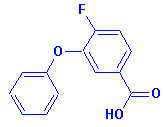
the SAP and was analyzed for the cyfluthrin biomarker, 4-fluoro-3-phenoxybenzoic
acid (FPBA). The mean cyfluthrin equivalents excreted were 8.4+/-5.7
microg/person (yielding an absorbed dosage of 0.10 microg/kg;
n=7). The elimination half-life was 16+/-5 h. All predicted ADDs
based upon environmental measurements overestimated the ADDs measured
by urinary excretion.
PMID: 12679791 [PubMed - in process]
http://www.ncbi.nlm.nih.gov:80/entrez/query.fcgi?cmd=Retrieve&db=PubMed&list_uids=12053257&dopt=Abstract
Bull Environ Contam Toxicol. 2002
Jul;69(1):54-8.
No Abstract available
Evaluation of residues of beta-cyfluthrin
on cotton.
Mukherjee I, Gopal M, Kusum.
Division of Agricultural Chemicals, Indian Agricultural Research
Institute, New Delhi 110012, India.
PMID: 12053257 [PubMed - indexed for MEDLINE]
http://www.ncbi.nlm.nih.gov:80/entrez/query.fcgi?cmd=Retrieve&db=PubMed&list_uids=10874624&dopt=Abstract
J Environ Sci Health B. 2000 Jul;35(4):477-89.
A preliminary examination of the translocation
of microencapsulated cyfluthrin following applications to the
perimeter of residential dwellings.
Stout DM 2nd, Leidy RB.
National Exposure Research Laboratory,
U.S. EPA, Research Triangle Park, NC 27711, USA. stout.dan@epa.gov
Methods have been developed to monitor the translocation of microencapsulated
cyfluthrin following perimeter applications to residential dwellings.
A pilot study was implemented to determine both the potential
for application spray to drift away from dwellings and the intrusion
of residues into homes following perimeter treatments. Residential
monitoring included measuring spray drift using cellulose filter
paper and the collection of soil samples from within the spray
zone. In addition, interior air was monitored using fiberglass
filter paper as a sorbent medium and cotton ball swabs were used
to collect surface wipes. Fortification of matrixes resulted in
recoveries of > 90%. Spray drift was highest at the point of
application and declined to low but measurable levels 9.1 m from
the foundations of dwellings. Soil residues declined to low, but
measurable levels by 45 days post-application. No cyfluthrin was
measured from indoor air; however, some
interior surfaces had detectable levels of cyfluthrin until three
days post-application. Findings indicate that spray drift
resulting from perimeter applications might contaminate non-target
surfaces outside the spray zone. Soil borne
residues may serve as persistent sources for human exposure and
potentially intrude into dwellings through the activities of occupants
and pets. Residues do not appreciably translocate through
air and consequently inhalation is not a likely route for human
exposure. Surface residues detected indoors
suggest that the physical movement of residues from the
exterior to the interior might be a viable route of movement of
residues following this type of application.
PMID: 10874624 [PubMed - indexed for MEDLINE]
http://www.ncbi.nlm.nih.gov/entrez/query.fcgi?cmd=Retrieve&db=pubmed&dopt=Abstract&list_uids=15218929
J Med Entomol. 2000 Jan;37(1):201-4.
Relative efficacy of insecticide
treated mosquito nets (Diptera: Culicidae) under field
conditions.
Ansari MA, Razdan RK.
Malaria Research Centre (ICMR), Madhuban, Delhi, India.
The relative efficacy of insecticide treated mosquito nets was
evaluated under field conditions in Dehra village of Dhaulana
PHC, District Ghaziabad, U.P., India, during 1996. Nylon nets
were impregnated with deltamethrin, cyfluthrin,
lambdacyhalothrin, and etofenprox at 25 mg/m2 by standard methods.
Repellent, excito-repellency, killing, and airborne actions were
monitored from dusk to dawn by hourly collection of mosquitoes
that entered and rested in rooms and also females that landed
on treated and untreated mosquito nets. Results revealed 15.3-22.9%
repellent action, 98.3-99.3% excito-repellency action, and 100%
mortality of females that landed on treated fabrics. No significant
differences were observed in the efficacy of different synthetic
pyrethroids against anophelines. However, against Culex quinquefasciatus
Say there was a significant difference between deltamethrin and
etofenprox. Control of anophelines was more pronounced than Cx.
quinquefasciatus. There was no pronounced airborne action with
any insecticide tested. Synthetic pyrethroids with strong airborne
action may be more appropriate for impregnation of mosquito nets.
PMID: 15218929 [PubMed - indexed for MEDLINE]
http://www.ncbi.nlm.nih.gov:80/entrez/query.fcgi?cmd=Retrieve&db=PubMed&list_uids=10472315&dopt=Abstract
Occup Environ Med. 1999 Jul;56(7):449-53.
Role of individual susceptibility in risk
assessment of pesticides.
Leng G, Lewalter J.
Institute of Hygiene, Heinrich-Heine-University Dusseldorf, Germany.
OBJECTIVES: This study presents criteria for assessing the individual
pesticide burden of workers in the chemical industry.
METHODS: A group of 1003 workers exposed to methylparathion or
ethylparathion (alkyl phosphates), propoxur (carbamate), or cyfluthrin
(pyrethroid) was investigated. After exposure to methylparathion
or ethylparathion the methylparathion or ethylparathion and methylparaoxon
or ethylparaoxon concentrations in plasma, the p-nitrophenol concentration
in urine, and the activities of cholinesterase and acetylcholinesterase
were measured. For exposure to propoxur the propoxur concentration
in plasma, the 2-isopropoxyphenol concentration in urine, and
the cholinesterase and acetylcholinesterase activities were measured.
For exposure to cyfluthrin the cyfluthrin concentration in plasma
was measured.
RESULTS: At the same propoxur concentration only workers with
a low individual acetylcholinesterase activity reported symptoms.
Workers who metabolised cyfluthrin rapidly reported less symptoms
than workers with a lower rate of metabolism. This tendency was
also evident in cases of mixed exposure (cyfluthrin and methylparathion).
CONCLUSIONS: In the assessment of exposure
to pesticides susceptibility of the individual person has to be
considered.
PMID: 10472315 [PubMed - indexed for MEDLINE]
http://www.ncbi.nlm.nih.gov:80/entrez/query.fcgi?cmd=Retrieve&db=PubMed&list_uids=10414789&dopt=Abstract
Toxicol Lett. 1999 Jun 30;107(1-3):123-30.
The influence of individual susceptibility
in pyrethroid exposure.
Leng G, Lewalter J, Rohrig B, Idel H.
Institute of Hygiene, Heinrich-Heine-University Dusseldorf, FRG.
leng@uni-duesseldorf.de
The aim of this study was to find a suitable biomarker for pyrethroid
adverse effects. It was shown that there is a correlation between
the half-life time (t(1/2)) of pyrethroids in plasma and the clinical
findings. We hypothized that this finding indicates an interindividual
different amount of total esterase activity or even a polymorphism.
By in vitro experiments it was demonstrated that pyrethroids are
cleaved by carboxylesterases. After it turned out that carboxylesterase
activity in human plasma is too low for detection, a method for
specific determination of carboxylesterase activity in human isolated
lymphocytes was developed. As a substrate for carboxylesterase
activity, cyfluthrin was added to
the lymphocyte suspension. As a proof for cyfluthrin degradation
by carboxylesterases the produced hydrocyanic acid was determined
by GC/MS. First hints for interindividual differences in carboxylesterase
activity in lymphocytes were found.
PMID: 10414789 [PubMed - indexed for MEDLINE]
http://www.ncbi.nlm.nih.gov:80/entrez/query.fcgi?cmd=Retrieve&db=PubMed&list_uids=10414784&dopt=Abstract
Toxicol Lett. 1999 Jun 30;107(1-3):81-7.
Induction of mitotic cell division distrubances
and mitotic arrest by pyrethroids in V79 cell cultures.
Hadnagy W, Seemayer NH, Kuhn KH, Leng G,
Idel H.
Institute of Hygiene, Heinrich-Heine University Dusseldorf, Germany.
Five pyrethroids (fenvalerate, deltamethrin, cypermethrin, permethrin,
cyfluthrin) differing in their chemical
purity were investigated on their cytotoxic effects, especially
on their ability to induce mitotic cell division disturbances
using Chinese hamster lung cells of line V79. The colony forming
ability (CFA) resulted in distinct differences of the cytotoxic
effect of the tested pyrethroids, whereby permethrin was found
to be most toxic. With the exception of fenvalerate all tested
pyrethroids gave rise to inhibition of cell cycle progression
as shown by G2/M-arrest of synchronized V79 cells by flow cytometry
as well as by the increase of the mitotic index as evaluated by
light microscopy. The mitotic arresting activity could be attributed
to the occurrence of abnormal mitotic figures such as initial
and full C-metaphases. The results however indicate, that pyrethroids
per se do not contribute to the cytotoxic effects but that other
factors such as chemical impurities, source as well as manufacturing
process and isomer composition may be responsible for the observed
cytotoxic effects.
PMID: 10414784 [PubMed - indexed for MEDLINE]
http://www.ncbi.nlm.nih.gov:80/entrez/query.fcgi?cmd=Retrieve&db=PubMed&list_uids=9820689&dopt=Abstract
Toxicol Lett. 1998 Aug;96-97:361-8.
Assessment of pyrethroid-induced paraesthesias:
comparison of animal model and human data.
Pauluhn J, Machemer LH.
Institute of Toxicology, Bayer AG,
Wuppertal, Germany.
The quantification of upper respiratory tract (URT) sensory irritation
is considered to be important in rodent inhalation studies, since
it may be also used as an endpoint mimicking trigeminal paraesthesias
observed in humans. URT sensory irritation is known to be associated
with rodent-specific secondary physiological effects such as depression
of body temperature and changes in heart rate. In acutely exposed
rats, these endpoints have been addressed by telemetrical measurements.
The analysis of the ventilation pattern
during acute inhalation studies of rats exposed to the alpha-cyano-pyrethroid
cyfluthrin demonstrates that concentration-dependent URT sensory
irritation was associated with a hypothermic response.
The no-effect levels (NO(A)EL) based on the URT sensory irritation
endpoint following acute inhalation exposure for 1 h and following
a repeated 4-week or 13-week inhalation exposure for 6 h/day on
5 days week were virtually identical (approximately 0.1 mg/m3
air). An additional objective was to examine whether human volunteers
experience comparable signs when acutely exposed for 1 h to airborne
concentrations slightly above or in the range of the NO(A)EL.
In human volunteers there were no clinically significant or pyrethroid
related abnormalities in vital signs, ECG's or in any clinical
laboratory tests after either exposure, although transient effects
related to URT (sensory) irritation were reported.
In conclusion, an initial actual exposure concentration of approximately
0.1 mg cyfluthrin/m3 air appears to be in the range of the sensory
irritant threshold concentration for both rats and humans. Thus,
with regard to physiological afferent portal-of-entry effects,
the interspecies response was consistent.
PMID: 9820689 [PubMed - indexed for MEDLINE]
http://www.ncbi.nlm.nih.gov:80/entrez/query.fcgi?cmd=Retrieve&db=PubMed&list_uids=9727328&dopt=Abstract
World Health Organ Tech Rep Ser. 1998;879:i-vi,
1-73.
Evaluation of certain veterinary drug
residues in food. Forty-eighth report of the Joint FAO/WHO Expert
Committee on Food Additives.
[No authors listed]
This report presents the conclusions of a Joint FAO/WHO Expert
Committee convened to evaluate the safety of residues of certain
veterinary drugs in foods and to recommend maximum levels for
such residues in food. The first part of the report considers
standards for the performance of studies, residues at the injection
site, and several initiatives to promote transparency of the process
for setting Maximum Residue Limits (MRLs). A summary follows of
the Committee's evaluations of toxicological and residue data
on a variety of veterinary drugs: two anthelminthic agents (moxidectin
and tiabendazole), eight antimicrobial agents (ceftiofur, danofloxacin,
dihydrostreptomycin, streptomycin, enrofloxacin, flumequine, gentamicin
and spiramycin), one glucocorticosteroid (dexamethasone), and
two insecticides (cyfluthrin and
fluazuron). Annexed to the report are a summary of the Committee's
recommendations on these drugs, including Acceptable Daily Intakes
and MRL's and further toxicological studies and other information
required.
Publication Types: * Technical Report
PMID: 9727328 [PubMed - indexed for MEDLINE]
http://www.ncbi.nlm.nih.gov:80/entrez/query.fcgi?cmd=Retrieve&db=PubMed&list_uids=9606258&dopt=Abstract
Bull Environ Contam Toxicol. 1998
Jun;60(6):837-44.
No Abstract available
Effects of pyrethroid insecticides on
pest control operators.
Wieseler B, Kuhn K, Leng G, Idel H.
Institute of Hygiene, Heinrich-Heine-University Dusseldorf, Moorenstrasse
5, 40225 Dusseldorf, Germany.
PMID: 9606258 [PubMed - indexed for MEDLINE]
http://www.ncbi.nlm.nih.gov:80/entrez/query.fcgi?cmd=Retrieve&db=PubMed&list_uids=9553309&dopt=Abstract
Gesundheitswesen. 1998 Feb;60(2):95-101.
[Pyrethroids in house dust of the German
housing population--results of 2 nationwide cross-sectional studies]
[Article in German]
Friedrich C, Becker K, Hoffmann G, Hoffmann
K, Krause C, Nollke P, Schulz C, Schwabe R, Seiwert M.
Institut fur Wasser-, Boden- und Lufthygiene des Umweltbundesamtes,
Berlin.
As a part of the German Environmental Surveys performed in 1985/86
(West Germany), 1990/91 (West Germany) and 1991/92 (East Germany),
dust samples were collected in the households of about 1600 randomly
selected adults (25 to 69 years) and an analysis of these samples
was performed in respect of their content of 8 different pyrethroids
and of the synergist piperonyl butoxide (PBO). In the 1990-92
survey about 90% of the samples contained permethrin in concentrations
above the limit of quantification. This showed permethrin to be
the most widespread of the 8 compounds investigated. The geometric
mean of the permethrin content in domestic dust was 0.22 mg/kg.
Only about 8% of the samples contained one or more of the other
investigated substances (cyfluthrin,
lambda-cyhalothrin, cypermethrin, alpha-cypermethrin, deltamethrin,
empenthrin, d-phenothrin) in quantifiable amounts. About 76% of
the samples contained quantifiable amounts of PBO. In East Germany
the geometric mean of the PBO content (0.21 mg/kg) was significantly
higher than in West Germany (0.07 mg/kg), but no difference for
permethrin was found. Significant associations could be shown
for the permethrin content and the application of biocides as
well as for the PBO content and regional factors (size of community,
type of dwelling area). Samples collected in 1985/86 (West Germany)
showed a geometric mean for permethrin of 0.06 mg/kg and for PBO
of 0.07 mg/kg. Comparing the values of 1985/86 and 1990/91, a
significant increase can be observed for permethrin, whereas the
PBO concentration remained constant.
PMID: 9553309 [PubMed - indexed for MEDLINE]
http://www.ncbi.nlm.nih.gov:80/entrez/query.fcgi?cmd=Retrieve&db=PubMed&list_uids=9460232&dopt=Abstract
Xenobiotica. 1997 Dec;27(12):1273-83.
Human dose-excretion
studies with the pyrethroid insecticide cyfluthrin: urinary
metabolite profile following inhalation.
Leng G, Leng A, Kuhn KH, Lewalter J, Pauluhn
J.
Institute of Hygiene, Heinrich-Heine-University Dusseldorf, Germany.
1. Nine male volunteers were exposed to the pyrethroid insecticide
cyfluthrin. The study was performed in an exposure room, where
an aerosol containing cyfluthrin was sprayed to obtain atmospheres
with mean cyfluthrin concentrations of 160 and 40 micrograms/m3.
Four volunteers were exposed for 10, 30 and 60 min at 160 micrograms/m3
and another five volunteers were exposed for 60 min at 40 micrograms/m3.
For 160 micrograms/m3 exposure urine samples were collected before
and immediately after exposure as well as for the periods 1-2,
2-3, 3-4, 4-5, 5-6, 6-12 and 12-24 h after exposure. For 40 micrograms/m3
exposure urine samples were collected before and 2 h after exposure.
2. The main urinary cyfluthrin metabolites, cis-/trans-3-(2,2-dichlorovinyl)-2,2-dimethylycyclopropane
carboxylic acid (DCCA) and 4-fluoro-3-phenoxybenzoic acid (FPBA),
were determined. The limit of detection (LOD) for all metabolites
was 0.0025 microgram in an urine sample of 5 ml (0.5 microgram/l).
After inhalative exposure of 40 micrograms cyfluthrin/m3 air for
60 min, the amount of metabolites in urine collected in the first
2 h after exposure was less than the LOD, namely 0.14 microgram
for cis-DCCA, 0.15-0.28 microgram for trans-DCCA and 0.12-0.23
microgram for FPBA.
3. Of the metabolites, 93% was excreted within the first 24 h
(peak excretion rates between 0.5 and 3 h) after inhalative exposure
of 160 micrograms/m3. The mean half-lives were 6.9 h for cis-DCCA,
6.2 h for trans-DCCA and 5.3 h for FPBA.
4. The mean trans-:cis-DCCA ratio was 1.9 for the time course
as well as for each subject.
5. The amount of metabolites in urine depends on the applied dose,
on the exposure time and shows interindividual differences.
Publication Types: * Clinical Trial * Controlled Clinical Trial
PMID: 9460232 [PubMed - indexed for MEDLINE]
http://www.ncbi.nlm.nih.gov:80/entrez/query.fcgi?cmd=Retrieve&db=PubMed&list_uids=9323214&dopt=Abstract
Bull Environ Contam Toxicol. 1997
Nov;59(5):681-7.
No Abstract available
Evaluation of possible toxic effects of
cyfluthrin during short-term, relevant community exposure.
Satpathy SK, Tyagi PK, Das BS, Srivastava
P, Yadav RS.
Department of Internal Medicine and Biochemistry, Ispat General
Hospital, Rourkela 769005, India.
PMID: 9323214 [PubMed - indexed for MEDLINE]
http://www.ncbi.nlm.nih.gov:80/entrez/query.fcgi?cmd=Retrieve&db=PubMed&list_uids=8920739&dopt=Abstract
Toxicol Lett. 1996 Nov;88(1-3):215-20.
Biological monitoring of pyrethroid metabolites
in urine of pest control operators.
Leng G, Kuhn KH, Idel H.
Institute of Hygiene, Heinrich-Heine-University Dusseldorf, Germany.
Due to their low mammalian toxicity but high insectical activity,
pyrethroids are increasingly used for pest control. The objective
of the present study was the development of a biological monitoring
program to determine exposure to pyrethroids. A diastereoselective
detection of the major pyrethroid metabolites cis- and trans-3-(2,2-dichlorovinyl)-2,2-dimethylcyclopropanecarboxylic
acid, cis-3-(2,2-dibromovinyl)-2,2-dimethylcyclopropanecarboxylic
acid, 3-phenoxybenzoic acid and fluorophenoxybenzoic acid by capillary
gas chromatography in combination with mass selective detection
was applied. The limits of determination ranged between 0.5 and
1 microgram/l urine, depending on the metabolite concerned.
It was demonstrated that pyrethroid metabolites were detectable
in urine for a period of elimination up to 3.5 days after exposure
to cyfluthrin. Fluorophenoxybenzoic acid was shown to be a suitable
biomarker for exposure to cyfluthrin. The presented method
was adequate for monitoring pyrethroids in occupationally exposed
subjects.
PMID: 8920739 [PubMed - indexed for MEDLINE]
http://www.ncbi.nlm.nih.gov:80/entrez/query.fcgi?cmd=Retrieve&db=PubMed&list_uids=9035787&dopt=Abstract
Gesundheitswesen. 1996 Oct;58(10):551-6.
[Toxicologic evaluation of pyrethroids
in indoor air: demonstrated with the example of cyfluthrin and
permethrin]
[Article in German]
Pauluhn J, Steffens W, Haas J, Machemer
L, Miksche LK, Neuhauser H, Schule S.
Bayer AG, Institut fur Toxikologie,
Wuppertal.
Pyrethroids have varying activities depending on vehicle or route
of administration (oral, dermal, inhalational). Specific features
like the sensory irritation potential of the alpha-cyano-pyrethroids
on the respiratory tract can only be quantified adequately by
inhalation testing. Thus equitoxic dosages can vary between inhalative
and oral application, especially for alpha-cyano-pyrethrolds.
The no-effect values for chronic exposures derived for permethrin
(type I pyrethroid) and cyfluthrin (type II pyrethroid) show clearly,
that each pyrethroid has to be considered as an individual substance
toxicologically, and that any extrapolation from the oral to the
inhalative route should only be done after a thorough assessment
of the specific toxicological profile. The study of simulated
pest control measures on carpets pretreated with permethrin showed,
that no significant enrichment of permethrin in total dust could
be seen from a carpet additionally treated with pyrethroids. The
missing correlation between absolute (mg pyrethroid/m3 air) and
relative (mg pyrethroid/kg dust) concentrations in air-borne dust
as well as the low degree of translocation of pyrethroids from
carpets (only about 0.044% x m(-2) x h(-1) of the cyfluthrin applied
to the carpet can be regarded as possibly respirable) prove, that
analyses of pyrethroids in household sedimented dust ("vacuum
cleaner bag analyses") without knowing the absolute surface
concentration and respective air concentrations are of little
value for risk assessment. The data allow the conclusion, that
a scientific assessment of health risks is only possible based
on absolute concentrations of pyrethroids in indoor air.
PMID: 9035787 [PubMed - indexed for MEDLINE]
http://www.ncbi.nlm.nih.gov:80/entrez/query.fcgi?cmd=Retrieve&db=PubMed&list_uids=9379461&dopt=Abstract
J Med Entomol. 1997 Sep;34(5):552-8.
Pesticide use by licensed applicators
for the control of Ixodes scapularis (Acari: Ixodidae) in Connecticut.
Stafford KC 3rd.
Department of Entomology, Connecticut Agricultural Experiment
Station, New Haven 06504, USA.
To assess the use of insecticides for tick control by commercial
applicators in Connecticut, a questionnaire was mailed to 897
individuals and businesses with ornamental and turf pesticide
applicator licenses. In total, 348 completed surveys were returned
(38.8%). The majority of the respondents considered themselves
lawn care (41.1%), landscape (31.3%) or tree care (12.6%) providers.
Tick control services were offered by 16.4% (n = 57) of the respondents,
all of whom apply insecticides for tick control, mainly for Ixodes
scapularis Say. Over half (n = 33) also treat for the American
dog tick, Dermacentor variabilis (Say). Most respondents (66.7%)
began applying pesticides for the control of I. scapularis during
the period from 1990 to 1996. The principal
acaricide used for tick control was cyfluthrin (n = 21),
with chlorpyrifos 2nd (n = 18), carbaryl 3rd (n = 12), and fluvalinate
(n = 4) 4th. When asked about what other pesticides were used
for tick control, the top 3 chemicals also were the principal
alternatives. Past success with a product was the dominant factor
in selecting a pesticide, but information provided by the Connecticut
Agricultural Experiment Station (New Haven), Cooperative Extension
(University of Connecticut, Storrs), and scientific studies were
important. Half of the respondents (49.1%) indicated that their
tick control business had increased slightly or dramatically since
1991, although tick control comprises < 5% of their overall
business for 63.1% of these applicators. Residential properties
comprised 90% of the business for half of those treating for ticks,
and the median charge for 0.4 ha was $180. Many respondents (43.8%)
also indicated that they planned to expand their tick control
services. Tick control represents a small but growing business
in Connecticut.
PMID: 9379461 [PubMed - indexed for MEDLINE]
http://www.ncbi.nlm.nih.gov:80/entrez/query.fcgi?cmd=Retrieve&db=PubMed&list_uids=8834736&dopt=Abstract
Med Vet Entomol. 1996 Jan;10(1):1-11.
Comparison of different insecticides and
fabrics for anti-mosquito bednets and curtains.
Curtis CF, Myamba J, Wilkes TJ.
London School of Hygiene and Tropical Medicine, U.K.
Various formulations of six insecticides (a carbamate and five
pyrethroids), were impregnated into bednets
and curtains made from cotton, polyester, polyethylene or polypropylene
fabric. For bioassays of insecticidal efficacy, female
Anopheles gambiae mosquitoes were made to walk on the fabrics
for 3 min and mortality was scored after 24 h. The main concentrations
tested were: bendiocarb 400 mg/m2, cyfluthrin
30-50 mg/m2, deltamethrin 15-25 mg/m2, etofenprox 200 mg/m2,
lambda-cyhalothrin 5-15 mg/m2 and permethrin 200-500 mg/m2. Field
trials in Tanzania used experimental huts (fitted with verandah
traps) entered by wild free-flying Anopheles gambiae, An.funestus
and Culex quinquefasciatus mosquitoes. Results of testing the
impregnated fabrics in experimental huts showed better personal
protection provided by bednets than by curtains. Permethrin cis:trans
isomer ratios 25:75 and 40:60 were equally effective, and the
permethrin rate of 200 mg/m2 performed as well as 500 mg/m2. Bioassay
data emphasized the prolonged insecticidal efficacy of lambda-cyhalothrin
deposits, except on polyethylene netting. Most of the impregnated
nets (including the 'Olyset' net with permethrin incorporated
during manufacture of the polyethylene fibre) and an untreated
intact net performed well in preventing both Anopheles and Culex
mosquitoes from feeding on people using them overnight in the
experimental huts. Anopheles showed high mortality rates in response
to pyrethroid-treated nets, but only bendiocarb treated curtains
killed many Culex. Holed nets treated with either cyfluthrin
(5 EW formulation applied at the rate of 50 mg a.i./m2) or lambda-cyhalothrin
(2.5 CS formulation at 10 mg a.i./m2) performed
well after 15 months of domestic use. Treatment with deltamethrin
SC or lambda-cyhalothrin CS at the very low rate of 3 mg/m2 gave
good results, including after washing and re-treatment.
PMID: 8834736 [PubMed - indexed for MEDLINE]
http://www.ncbi.nlm.nih.gov:80/entrez/query.fcgi?cmd=Retrieve&db=PubMed&list_uids=7663084&dopt=Abstract
Bull Environ Contam Toxicol. 1995
Jul;55(1):142-8.
No Abstract available
Cyfluthrin persistence in soil as affected
by moisture, organic matter, and redox potential.
Smith S Jr, Willis GH, Cooper CM.
USDA-ARS, National Sedimentation Laboratory, Oxford, Mississippi
38655-1157, USA.
PMID: 7663084 [PubMed - indexed for MEDLINE]
http://www.ncbi.nlm.nih.gov:80/entrez/query.fcgi?cmd=Retrieve&db=PubMed&list_uids=8350078&dopt=Abstract
J Am Mosq Control Assoc.
1993 Jun;9(2):210-20.
Indoor
low-volume insecticide spray for the control of Anopheles albimanus
in southern Mexico. Village-scale trials of bendiocarb, deltamethrin
and cyfluthrin.
Arredondo-Jimenez
JI, Rodriguez MH, Bown DN, Loyola EG.
Centro de Investigacion
de Paludismo, Direccion General de Epidemiologia, Secretaria de
Salud, Tapachula, Chiapas, Mexico.
A comparative insecticide
village-scale trial was carried out to determine the efficacy
of low-volume (LV) indoor spray of bendiocarb, deltamethrin and
cyfluthrin for the control of Anopheles
albimanus in a coastal plain of southern Mexico. Low-volume spray
was conducted with knapsack mist-blowers,
giving an average discharge rate of 215 ml/min, which deposited
droplets of 50-100 microns. Using this technique, 25
houses were treated/sprayman/day as compared with 8 houses/sprayman/day
using conventional hand compression pumps. Indicators of
LV mortality showed a residual activity of 10 wk as compared with
13 wk of activity for wettable powder (WP) (bendiocarb). When
comparing expenditures, LV spray costs were 43% less when using
bendiocarb, 83% less with deltamethrin and 74% less with cyfluthrin
with respect to the conventional WP spray of the same insecticides.
Low-volume spray time was reduced by one-third, with respect to
WP. Malaria incidence was reduced by 53 and 56%, respectively,
in the bendiocarb LV and deltamethrin LV treated villages as compared
with the untreated village.
PMID: 8350078
[PubMed - indexed for MEDLINE]
http://www.ncbi.nlm.nih.gov:80/entrez/query.fcgi?cmd=Retrieve&db=PubMed&list_uids=1359650&dopt=Abstract
Southeast Asian J Trop
Med Public Health. 1992 Jun;23(2):318-23.
Beta-cyfluthrin,
a synthetic pyrethroid for mosquito control.
Vasuki
V, Rajavel AR.
Vector Control Research
Centre, Indian Council of Medical Research, Pondicherry.
Beta-cyfluthrin (OMS
3051), a new synthetic pyrethroid and one of the stereoisomers
of cyfluthrin, was studied for insecticidal activity against eight
mosquito species. Its larvicidal activity with LC50 values of
5.62 x 10(-5) and 1.19 x 10(-4) mg/l respectively for Culex quinquefasciatus
and Aedes aegypti was comparable with that of deltamethrin. This
pyrethroid was more effective against the larvae of Armigeres
subalbatus (LC50 - 7.76 x 10(-7)) and the adults of Anopheles
culicifacies LT50 - 27.76 min at 2.0 mu/cm2) than the other species
tested. Residual efficacy at 50 mg(ai)/m2 was more persistent
(for 14-25 weeks) on thatch and asbestos among the four treated
surfaces. This compound also elicited oviposition deterrent activity
at 0.001 mg/l against Cx.quinquefasciatus. beta-cyfluthrin is
a good insecticide for mosquito control. However,
care should be exercised while using it as a larvicide in breeding
habitats considering its toxicity to fish.
PMID: 1359650
[PubMed - indexed for MEDLINE]
http://www.ncbi.nlm.nih.gov:80/entrez/query.fcgi?cmd=Retrieve&db=PubMed&list_uids=1768948&dopt=Abstract
Bull Environ Contam
Toxicol. 1991 Sep;47(3):355-61.
No
Abstract available
Pyrethroid
insecticides and formulations as factors in residues remaining
in apparel fabrics after laundering.
Laughlin
J, Newburn K, Gold RE.
University of Nebraska-Lincoln
68583-0802.
PMID: 1768948
[PubMed - indexed for MEDLINE]
http://www.ncbi.nlm.nih.gov:80/entrez/query.fcgi?cmd=Retrieve&db=PubMed&list_uids=3396790&dopt=Abstract
Fundam Appl Toxicol.
1988 May;10(4):624-34.
The effects
of type I and II pyrethroids on motor activity and the acoustic
startle response in the rat. Crofton KM, Reiter LW.
Neurotoxicology Division,
U.S. Environmental Protection Agency,
Research Triangle Park, North Carolina 27711.
Recent data have demonstrated
that the in vivo effects of low dosages of two pyrethroids, cismethrin
and deltamethrin, can be differentiated. Two behavioral tests,
locomotor activity and the acoustic startle response (ASR), were
utilized to separate the behavioral actions of Type I and II pyrethroids
using permethrin, RU11679, cypermethrin, RU26607, fenvalerate,
cyfluthrin, flucythrinate, fluvalinate
and p,p'-DDT. Dosage-effect functions for all compounds were determined
for both figure-eight-maze activity and the ASR in the rat. All
compounds were administered po in 1 ml/kg corn oil 1.5-3 hr prior
to testing. All compounds produced dosage-dependent
decreases in locomotor activity. The Type I compounds,
permethrin and RU11679, along with p,p'-DDT, increased amplitude
and had no effect on latency to onset of the ASR. In contrast,
the Type II pyrethroids, cypermethrin, cyfluthrin,
and flucythrinate, decreased amplitude and increased the latency
to onset of the ASR. Fenvalerate increased the amplitude,
had no effect on latency, but unlike the other compounds tested,
increased ASR sensitization. Fluvalinate had no effect on any
measure of the ASR. These data provide further evidence of the
differences between the in vivo effects of low dosages of Type
I and II pyrethroids, and extend the findings of our previous
work to other representatives of the two classes of pyrethroids.
PMID: 3396790
[PubMed - indexed for MEDLINE]
http://www.ncbi.nlm.nih.gov:80/entrez/query.fcgi?cmd=Retrieve&db=PubMed&list_uids=3354265&dopt=Abstract
Z Lebensm Unters Forsch.
1988 Feb;186(2):125-9.
[Residue
analysis of pyrethroid insecticides in cereal grains, milled fractions
and bread]
[Article in German]
Dicke
W, Ocker HD, Thier HP.
Institut fur Lebensmittelchemie
der Universitat Munster, Bundesrepublik Deutschland.
A procedure is described
for the residual analysis of eight pyrethroid insecticides at
levels of 2-5 micrograms/kg. Residues are extracted from cereal
grains, flour or bread with a mixture of acetonitrile/water (2
+ 1) and are partitioned into petroleum ether. Clean-up is performed
by gel permeation chromatography on Bio-Beads S-X3 and an additional
Florisil column. Electron capture gas liquid chromatography on
a non-polar SE-30 capillary column separates the isomers of the
compounds. Under the conditions used in the experiments with cyfluthrin,
cypermethrin, deltamethrin, fenvalerate, and permethrin, the compound
levels in rye and wheat did not decrease significantly. Losses
during milling and baking were small. Consequently, pyrethroid
insecticides remain effective in grain stored over a long period
of time. However, considerable residues result in the milled fractions
as well as in different types of bread.
PMID: 3354265
[PubMed - indexed for MEDLINE]
http://www.ncbi.nlm.nih.gov:80/entrez/query.fcgi?cmd=Retrieve&db=PubMed&list_uids=12546459&dopt=Abstract
J Vector Ecol. 2002
Dec;27(2):230-4.
Field evaluation
of cypermethrin and cyfluthrin against dengue vectors in a housing
estate in Malaysia.
Sulaiman
S, Pawanchee ZA, Othman HF, Shaari N, Yahaya S, Wahab A, Ismail
S.
Department of Biomedical
Science, Faculty ofAllied Health Sciences, Universiti Kebangsaan
Malaysia, Kuala Lumpur, Malaysia.
Cynoff 25ULV (cypermethrin
25 g/l) and Solfac UL015 (cyfluthrin 1.5% w/v) were evaluated
against the sentinel sugar-fed adults and 4th-instar larvae of
Aedes aegypti in a housing estate endemic of dengue in Malaysia.
The impact of both pyrethroids on field populations of Aedes albopictus
and Aedes aegypti larvae was monitored weekly using bottle containers.
Both Cynoff 25ULV and Solfac UL015 showed adulticidal effects
and larvicidal effects. This field trial using Cynoff 25ULV against
dengue vectors showed its potential for use in dengue vector control
programs.
PMID: 12546459
[PubMed - indexed for MEDLINE]
http://www.ncbi.nlm.nih.gov:80/entrez/query.fcgi?cmd=Retrieve&db=PubMed&list_uids=12510887&dopt=Abstract
Med Vet Entomol. 2002
Dec;16(4):356-63.
Domestic
scorpion control with pyrethroid insecticides in Mexico.
Ramsey
JM, Salgado L, Cruz-Celis A, Lopez R, Alvear AL, Espinosa L.
Centre for Infectious
Disease Research, National Institute for Public Health, Cuernavaca,
Morelos, Mexico. jramsey@insp.mx
Scorpion stings cause
more morbidity in Mexico than any other country, leading to about
100 deaths annually. In 1999, the State of Morelos reported nine
deaths among 30663 cases of scorpion sting. To
replace lindane used for scorpion control, field trials of pyrethroid
pesticides were undertaken in Morelos during 1998-2000 at the
village of Chalcatzingo (population initially with 2760 inhabitants
and 530 houses). Pre-intervention surveys detected scorpions
(Scorpiones: Buthidae) of two species in the majority of houses:
Centruroides limpidus limpidus Karsch outnumbering Vaejovis mexicanus
smithi Koch. Scorpion prevalence was assessed, pre- and post-spray,
directly by searching (40 min/house) and by householder reports
of sightings inside houses. Pre-intervention perceptions of scorpion
abundance were similar for all areas, with sightings in 12-18%
of houses, whereas daytime searches detected more infestations
in eastern parts of the village (prevalence 17% indoors, 22% outdoors)
than in other sectors (9% indoors, 14% outdoors). Pyrethroids
were evaluated as residual treatments in separate sectors of Chalcatzingo,
with almost complete coverage indoors and
peridomestically, using the following four formulations:
bifenthrin 10% wettable powder (WP) applied at 50mg a.i./m2, cyfluthrin
10% WP (Solfac 10 WP) at 44-55 mg a.i./m2, deltamethrin
2.5% suspension concentrate (Biothrin 25 SC) at 11 mg a.i./m2
and 5% WP (K-Othrine 50 WP) at 35 mg a.i./m2. Phase 1 compared
bifenthrin 10 WP, Solfac 10 WP and Biothrin 25 SC sprayed in December
1998; phase 2 compared Solfac 10 WP and K-Othrine 50 WP sprayed
in June and again in December 2000, with follow-up surveys of
scorpions one month post-spray and subsequently. Scorpion prevalence
was reduced by 64-77% peridomestically one month post-spray and
by 83, 46 and 15% in houses sprayed with cyfluthrin WP, bifenthrin
WP or deltamethrin SC, respectively. Householder reports of sighting
scorpions indoors were 33-85% below pre-intervention levels. Cumulative
effects of the three spray-rounds over 3
years reduced scorpion prevalence by approximately 60%
in the deltamethrin WP re-sprayed area and by approximately 90%
in the cyfluthrin WP re-sprayed area.
Householder sightings also fell by 67 and 28% in the cyfluthrin
and delta-methrin re-sprayed areas, respectively. Operational
efficacy of these products against scorpions at the dosages applied
was ranked as cyfluthrin WP > bifenthrin
WP > deltamethrin SC > WP. Reported cases of scorpion sting intoxication
fell by 17% during this study after having risen by approximately
40% over four previous years.
Publication Types:
* Evaluation Studies
PMID: 12510887
[PubMed - indexed for MEDLINE]
http://www.ncbi.nlm.nih.gov:80/entrez/query.fcgi?cmd=Retrieve&db=PubMed&list_uids=12477001&dopt=Abstract
Pest Manag Sci. 2002
Dec;58(12):1259-65.
Persistence
and leaching of beta-cyfluthrin in alluvial soil of India.
Gupta
S, Gajbhiye VT.
Division of Agricultural
Chemicals, Indian Agricultural Research Institute, New Delhi,
110 012, India.
Persistence as affected
by rate of application and moisture regimes and leaching of beta-cyfluthrin
was studied in alluvial soil under laboratory conditions. The
effects of rate of application and moisture regimes on persistence
were studied by incubating fortified soil at 0.1, 1.0 and 10.0
mg kg(-1) under air-dry, field capacity and submerged moisture
regimes. The initial deposits of 0.09, 1.11 and 10.1 mg kg(-1)
dissipated with time and 78.4-100% loss was recorded at 90 days.
The half-life values varied from 7.8 to 41.8 days. The rate of
dissipation decreased as the rate of application increased under
field capacity and submerged conditions. However, under air-dry
conditions, the effect was less pronounced, and half-life values
showed a reverse trend. Persistence of beta-cyfluthrin under different
moisture regimes followed the trend: air-dry > field capacity
> submerged. The trend could be attributed to the effect of moisture
on number and type of microbes. Leaching was studied in a packed
soil column under saturated flow conditions. beta-Cyfluthrin was
found to be highly immobile in alluvial soil. No residues were
detected in any leachate fraction under the experimental conditions.
In column soil, residues were detected at 0-10 cm depth and the
major amount (>99%) was recovered from 0-5 cm depth. Although
beta-cyfluthrin showed moderate persistence in alluvial soil,
the possibility of its leaching to ground water is negligible
as a result of its immobility.
PMID: 12477001
[PubMed - indexed for MEDLINE]
http://www.ncbi.nlm.nih.gov:80/entrez/query.fcgi?cmd=Retrieve&db=PubMed&list_uids=12463026&dopt=Abstract
Arch Inst Pasteur Madagascar.
2000;66(1-2):9-12.
[Xenopsylla
cheopis (Siphonaptera: Xenopsyllinae), fleas in rural plague areas
of high altitude Madagascar: level
of sensitivity to DDT, pyrethroids and carbamates after 50 years
of chemical vector control]
[Article in French]
Ratovonjato
J, Duchemin JB, Duplantier JM, Chanteau S.
Institut Pasteur de
Madagascar, BP 1274-101 Antananarivo-Madagascar.
The resistance of Xenopsylla
cheopis from urban area to pyrethroids, to DDT, and their susceptibility
to carbamate are known. We have evaluated the susceptibility of
X. cheopis collected from three rural localities: Ambodisiarivo
(district of Antananarivo Avaradrano), Mandoto (district of Betafo),
Analaroa (district of Anjozorobe) in the province of Antananarivo
and in Besoa (district of Ambalavao) in the province of Fianarantsoa.
The standard WHO protocol was used and four insecticides were
tested: deltamethrin 0.025%, cyfluthrin
0.15% (pyrethroids), DDT 4% (organochlorine), propoxur
1% and bendiocarb 0.1% (carbamate). X. cheopis has been shown
resistance to DDT 4%, to deltamethrin 0.025% but was susceptible
in the rural area around Antananarivo City. They were tolerant
to deltamethrin 0.025% and cyfluthrin
0.15% but susceptible to propoxur 0.1% and bendiocarbe 1% in the
districts of Betafo and Anjozorobe. In Besoa, X. cheopis was resistant
to DDT 4%, tolerant to deltamethrin 0.025% and cyfluthrin
0.15% but susceptible to propoxur 0.1% and bendiocarbe 1%. These
results indicate that DDT and pyrethroids can not be recommended
any more for the vector control in the rural area around the capital.
The use of pyrethroids in the other districts of the central highland
must be joined with a X. cheopis susceptibility control. In case
of resistance to pyrethroids, carbamates would be proposed to
control plague vector in the rural area. The high level of resistance
to DDT and pyrethroid in the rural area around the capital confirms
the importance of studying the flea population in different area
of Madagascar and the possibility of the gene resistance propagation.
PMID: 12463026
[PubMed - indexed for MEDLINE]
From Toxline at Toxnet
JOURNAL OF VECTOR ECOLOGY; 23 (1). 1998.
69-73.
Field evaluation of cyfluthrin and malathion
96 TG ULV spraying at high-rise flats on dengue vectors in Malaysia.
SULAIMAN S, PAWANCHEE ZA, OTHMAN HF, JAMAL
J, WAHAB A, SOHADI AR, RAHMAN A RA, PANDAK A
Dep. Biomed. Sci., Fac. Allied Health Sci., Univ. Kebangsaan
Malaysia, Kuala Lumpur, Malaysia.
Cyfluthrin (Solfac ULO15) and malathion 96 TG were evaluated
against sentinel sugar-fed adults and 4th-instar larvae of Aedes
aegypti at high-rise flats in Malaysia by
ULV spraying. The impact of both insecticides on field
populations of Aedes spp. (Ae. aegypti and Ae. albopictus) larvae
were monitored weekly using containers. Both cyfluthrin and malathion
96 TG showed adulticidal effects but cyfluthrin showed more significant
larvicidal effect than malathion 96 TG (P<0.05).
From Toxline at Toxnet
MOSQUITO BORNE DISEASES BULLETIN; 10 (4). 1993.
128-131.
The residual effects of the synthetic
pyrethroids lambda-cyhalothrin and cyfluthrin against Aedes aegypti
(L.) in wooden huts in Malaysia.
SULAIMAN S, KARIM MA, OMAR B, JEFFERY J,
MANSOR AF
Dep. Parasitol. Med. Entomol., Fac. Med., Natl. Univ. Malaysia,
Jalan Raja Muda Abdul Aziz, Kuala Lumpur, Malaysia.
Lambda-cyhalothrin and cyfluthrin synthetic pyrethroids were
evaluated for their residual effect against bloodfed females Aedes
aegypti in wooden huts in Malaysia. At a concentration of 0.05
gm ai/m2, 100% knockdown was obtained at 28 days after residual
spraying with lambda-cyhalothrin compared to cyfluthrin which
did not produce 100% knockdown for more than 1 day posttreatment.
However, both pyrethroid seemed to cause high mortalities up to
7 days posttreatment at the concentration of 0.01 gm ai/m2 and
56 days at 0.05 gm ai/m2.